White Hat Backlinks Service for Startups: Build Safe, Lasting Links
White hat backlinks are editorial links built through valuable content, natural outreach, and ethical SEO practices, not manipulative schemes. Many startups create content that drives organic traffic, but their domain authority remains low. This is where a white-hat backlink service helps brands build relevant links from authoritative websites to strengthen search visibility.
For startups, publishing high-quality content is their only challenge. But competitors build authority through ethical backlinks, so they get more clicks, earn Google’s trust, and gain organic traffic. That makes it harder for a new website to rank higher.
In this article, I explain what white hat backlink services are, how to find a trusted white hat backlink agency, and strategies to build ethical backlinks. You don’t need to waste your budget on cheap packages that build irrelevant or low-quality placements that last only a little while and provide little value.
What is a White Hat Backlinks Service?
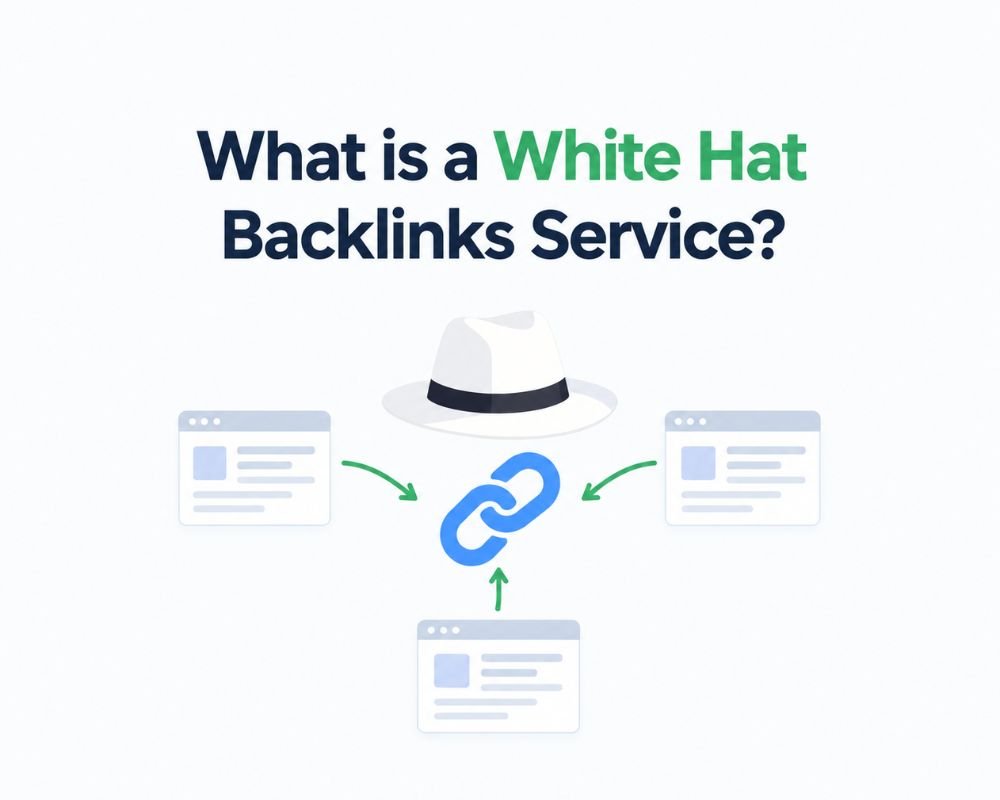
A white hat backlinks service is a link-building service that gets other websites to link back to your website using Google-approved methods, meaning no tricks, no rule-breaking.
This natural link building earns website authority and is a genuine, safe strategy to build authority and rankings through relationships and quality content that will last and be considered legitimate.
The white hat link building market size is approximately 38.7% (\~$560M) of the $1.45B white label SEO market in 2025; it is projected to increase to $2.57 billion in 2032. Much of it is marketed as white-hat or outreach-based—understanding what you are paying for is more critical than ever.
Another “global link building service market size is worth $25.97 billion in 2026 and projected to reach $57.07 billion in 2030.”
Common services include link prospecting, website and traffic analysis, content development, manual outreach, editorial placement, link tracking, and reporting. It can save startups time and resources by helping them find viable websites and build connections with publishers.
How to determine if a backlink is “white hat”?
The main features of a quality backlink are
Relevant: The website and page that you are linking to are closely related to your topic or audience.
Editorially justified: The link actually leads to helpful information for the reader.
Naturally placed: The link is seamlessly integrated into content, not inserted.
Earned through value: The link offers something useful from a research, expert knowledge, original content, digital PR, or authentic relationships standpoint.
Link-worthy content often includes expertise, firsthand experience, accuracy, and real value.
What is the difference between White Hat and Black-Hat Link Building?
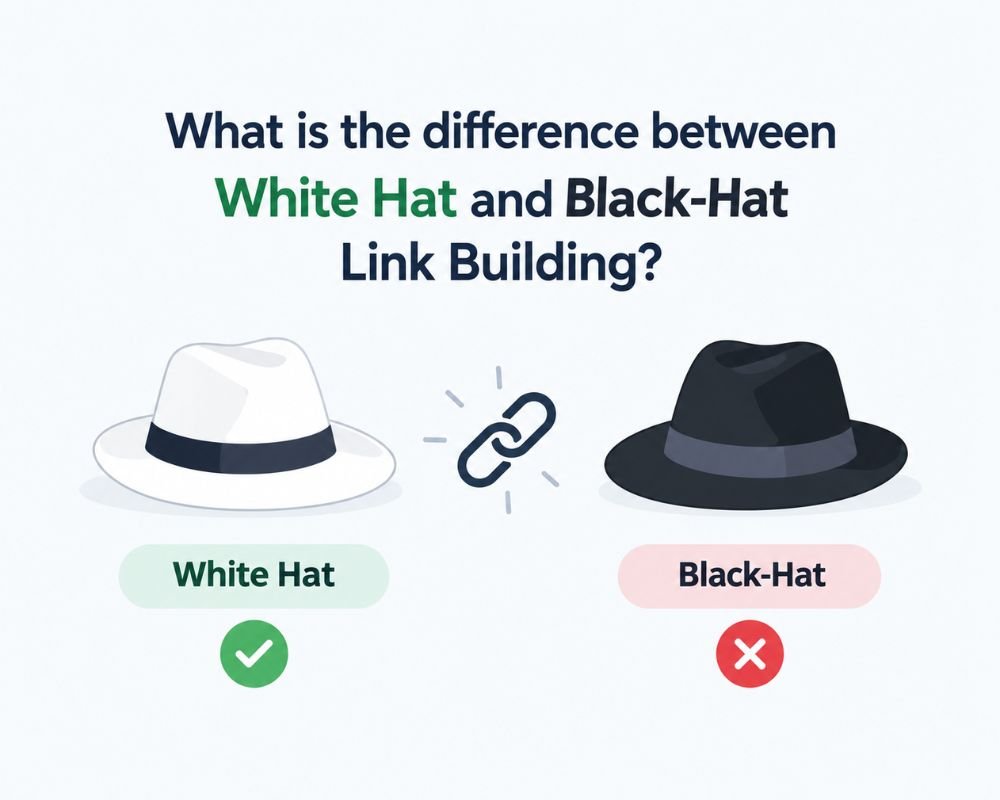
The key factor is how you earn the backlink and whether it adds value. White-hat link building involves earning relevant, editorial links, whereas manipulative techniques try to boost rankings with artificial link patterns.
| White-Hat Approach | Risky or Manipulative Approach |
| Relevant editorial links | Link farms |
| Original research | Private Blog Networks (PBNs) |
| Genuine outreach | Automated link creation |
| Useful guest contributions | Mass guest-post networks |
| Digital PR | Paid links intended to pass ranking credit |
| Natural anchor text | Aggressively optimized anchors |
Google considers buying or selling links for ranking purposes, excessive link exchanges, automated link generation, and certain guest posting practices that appear spammy to be examples of link spam. Avoid link-building mistakes that could trigger a spam penalty on your website.
Backlinko research indicates that “the #1 results on Google have an average 3.8x more backlinks than #2-3 pages.” This suggests that more backlinks can signal relevance and earn value, but not every backlink is good for a website.
But not all paid placements are necessarily impermissible. Google offers rel=”nofollow” for ads and sponsorships where you don’t want to give your site credit for ranking or pass traffic to the other page, and rel=”sponsored” for paid ads or sponsorships. The key difference is whether links are being used to manipulate search engine rankings.
Why Cheap Backlink Packages Are Not Recommended for Startups.
When a startup has a small marketing budget, a package offering “100 backlinks for $400” may look appealing, but quantity doesn’t prove quality.
Low-cost bulk campaigns can bring a site into contact with:
- Poor topical relevance
- Artificial link patterns
- Low-quality publishers
- Wasted acquisition budget
- Difficulty measuring ROI
- Problems getting to the search engine.
Low-cost automated services may utilize PBNs or spam farms, while reputable services focus on manual service, outreach to editors, transparency, and reporting.
Instead of asking “How many links can I purchase?” as a start-up, a more relevant question is, “Which websites that are relevant in the eyes of my target audience can I enhance my visibility on?”
5 White Hat Link Building Strategies That Work for Startups
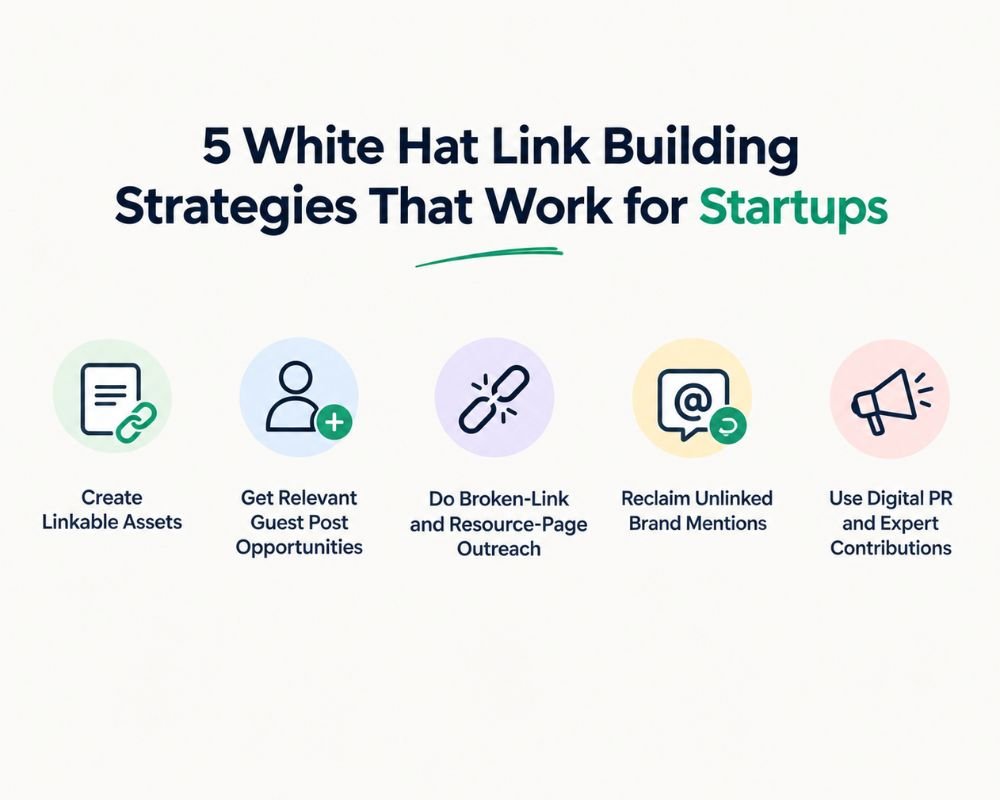
The best white hat link building involves providing a publisher with a legit reason to link to your site. Instead of chasing hundreds of links, focus on quality backlinks: useful content, relevance, relationships, and editorial value.
1. Create Linkable Assets
Make resources that other sites will want to link to, including original industry research, data pages, statistics, surveys, data studies, free tools and calculators, definitive guides, original graphics, and the like. As you conduct your research, you’ll discover that data-rich content and valuable resources are excellent methods for drawing in backlinks.
For instance, a SaaS provider could share and anonymize customer data to create an annual industry report and submit it to relevant publications and blogs for promotion.
2. Get Relevant Guest Post Opportunities
Guest posting can be an effective white hat link building tactic if it is useful and posted on a quality, relevant website. Avoid using any publisher who offers you a backlink!
When pitching, evaluate audience relevance, editorial standards, organic traffic, content quality, and topic alignment. You’ve highlighted that ‘relevant placement’ is more valuable than many links from ‘random websites.’
3. Do use Broken-Link and Resource-Page Outreach.
Identify relevant pages with broken links, and provide a helpful alternative link from your site.
There is a simple process to do this:
Look for a replacement for missing parts, verify their correctness, discover a suitable substitution, pitch it, and track it
If your content actually fills a gap, resource page link building can provide an opportunity as well.
4. Reclaim Unlinked Brand Mentions
Look for sites that talk about your startup, product, founder, or research, but don’t connect to the correct page. If the mention is actually necessary to readers, please write to the publisher requesting, in a brief note, the inclusion of the appropriate link.
This can be especially effective since the publisher has already mentioned your brand.
5. Use Digital PR and Expert Contributions
Submit journalists’ requests, expert responses, original data, industry research, and newsworthy research to appropriate media and publications. For startups, digital PR can also build editorial links and boost referral traffic.
Other useful white hat tactics include digital PR, journalist pitching, broken-link outreach, resource pages, and brand-mention reclamation.
How to Evaluate Backlink Quality Before You Pay
No single metric measures backlink value. Check the website, page, audience, context, and link itself before paying for or considering their placement.
Before using a link, ask yourself the following questions:
Before approving a placement, use this checklist:
- Does the site have a relevant topic?
- Is it a real organic source of traffic?
- Is the page you want linked to in the index?
- Does it have useful original content on the site?
- Does it seem to be intended for an actual audience?
- Is the link appropriate for the audience?
- Does anchor text seem natural?
- Are there any suspicious outbound link patterns on the website?
You should consider a combination of relevance, authority, traffic, and quality of the content, according to your research. It also points out that DA and DR are proxies, not direct metrics for Google’s view of a particular backlink.
DA/DR Isn’t Enough
A DR 70 website with irrelevant content, suspicious outbound link patterns, and fewer backlinks might be less likely to be a good candidate for you than a smaller site that focuses on your topic, has a more authentic audience, and has fewer backlinks.
According to them, link building statistics show about a 2.7x benefit to ranking from a same- or adjacent-niche link compared to an off-topic link.
Tell the industry this as a rule, not a ranking one, and use it as a reminder of the main rule: Relevance should be considered alongside authority and traffic.
For startups, it helps keep them focused on “How many backlinks can I get?” instead of “Which backlinks have a legitimate reason to exist and can have some business value?”
How to Choose a Trusted White Hat Backlinks Service
This is where the commercial aspect matters most.
Start by checking that the company provides high-quality backlinks. First, confirm the company delivers quality backlinks.
Be sure to develop a vetting checklist of 7 points:
- Transparent prospecting process
- Manual publisher vetting
- Niche relevance
- Organic traffic verification
- Live URL reporting
- Clear anchor-text strategy
- No ranking warranties or bulk link guarantees.
Transparency, custom strategy, manual vetting, reporting, and case studies are key factors when selecting providers.
Questions to Ask a White Hat Link Building Services Agency
Include:
Are there any pre-approved target websites?
What metrics do you use to measure organic traffic?
Do you use PBNs or auto networks?
What if one of the links goes away?
Will I be able to get the live URL?
What is the method by which you select anchor text?
Do you have any relevant case studies?
How Much Time Does White Hat Link Building Take?
White hat link building isn’t a rapid ranking hack; it’s a gradual process.
The standard process includes research, content creation, outreach, editorial placement, indexing, and ranking impacts.
Measurable SEO results typically appear after about 3-6 months, but this can vary depending on the site’s authority, competition, content quality, and the number and quality of links gained.
A link-building budget suitable for a startup.
Rather than setting a specific number of backlinks per month, it would be better for a startup to adopt a gradual strategy:
Phase 1: Review your current backlinks and establish a solid base.
Phase 2: Develop assets to link together and start targeted outreach efforts.
Phase 3: Increase the tactics that consistently earn relevant placements.
Phase 4: Monitor referring domains, rankings, organic traffic, and conversions.
This will enable more startups to invest their money based on the results instead of trying to obtain an arbitrary amount of backlinks.
Conclusion
Creating quality backlinks requires patience, strategy, and outreach. A white-hat backlinks service can help startups earn relevant editorial links that increase authority and visibility in organic search without risky link schemes. It is not about link quantity but link quality, topical relevance, useful content, and genuine publisher relationships.
When you’re looking to build backlinks but have limited time and resources to prospect, create content, outreach, and place content, DigitalAiRole can help. Our white-label link building solutions focus on relevant, quality placements and clear reporting based on your site’s objectives.
Looking to create more valuable, safer backlinks? Discover DigitalAiRole’s white hat link building service and start building links that support long-term SEO success.