Powerful ed-tech for teacher collaboration: Guide
Ed tech for teacher collaboration means using technology to help teachers work together more efficiently in and out of the classroom. A 2025 Gallup/Walton Family Foundation study found that 68% of teachers consider collaborative planning meetings highly valuable to their professional development. So tools that make collaboration faster and easier are valuable.
Teachers can easily share ideas and resources. They can collaborate to share information, but traditional collaboration is often fragmented and relies on emails, meetings, disparate documents, and multiple communication channels. This can be time-consuming and inefficient. Best teamwork should be more efficient and take less time. Thus, ed tech tools for teacher collaboration can make a real difference.
Digital tools help teachers save time, communicate in real time, co-create lesson plans, exchange feedback, and stay connected while working in different classrooms.
Collaboration-focused educational technology can support this process by enabling instant communication and feedback, shared lesson planning, and improved classroom instruction and management.
The integration of ed tech in teaching and learning practices is growing exponentially, accelerated by the rise of digital learning ecosystems in schools.
Digital ed tech tools support teacher collaboration and boost productivity by helping teachers organize and share resources more efficiently. With collaborative ed tech tools, teachers can store, share and update digital resources in one centralized location.
What is ed tech for teacher collaboration?

Ed-tech for teacher collaboration refers to using educational technology and AI tools for teachers to communicate, plan, create, organize, and evaluate. Instead of holding face-to-face meetings, sending emails, using paperless systems, and having informal talks, teachers use digital media to communicate with each other.
Teachers’ collaboration includes many forms, such as:
- Co-planning lessons and units
- Sharing teaching materials and resources
- Discussing student progress
- Giving and receiving peer feedback
- Participating in professional learning communities (PLCs)
- Co-teaching
- Brainstorming solutions to classroom challenges
- Developing common assessments
- Reviewing teaching practices
The technology itself is not the goal. The goal is better professional collaboration. A UK government survey from 2024-25 found that “82% of teachers reported technology was used to support collaborative learning”.
A shared document can enable three teachers to co-plan a lesson, and a video-conferencing service can facilitate a PLC meeting for a subject-area team when members cannot meet face-to-face; a project-management tool can also clarify who is responsible for which tasks and when they are due.
The most effective digital tools for teacher collaboration will therefore integrate smoothly into teachers’ workflows, rather than adding yet another system to learn and manage.
Why Teacher Collaboration Matters
Collaboration provides teachers with opportunities to learn from one another. A colleague might have a helpful class strategy, a different approach to assessment, or have solved a problem another teacher is facing.
The most recent OECD surveys, the TALIS report, found that”67% of teachers reported receiving professional learning focused on the pedagogical use of digital resources and tools, compared with 62% who received training focused on technical skills “.
This is why schools need to think beyond just giving teachers more communication channels. The goal should be to have meaningful collaboration that helps educators improve their practice.
How Digital Tools for Teacher Collaboration Remove Barriers
Traditional collaboration often looks something like this:
Scheduled meeting → email follow-up → separate documents → more emails → final version
Digital collaboration can create a more connected process:
Shared workspace → asynchronous discussion → co-editing → video meeting when needed → feedback → shared final version
For teachers with different schedules, shared digital spaces can be particularly helpful. In the morning, one teacher can add an idea, while another can comment later, and the team can discuss unresolved questions during the next planning period.
Best Teacher Collaboration Tools for Different Needs
No single collaboration platform fits every school or teaching team. Schools and educators can improve student careers with ed-tech tools for career guidance that guide students toward the right career path.
No one collaboration solution fits all schools or teaching teams. A unit planning team in a primary school differs from a district-wide PLC or a group of teachers doing peer observations.
Instead of asking, “What collaboration platform is the best?” ask, “What is the goal of the teacher collaboration?”
Collaboration tools for teachers who need shared lesson planning
Shared documents and workspaces can be especially helpful when teachers want to create, edit, and organize class materials collaboratively, such as lesson plans and quizzes. You need AI tools for quiz creation and lesson planning, as follows.
- Google Docs and Google Workspace
Google Workspace and Google Docs are compatible. Google Docs lets more than one person edit the same document, add comments, make suggestions, and collaborate without back-and-forth emails with different versions of a file.
- Microsoft 365 and OneDrive
Microsoft 365 offers similar collaborative experiences to the ones familiar to schools that may already be using Microsoft products. Word, OneDrive, Teams and other Microsoft programs can work together to plan and share documents. This can be extremely practical for schools that already have Microsoft accounts and systems.
The real benefit is not necessarily the ability to have another document editor, but rather to have the documents, communications, storage, meetings, and more all connected in a system the school already uses.
- Notion
Notion combines documents, databases, notes, and project organization in a flexible workspace.
Teachers can use it to create:
- Curriculum planning hubs
- Department resource libraries
- Meeting notes
- Professional learning spaces
- Project trackers
- Teaching-resource databases
- Trello
Trello organises projects by using boards, cards and lists.A teacher team could create columns such as:
Ideas → Planning → In Progress → Review → Complete
Cards could represent individual lessons, assessments, school projects, or curriculum tasks. This makes responsibilities and progress easy to see.
Communication and Meeting Tools for Teacher Teams
Sometimes teachers don’t need another shared document. They need a reliable place to communicate.
- Microsoft Teams
Microsoft Teams can bring chat, meetings, files, and team channels together. Schools can create separate spaces for departments, grade levels, PLCs, or projects.
For example, a science department might have channels for:
- General announcements
- Curriculum planning
- Assessment
- Resources
- Professional development
This can make ongoing communication easier to find than scattered email conversations.
- Google Meet
Google Meet is useful for virtual meetings, particularly for schools already using Google Workspace.
Teachers can use it for:
- meetings
- PLC
- Department meetings
- Remote planning
- Professional development
- Cross-school collaboration
- Zoom
Zoom can be used for scheduling virtual meetings, workshops, professional learning, and collaboration among virtual educators.
It works best when meetings have a clear objective, shared documents, and follow-up procedures.
- Slack
Slack is built around channels and quick conversations. It can work well for schools or education organizations that need frequent communication around specific subjects, projects, or professional communities.
The key is not to turn any communication platform into a constant stream of notifications. A collaboration tool should make information easier to manage, not harder.
Digital Tools for Teacher Collaboration Through Peer Feedback
Some of the most valuable collaboration happens when teachers closely examine their teaching practice and discuss what they see.
- Edthena
EdThena is a video-based communication platform. Teachers record videos of their teaching using any device or software, upload them, and receive time-stamped feedback from coaches or peers. This supports cycles of trial, feedback, reflection, and microteaching, which can improve student outcomes.
Edthena focuses primarily on video-based teacher learning and coaching. By recording a lesson, teachers can view the experience and reflect on the actual outcome instead of relying solely on memory.
A teacher can record their lesson and then share the video with a coach or peer who can offer specific feedback based upon what they see in the recording.
- TeachFX
TeachFX uses classroom audio and AI-supported analysis to provide teachers with insights into classroom talk and instructional practice.
Tools in this category could promote reflection by providing additional evidence for consideration, beyond observations, student work, and colleague feedback.
Nevertheless, schools should thoroughly examine how classroom recordings and other teacher- or student-related data are gathered, kept, processed, and shared before choosing such a tool.
How to choose collaboration tools for teachers

Starting with the collaboration challenge, not the features, is a good way to select technology. A platform may have dozens of remarkable features, but it will be useless to teachers if they find it hard to understand or it doesn’t mesh well with existing procedures.
Match the Tool to Your Collaboration Goal
| Collaboration need | Useful tool type |
| Co-write lesson plans | Collaborative documents |
| Quick teacher communication | chat/team channels |
| Virtual PLCs | Video conferencing |
| Assign responsibilities | Project management tools |
| Peer observation | Video coaching |
| brainstorming | Digital whiteboards |
The key difference is between the tool’s capabilities and what teachers must do. If teachers only need to collaborate on lesson planning, they may not need a complicated project-management system. For schools requiring a year-long school or curriculum project across multiple teams, a more structured workspace might be appropriate.
Check These 6 Features Before Choosing
1. Ease of Use
Teachers should understand how the process works without extensive training.
Platforms that require complicated procedures for simple tasks can quickly become an adoption issue.
Collaboration in real-time and asynchronously.
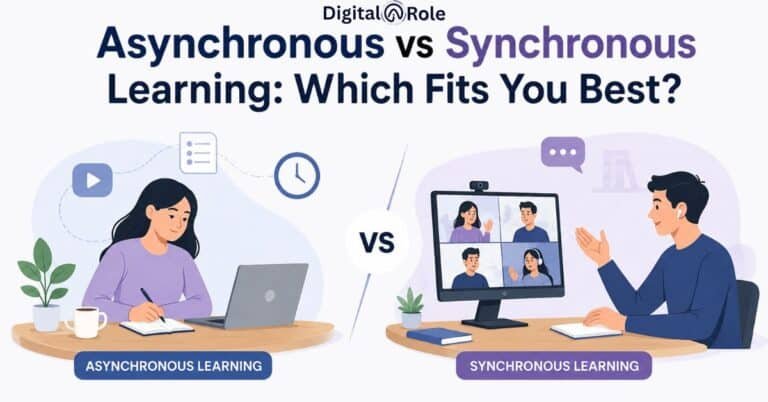
Collaboration technology should support both. Teachers should be able to review documents, leave comments and edit documents and resources as needed during a meeting, but also outside of a meeting as time allows.
3. Mobile Access
Not all teachers are seated at a desk. Checking messages, viewing documents and responding to collaboration tasks can be easier and more convenient with mobile access.
4. The integration with existing systems
Integration with existing systems is great.
When considering another platform, check whether it is compatible with the systems your school uses.
Fewer separate logins and duplicated workflows can help ease the adoption process.
5. Privacy and Security
Schools should examine permissions, data storage, account controls, third-party integrations, recording features, and applicable school or district policies.
This is particularly relevant if the tools include student information, recordings of students in class, or analysis using Artificial Intelligence (AI).
6. Cost and Licensing:
Take into account the total investment instead of the subscription price.
Schools need to review usage restrictions, additional features, storage, administration capabilities, support, and whether they have tried similar functionality with an existing education license.
The most important thing to remember is that a collaboration platform is not the program with the most features. Select the tool which the teachers can use reliably and with confidence.
How to use Digital tools for teacher collaboration effectively
Technology is not a magic bullet that equals collaboration. Schools need to establish a workflow around the tools.
Create a Shared Collaboration Workflow
Most importantly, do not choose a collaboration platform simply because it has the most features. Choose the tool that the teachers can use consistently and confidently.
A simple model is:
Discuss → Plan → Create → Review → Improve → Share
For example, imagine a grade-level team preparing a new unit.
The teachers meet in Microsoft Teams for a short meeting to set the learning goals. Then they edit the lesson plan together in Google Docs, add resources, review student data, and annotate activities. They teach the lesson, then discuss what went well and what could be improved, and save the lesson in a shared folder for future use by the lesson team.
Technology enables the process, and the conversation is professional.
Make collaboration asynchronous when possible.
Not all tasks need another meeting! Simple tasks can be accomplished asynchronously by teachers, for example:
- comments
- Shared documents
- Discussion threads
- Voice or video feedback
- Shared planning boards
- Collaborative notes
For instance, instead of scheduling a 30-minute meeting to discuss a lesson plan, teachers could leave comments with suggestions in the same document and save meeting time for matters that actually need discussion.
This would allow more flexibility when collaborating and could decrease the amount of meetings needed.
Build Collaboration Into the School Schedule
Technology can never solve a scheduling problem. Adding another digital platform when teachers don’t have time set aside for collaboration can just be another task. Common planning periods, targeted PLC blocks, peer learning opportunities, and leadership support are ways schools can support collaboration.
Within this category of tools, some can support reflection by providing teachers with another source of evidence to consider, in addition to observations, students’ work, and feedback from other teachers.
Common Challenges With Ed-Tech for Teacher Collaboration
While technology can enhance collaboration, it can also create new challenges if it isn’t used for a specific purpose.
This is a problem that many people face. This is an issue many people encounter.
Too Many Platforms and Notifications
One of the quickest errors is creating a new platform for every job.
Teachers may currently use one system for email, another for documents, another for messaging, another for meetings, and another for professional development.
The more tools you add, the more cognitive load you create.
Instead, build a small core collaboration stack and clearly define the purpose of each tool.
For example:
- Shared documents: lesson planning
- Team platform: communication
- Video platform: meetings
- Cloud storage: resources
- Project board: larger collaborative projects
The exact tools can vary. The principle is consistency.
Forced Or Checkbox Collaboration
Collaboration becomes less useful when it is only because a school requires teachers to complete a form, upload evidence, or attend a meeting.
Meaningful collaboration should have a purpose.
A teacher should be able to answer: “What are we collaborating on, and how does this help my teaching or students?”
Technology should make collaboration easier, not add another layer of administrative work.
Distinguishes between simple exchanges, such as sharing materials, and deeper professional collaboration involving activities such as team teaching, classroom observation and collaborative professional learning.
That’s why a school can have lots of digital communication without having meaningful professional collaboration.
Privacy, Security And Teacher Autonomy
Schools should also consider privacy and security before adopting collaboration technology.
Questions to ask include:
What student information is being collected?
Who can access shared files?
How are classroom recordings stored?
Can administrators control permissions?
Does the platform share data with third parties?
How does an AI-powered tool use submitted information?
Does the tool comply with school or district policies?
What happens to data when an account is closed?
Teacher autonomy matters too. Teachers must understand how the tool works and its role in the learning process, and they must not feel as if technology is being forced on them.
Conclusion
The best ed-tech resources for teacher collaboration aren’t always the latest or best platforms. But technology is only part of the equation.
A shared document can simplify lesson planning. A team platform can organize communication. A video-conferencing tool can connect a remote PLC. A project board can clarify responsibilities. Video-based coaching can make peer feedback more specific.
But technology is only part of the equation. Trust, time, clear objectives, positive leadership, and opportunities for teachers to learn from each other are all essential elements of successful collaboration.
This research from OECD TALIS illustrates how deeper professional collaboration is linked to teacher self-efficacy, job satisfaction, and some teaching practices; thus, conditions must be created where collaboration can actually occur.
The aim, in other words, shouldn’t be to provide teachers with more apps.
It should be to create a simpler way for teachers to communicate, plan, create, reflect, and improve together.
When schools choose technology around those goals, digital tools for teacher collaboration can become part of a practical professional workflow rather than another layer of work.
Technology can never solve a scheduling problem. Adding another digital platform when teachers don’t have time set aside for collaboration can just create another task. Common planning periods, targeted PLC blocks, peer learning opportunities, and leadership support are ways schools can support collaboration. Within this category of tools, some can support reflection by providing teachers with another source of evidence to consider, in addition to observations, students’ work, and feedback from other teachers.