11 Best Ed-Tech Tools for Career Guidance in 2026

Choosing a career is no longer as simple as picking a specialized degree that leads you to a job. With automation and AI innovation, the job market is changing; employers demand innovative, creative people. Students need practical ways to identify their strengths, explore career options, and build job-ready skills.
Ed-tech tools for career guidance make this process more accessible by combining assessment, AI recommendations, virtual learning workspaces, learning platforms, and application support.
AI career guidance tools help students find information on in-demand jobs, discover their interests and skills, and match them with suitable jobs or pathways. Students at every level need this guidance, especially in K-12, undergraduate, and post-graduation. Career counseling is shifting toward AI tools that analyze your skills and suggest a path for improvement.
In this article, I share the 11 best ed-tech tools for career guidance that elevate your career to the next level and help you choose the perfect job based on your skills and degree.
Career planning tools for students provide virtual job simulations with clear, actionable career paths.
Why Ed-Tech Tools for Career Guidance Matter in 2026
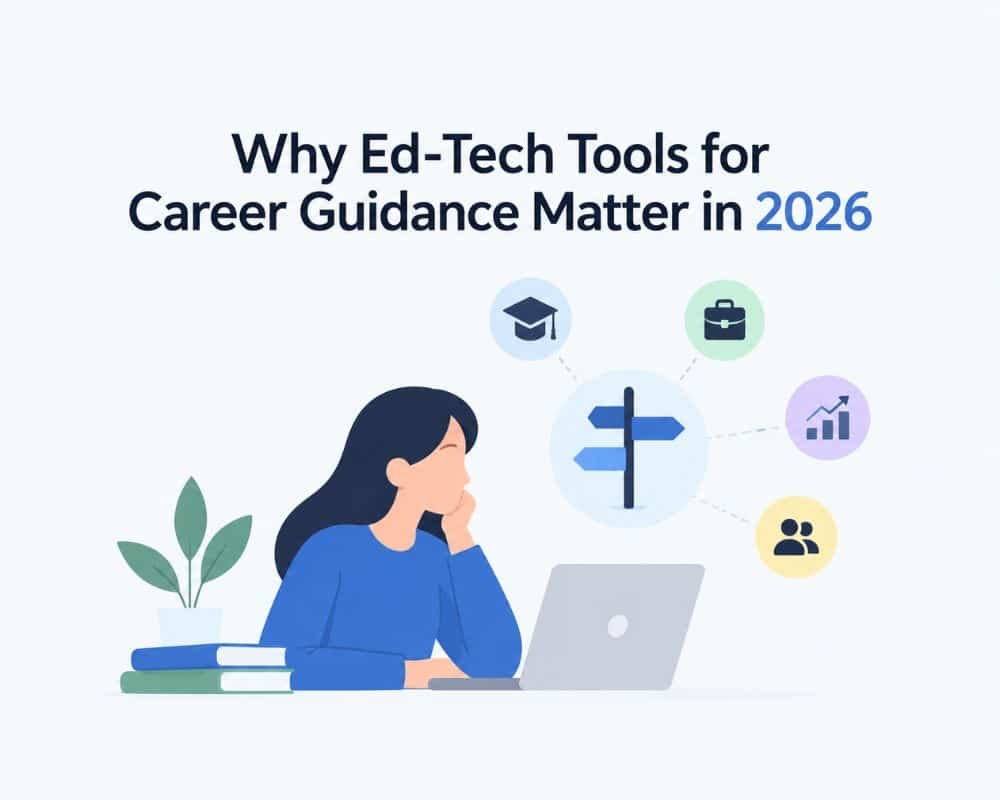
Ed-tech tools are essential in 2026 for career planning because career decisions are more complex for students, and students and job seekers need faster, more personalized guidance. These tools use AI assessments, career-matching platforms, skills analytics, and labor market data to help identify suitable careers, understand skill gaps, explore educational options, and make decisions based on current job market demand.
A survey on the future found that “20% of students aged 18-25 and 17% of 13-17-year-olds reported using AI tools for career guidance.”
Ultimately, AI career guidance tools serve as a transformative bridge—empowering teachers to unlock every student’s full potential and shape a resilient, future-ready generation.
Ultimately, integrating these AI-powered tools empowers teachers to personalize learning, streamline administrative tasks, and ultimately focus more on fostering deep student engagement and academic success.
Career planning is outgrowing the job market.
Career planning has traditionally relied on limited information, such as a student’s interests, academic strengths, or a simple career assessment. However, the job market is evolving rapidly. New occupations are emerging, and some current occupations are changing or being replaced by technology.
According to the WEF, 190 million new jobs will be created; net job creation is projected to reach 78 million in 2030. This shift requires students to learn what they like, where opportunities are emerging, and what skills those careers require.
Why Career Planning Tools for Students Need to Go Beyond Career Quizzes
Career AI quiz tools can help identify students’ interests but are not a complete answer. A good career planning resource should help learners move from ‘What career is suitable for me?’ to ‘What can I do to prepare for this?’
Students might require:
- Career assessment for interests, strengths, and potential career matches.
- Labor-market information to research salary, demand, qualifications, and new roles.
- Practical work experience in the real world, with a virtual internship, a job simulation, or experience in the workplace.
- Skill building through courses, projects, and industry-recognized credentials.
- Knowledge and guidance from experts who can demonstrate what a career is like.
- Portfolio development and CV building for presentation of learning as evidence of capability.
- Application support to enhance resumes, cover letters, profiles, and job applications.
The idea is to assess each tool based on the career outcome it will lead to.
For instance, a student can use CareerExplorer to investigate appropriate career paths, Forage to gain practical job-related experience, Coursera to acquire relevant skills and credentials, and Kickresume to improve their job application materials. So, the best digital career planning resources not only suggest a career but also add measurable steps toward it.
What are digital career guidance tools, and how do they work?
Digital career guidance tools are online resources that let students explore their interests and skills, learn about careers and experiences, build job-readiness skills, and prepare for work or further education.
Students can use these sites at various points in their career planning, not just for a single career quiz.
Here’s the typical process:
Career exploration → Skill development (through evidence-based learning) → Assessment (based on student data) → Career recommendations → Real-world exploration.
A student may start by taking a career assessment to identify appropriate career clusters, research those clusters with a virtual job simulation, gain the necessary skills through an online career cluster course, and then apply those skills to enhance a CV or application.
The Four Main Functions of Career Guidance EdTech
The best way to compare digital career guidance tools is by the results they can help students accomplish. Don’t think of each platform as interchangeable; think of four functions:
- Assess
Assessment tools assist students in understanding their interests, strengths, skills, and possible career matches.
Examples: CareerExplorer, Xello
- Explore & Experience
These applications let students go beyond research to explore real-world workplaces, professionals, job simulations, and virtual work experiences.
- Upskill
Students can build hands-on, job-relevant knowledge and skills through courses, projects, and professional learning on upskilling platforms.
Some examples include LinkedIn Learning and Coursera.
- Plan & Apply
These resources help students turn career interests and skills into real-world education plans, apprenticeship pathways, resumes, and job applications.
Examples: Unifrog, Pathway CTM, Kickresume.
Comparison table of career planning tools for students
| Ed-Tech Tool | Best For Students | Stage | Pricing | What Guidance Does It Give Students? |
| CareerExplorer | Students unsure about their career direction | Assess | Free; paid options available | Career assessment, personality/interest matching, career recommendations, and career-path exploration |
| Xello | School and high-school students planning their future | Assess / Plan | School/institution pricing | Helps students discover interests, explore careers, set goals, build plans, and connect education choices with careers |
| Forage | Students wanting real-world career experience | Experience | Free | Provides virtual job simulations, workplace tasks, employer insights, and completion certificates |
| Pathful | K–12 students exploring different careers | Explore | School/institution pricing | Virtual job shadowing, career speakers, workplace exposure, and insights into different professions |
| Nepris | Students who need industry exposure and mentoring | Explore | School/institution pricing | Connects classroom learning with industry professionals through virtual interactions, career talks, and mentoring |
| Springpod | Students exploring careers, universities, and industries | Explore / Experience | Free; some programs may vary | Virtual work experience, university experiences, career exploration, and insight into different study and career paths |
| LinkedIn Learning | Students who need job-ready skills | Learn | Subscription-based; free access may be available through some institutions | Career learning paths, professional skills, expert-led courses, and targeted upskilling for specific job roles |
| Coursera | Students seeking professional skills and credentials | Learn | Free courses available; paid certificates/subscriptions vary | Career-focused courses, professional certificates, projects, skills development, and preparation for specific career paths |
| Unifrog | Students making education and application decisions | Plan | Usually institution-funded; pricing varies | Career discovery, university/course research, application planning, goal setting, and application support |
| Pathway CTM | Students interested in apprenticeships and career pathways | Apply | Typically institution/employer-based; pricing varies | Career exploration, apprenticeship opportunities, pathway planning, employer connections, and work-based learning |
| Kickresume | Students preparing for internships and jobs | Apply | Free plan; paid plans available | CV/resume creation, application support, templates, AI-assisted writing, and tools for presenting skills to employers |
11 best ed-tech tools for career guidance in 2026
Here, I explain the best ed-tech tools for career guidance, which not only provide skill-gap education support but also offer actionable outcomes from each tool. It creates a career map when you follow it clearly, matching your skill set to a job.
1. CareerExplorer
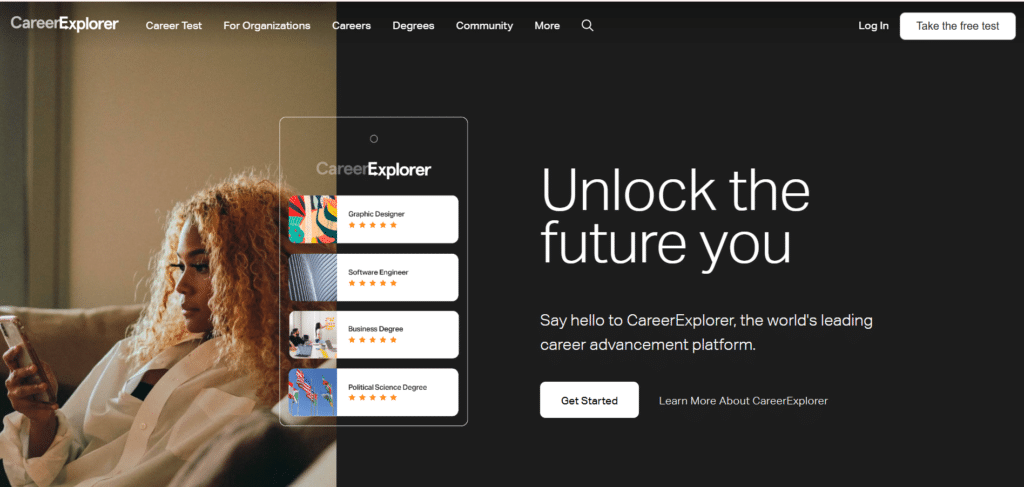
Best for career self-assessment.
Category: Assess
Ideal for: Career exploration students seeking career pathways to explore based on their interests, skills, and education interests and preferences.
What it does not do: CareerExplorer does not match students to actual careers but rather to potential careers. It brings together data on skills, required education, salaries, and career pathways. It also lets users explore the connections between occupations through its Career Map.
Actionable outcome: Students can finish with a short list of career options to explore further rather than a personality score. Consider comparing qualifications, salary, job outlook, and required skills for each option.
For whom is it appropriate? For students in high school beginning to think about their first career, for graduates who are thinking about pursuing a new career, and for people who are changing careers.
CareerExplorer has answered 400M+ questions, and millions of data points are generated each day to help inform CareerExplorer’s recommendations.
How it’s useful: Use the assessment as a starting point, not an end. A strong product workflow includes assessment, listing, brief research, and experience-based testing.
2. Xello
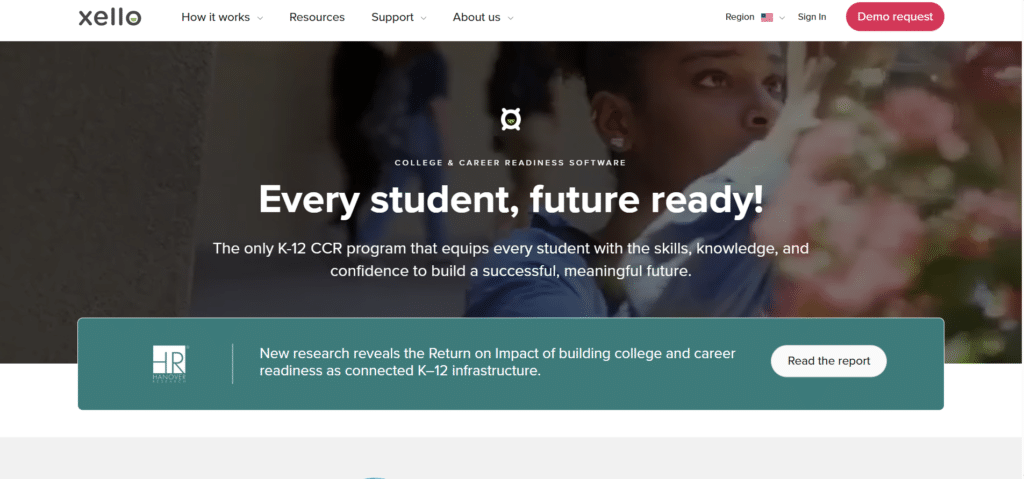
Best Career Planning Tools for Students
Category: Assess + Plan
Ideal for: K–12 students and schools requiring some structure in career exploration and planning.
What it is: Xello is a collection of career and personality assessments, career exploration, goal setting, student profiles, and labor-market information. It is not just a set of job suggestions but also a tool that helps students structure their interests and connect them to future education and career aspirations.
Actionable outcome: Students will develop a career plan based on their interests, guiding their next steps after high school.
Audiences: K–12 schools, counselors, teachers, and students who need career planning as part of the school experience.
3M+ student engagement hours annually.
How it’s relevant to schools: Xello is especially important for schools because exploring career options can be an integral part of a student’s planning process, not just a career quiz.
3. Forage
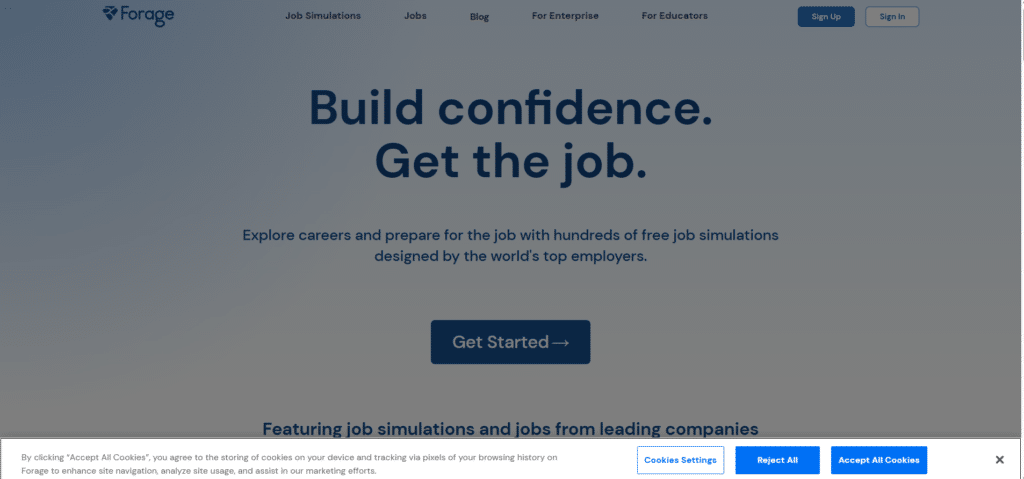
Best for virtual job simulations.
Category: Explore + Experience
Useful for students who wish to gain hands-on experience with real-world activities prior to pursuing employment or internships.
Forage is a free virtual simulation of real work situations developed by employers that you can do at your own pace. Students can work on projects, learn about different roles, and earn certificates they can use to demonstrate experience.
Actionable Outcome: Student completes a simulated workplace project with evidence of completion that can be discussed at interviews or as evidence of completion in professional development.
It is for university students, recent graduates, career explorers, and anyone who wants to explore a career without doing a physical internship.
9M+ students
250+ virtual job simulations
90+ employers
Participants are 3.3× more likely to land a job after participating, according to Forage.
How it is useful: Forage makes career advice shift from “Does this career interest me?” to “Could I actually do things associated with this career?
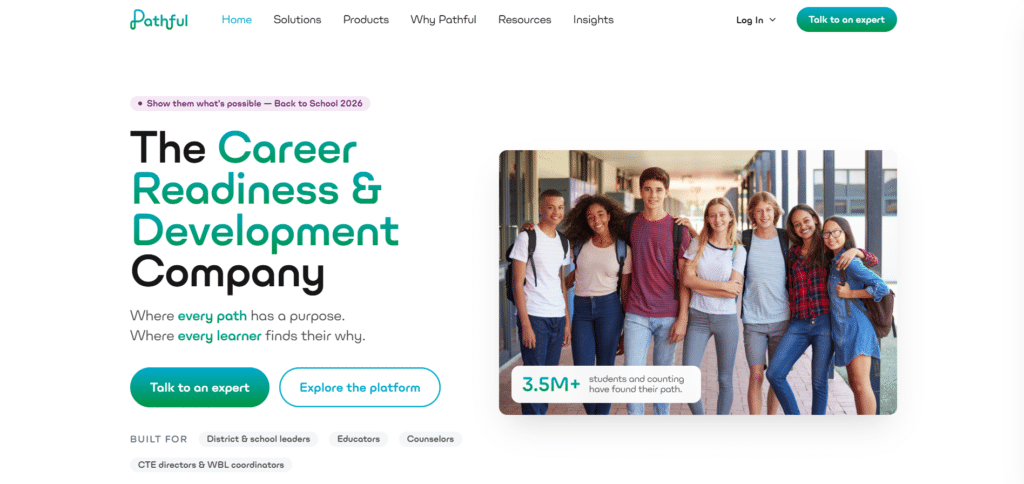
4. Pathful
The best option for virtual job shadowing.
Category: Explore + Experience
Best for: Students interested in learning what professionals do before choosing an academic or career path.
What it does not: Pathful does not provide students with any job offers. It has a network of 7,000+ industry experts that gives learners exposure to different careers and workplaces.
Actionable outcome: Students develop a better understanding of the career in practice and whether or not they will pursue a career in that field.
It is appropriate for K-12 students, schools, teachers, and career counselors who want to expose K-12 students to the workplace without students being physically present.
Pathful serves 3.5M+ students and 500+ career profiles.
5. Nepris
Best for Industry Mentoring
Category: Mentoring
Ideal for: Students who need direct contact with professionals to make career decisions.
It does: Nepris connects industry professionals and students virtually and provides industry experience. Students can research jobs, get answers, understand the science, technology, engineering, and mathematics (STEM) pathways, and review information like education needs and salary.
Actionable outcome: Students can ask authentic questions of professionals and use their responses to strengthen their career plans, rather than just following a recommendation or reading about a career online.
Target users: Students interested in STEM and other professional fields; schools looking to bring industry experience into the classroom
Afiniti AI/ML workexpereince research states that 80%+ of students who participated became interested in STEM, and 78%+ knew about STEM education options.
What it does: Nepris offers the human validation piece of the career guidance process. Students can get career suggestions from an assessment or AI system and meet with a professional to see whether those suggestions are practical in the real world.
6. Springpod
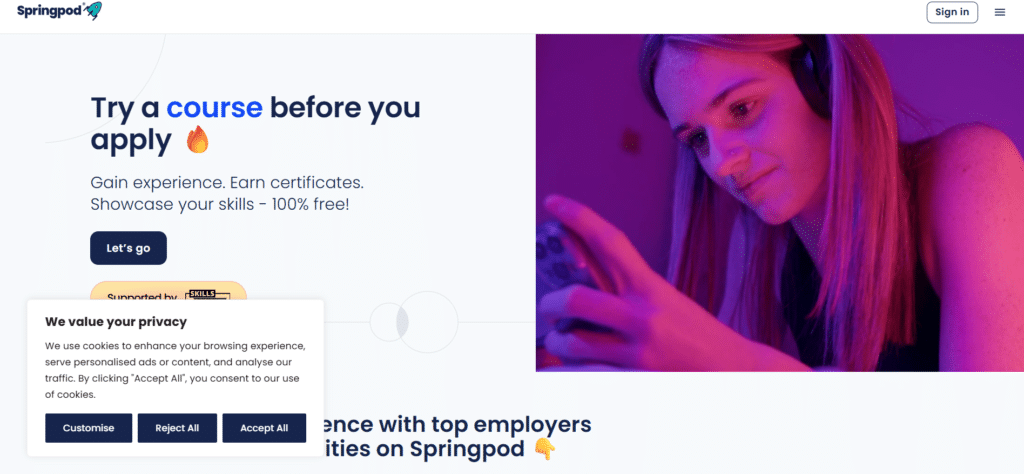
Best for Free Virtual Work Experience.
Category: Experience + Exploration
These resources are best for UK students who want to learn more about employers, universities, and career paths before making major decisions about their education or career.
What it offers: Springpod offers virtual work experiences, university experiences, employer programs, webinars, and certificates/badges. It focuses heavily on the UK, which can help students interested in education and career opportunities there.
Actionable outcome: Students can experiment with a career or university pathway before investing time and/or money and gain experience to use in applications.
Audiences: Primarily learners aged approximately 14-19, schools, colleges, and students interested in finding out more about university and career options in the UK.
Springpod states that 400,000 students and 4,000 schools and colleges have verified it, along with 300+ employer and university partners.
7. LinkedIn Learning
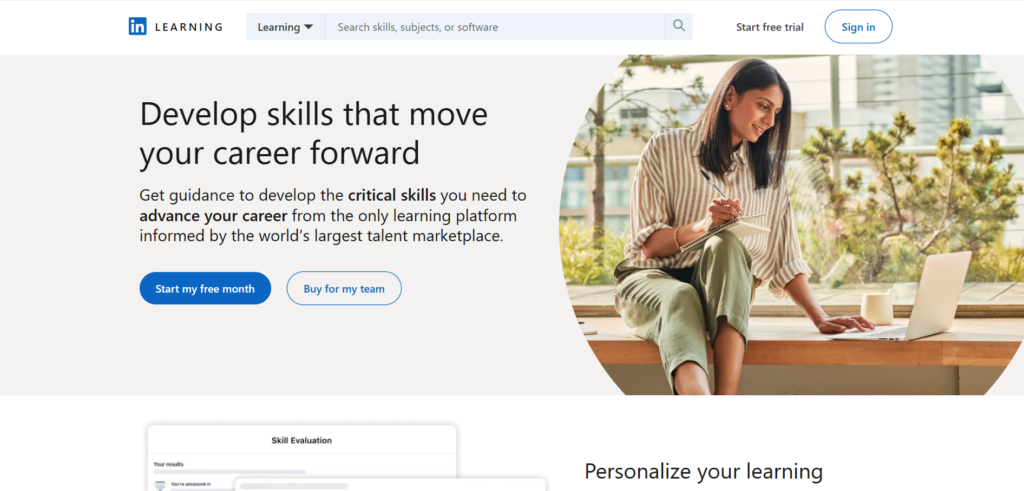
The best option for upskilling and AI career guidance.
Category: Upskill
Best for: Students who know the career they want but aren’t sure what skills they are missing or need to build to be job-ready.
It does this by providing learning paths, expert-led courses, role-specific skills, and learning resources that tie into the wider LinkedIn ecosystem.
These resources help students see what skills they lack and direct their learning toward filling those gaps, rather than picking a random collection of courses.
Actionable outcome: Students identify a skill missing from their repertoire and engage in deliberate learning to develop it for a specific purpose.
Target audience: University students, graduates, and career changers who want structured upskilling linked to careers or job roles.
LinkedIn Learning has 24,000+ courses taught by experts.
Why it’s helpful: Can be used to connect “I want this career” with “Here are the skills I need to develop” → “Here is how I develop these skills.” This makes it more practical than using online learning for certificates alone.
8. Coursera
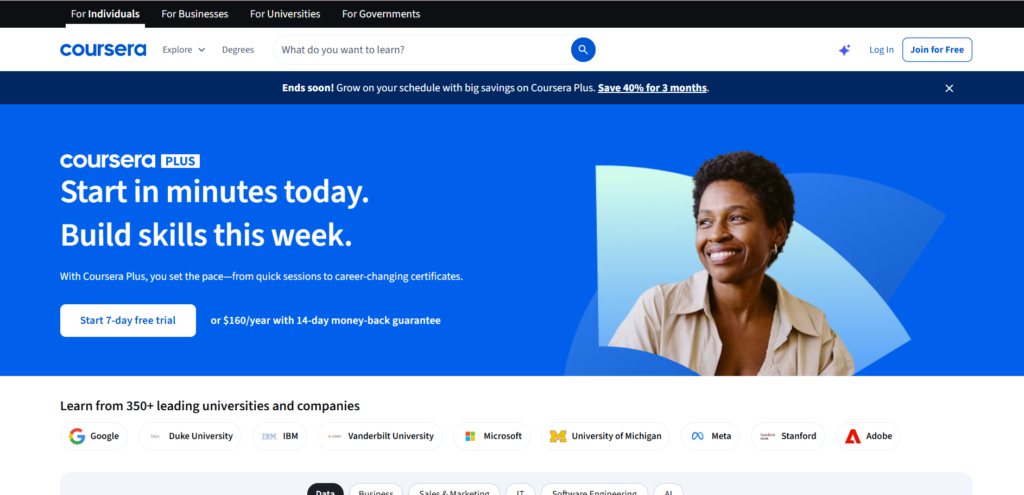
Best for industry-recognized skill credentials.
Category: Upskill + Credential
Ideal for students seeking a more organized approach to learning, hands-on projects, and credentials to enhance their professional profiles.
It offers university courses, professional certificates, career-focused certificates, industry learning, projects, and AI-powered learning experiences.
Actionable outcome: Students take career-oriented coursework, build skills, and earn a credential they can list on their resume or LinkedIn profile.
Target users: Students, graduates, career changers, and learners for specific professions.
Coursera claimed to have registered 175M learners in 2025 and to have collaborations with 350+ universities.
How it is useful: Students should select courses in reverse, starting with the job they want to pursue, rather than just picking courses they like.
Target job → Skills needed for that job → Learning pathway on Coursera → Project/credential → Application
This strategy links learning to a career pathway.
9. Unifrog
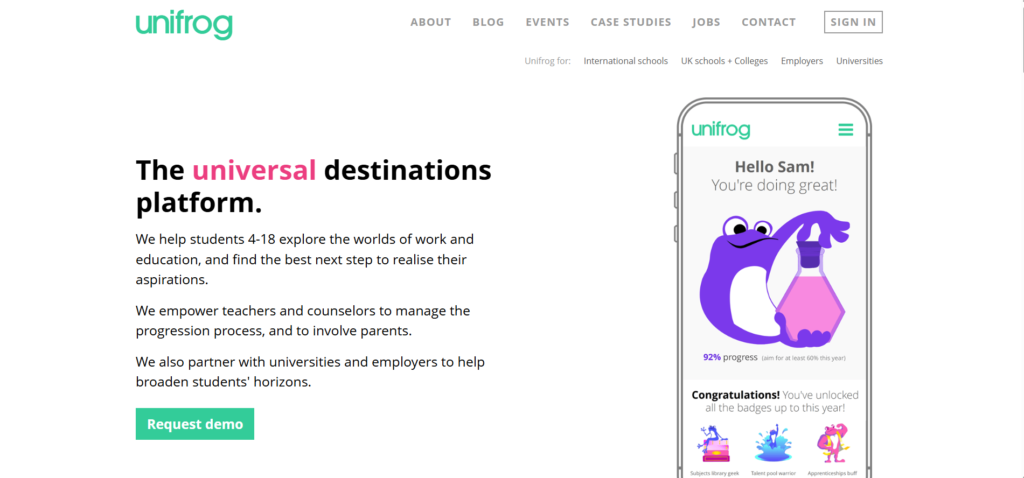
It is the best all-in-one career planning platform.
Category: Plan
Ideal for: Students who require one resource to guide them through the process of university, apprenticeship, scholarship, and career planning.
What it’s for: Unifrog combines university research, apprenticeships, jobs, scholarships, application tracking, and student planning. It can also support parent engagement and help students organise major education and career decisions.
Actionable outcome: Students have one place to search, compare, and plan their next step in education and/or career.
Ideal for use by students and schools in the UK with a focus on university and post-school career planning, but it is not limited to that.
Unifrog has been used by around 2.6M students worldwide, and 98% of partner schools say they recommend it.
How it’s useful: Students can work in a single environment to bring exploration and application together.
10. Pathway CTM
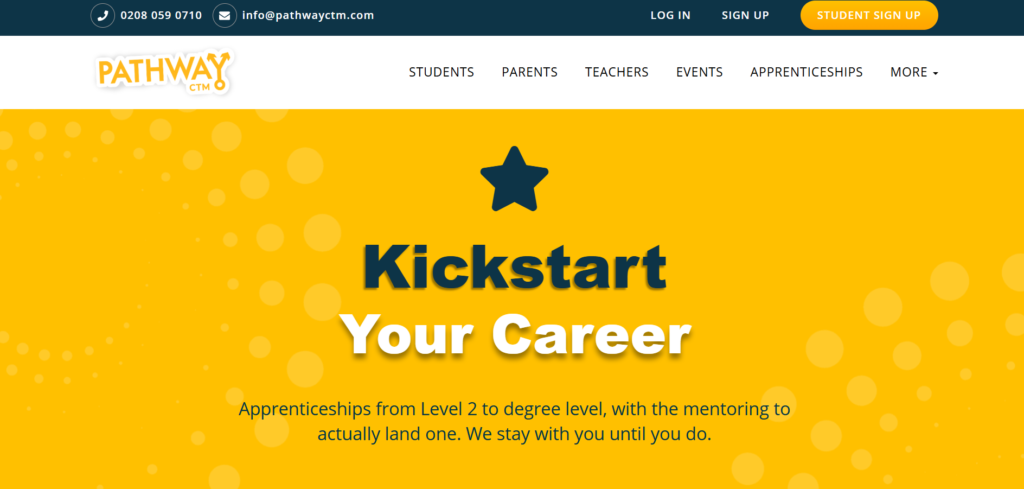
It is the best choice if you are planning your apprenticeship.
Activity: Plan + Mentoring + Placement
Best for: UK students looking to learn more and apply for apprenticeships.
What it offers: Pathway CTM lists apprenticeships, connects you with employers, offers CV and interview assistance, and offers a 1:1 mentor call. It aims to help pupils understand apprenticeship opportunities and prepare for the application process.
Productive action point: Pupils can change from saying ‘I’m interested in an apprenticeship’ to deciding what they want to do and what they can do to improve their chances.
Audience: Students aged 16+ interested in career pathways to apprenticeships in the UK, especially those who wish to gain employer exposure and guidance on applying.
According to Pathway CTM, 100K+ students are on its program, and students are 10 times more likely to get an apprenticeship through the platform. The 10× figure should be clearly attributed to Pathway CTM, not an independent investigation.
How it’s beneficial: It links career planning and actual opportunities, employer engagement, mentoring, and application preparation.
11. Kickresume
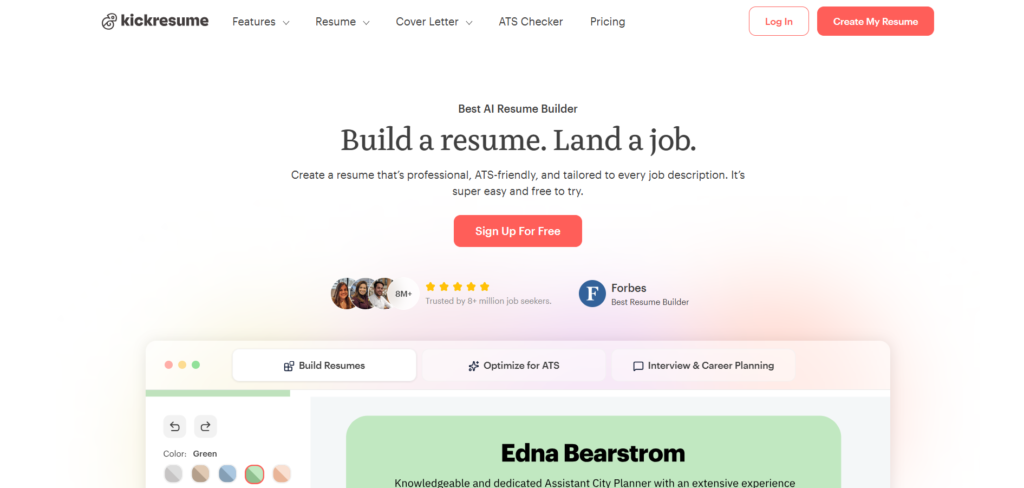
Best application preparation using AI.
Category: Apply
Ideal for: Students who are skilled or experienced and need help strengthening their application materials.
Features: Kickresume offers an AI resume builder, an AI cover letter generator, ATS checking, resume optimization, and an AI career map.
Actionable outcome: A student can turn newly acquired skills, projects, simulations, and experiences into a job-ready CV and application.
University students, graduates, career changers, and job seekers use it when applying for internships or full-time positions.
Kickresume reported creating 7.5M+ resumes and delivering 8M+ successful job seekers.
Where it’s beneficial: Kickresume works best at the end of a career process, not just as a resume builder. The tool is designed to package a student’s products for an employer after the student evaluates the career, gains experience in that field, develops skills, and builds evidence.
Conclusion
The best ed-tech tools for career guidance go beyond providing students with a list of potential careers. They help students move from self-assessment and career exploration to experience, skill development, planning, and job applications.
CareerExplorer and Xello help students explore career interests, while Forage, Pathful, and Nepris help them gain experience. Students can build job-ready skills through platforms like LinkedIn Learning and Coursera, and plan and apply through platforms like Unifrog, Pathway CTM, and Kickresume.
This depends on the student’s age, career stage, goals, and level of guidance. Schools and students should not choose a tool with all the bells and whistles, but one that helps them take the next step in their career progression.