13 Best AI Tools for Teachers in 2026: Don’t Miss Out
You’re walking into your class on Monday with every lesson planned, quizzes ready, and an assignment graded, and personalized learning material is prepared in minutes; you do not struggle for hours.
This feels unrealistic, but the best AI tools for teachers are now hidden gems for teachers because they are more accurate and effective than chatbots. Instead of spending hours on repetitive administrative tasks, you do this with a streamlined workflow by giving simple prompts and building your own workspace for students, which helps them to learn and succeed.
AI tools for teachers act like AI assistants for teachers, which create engaging lesson planning in minutes, automate grading, generate quizzes, personalize learning resources, and simplify classroom management.
In this guide, I explore 13 best AI tools for teachers that we tested for 3 months and give you honest reviews with their pros and cons, their pricing tier, and their free version. These AI tools are tested on their ease of use for educators, impact on classrooms, and productivity benefits.
Why Are Teachers Using AI More Than Ever in 2026?
Most teachers are not demanding. But their larger workload remains the same, but is not paid for preparing engaging lessons and quizzes, responding to parents, and grading assignments. AI in higher education breaks the hours-long struggle and converts in seconds, which saves you a lot of time.
When the workload is high, many teachers are now shifting to the best AI tools for teachers in 2026, which makes their daily tasks easier and helps them reclaim their valuable time for student learning and career improvement.
“69% of teachers say AI in education improves their teaching methods and skills.” Today’s teaching assistant is no ordinary bot capable of writing content; it’s an AI-driven assistant.
They can develop entire lesson plans, design differentiated learning activities, automate grading, develop classroom presentations, write parent emails, and even create standards-based quizzes in a matter of minutes.
From the top AI tools for teachers in the classroom for 2026 to the best AI quiz creation tools for teachers, these tools make everyday teaching easier without sacrificing quality.
You can save teachers hours per week using AI.
Teachers can save hours weekly with AI.
How much of the teacher’s week is off the clock is often a shock to many teachers. Education Week reports teachers spend 29 hours a week on non-teaching tasks, such as lesson planning, paperwork, and parent communication.
Luckily, AI can streamline a lot of these mundane tasks, letting educators concentrate on teaching rather than paperwork. Thanks to the proper AI tools, you can:
- Create a lesson plan in minutes, not hours.
- Generate quizzes, worksheets, and tests in a flash.
- Use automated marking and give personalized feedback.
- Create professional parent notes and classroom announcements.
- Create interesting presentations and class activities.
- Integrate modifications to learning tasks for varying student abilities.
Many teachers also say they use AI to brainstorm creative activities for their classroom, to create discussion questions, and to create differentiated assignments for multiple reading levels. AI is not meant to replace the teacher’s skills but rather to be an effective assistant that can aid in preparation time and take off the burden while retaining the teacher’s responsibility for final decisions.
Key Takeaway: AI is not a replacement for teachers; it is a tool to eliminate repetitive tasks and allow teachers to spend more time teaching, mentoring, and supporting their students.
Benefits of AI tools in the Classroom
AI in education is more than just about time saved. The best AI teaching tools enable teachers to deliver more engaging, personalized, and efficient learning experiences.
The greatest advantages of doing so are:
- Quick and efficient lesson preparation using curriculum-aligned materials.
- Automated grading providing faster and more consistent feedback.
- Adaptability of content to different levels of skill (personalized learning)
- Increased student engagement with interactive quizzes, polls, and activities.
- Accessibility: reading level adjustments, transcription, and language support.
- Improved classroom organization through decreased administrative burden and increased communication.
An expert teacher interviewed for the study says that AI “allows me to have more time to work with children than to make worksheets. It is a testament to the power of AI and how it helps teachers focus more on student success and less on mundane work.
Will AI replace teachers?
The answer is no.
AI can help with the mechanics of the classroom and create resources to help educate students, but great teachers bring empathy, creativity, critical thinking, and the human touch that cannot be replaced by AI.
AI cannot comprehend the emotions of students or develop rapport with them, nor can it make nuanced decisions about how to teach based on classroom dynamics.
AI should be used as a tool to assist teachers, not replace them, is the consistent message many leaders and the U.S. Department of Education give to students and parents. The definition of a successful classroom is one where AI is fast and efficient, but it is also complemented by the professional judgment, experience, and personal guidance of a teacher.
In practice, the best strategy is to leverage AI to do repetitive tasks and let teachers inspire, mentor, and support each student to their full potential.
Quick Comparison Table: 13 Best AI Tools for Teachers in 2026
When you choose the right AI tool, it depends on teachers’ goals and what they want to do with AI models. Such as ChatGPT, excel at gathering static data for self-paced model while Curipod is eleverate live paticipents for asynchronous vs synchronous learning environments.
Here I give you a quick comparison table that helps you to identify which tool is best for a specific task, its free version, and price tier. When you buy a tool, contact the tool’s team and double-check the price before buying. We aren’t earning any commission; this is written from our research and testing perspective.
| Tools | Best for | Free version | Monthly Price tier | Why it’s best for |
| ChatGPT (OpenAI) | Productivity | Yes, available. | Plus $20/mo | It automates lesson planning, email writing, and brainstorming and handles administrative tasks effectively. |
| Gemini | Productivity and Classroom integration | Yes | AI Plus: $4.99/mo · AI Pro: $19.99/mo | It seamlessly integrates Google Docs, Slides, Drive, and Classroom. |
| MagicSchool AI | Best Overall AI Tools | Yes | Plus: $12.99/mo ($8.33/mo billed annually) | This tool is built specifically for teachers with lesson planning, generating quizzes, rubrics, IEPs, and different activities. |
| Brisk Teaching | Lesson planning | Yes | Pro: ~$8.33/mo ($99.99/yr) · Districts: custom quote | It supports Chrome extensions for educators. Directly makes quizzes from webpages and docs. |
| NotebookLM (Google) | Lesson planning and research assistant | Yes | Bundled in Google AI Plus: $7.99/mo (NotebookLM Plus tier) | Organizing the teaching resources and generating summaries from uploaded documents. |
| Khanmingo | Classroom management/tutoring dashboard | Free for teachers (US) | N/A for teachers—only learners/parents pay $4/mo | It supports personalized tutoring using guides and Socratic questions. |
| Gradescope | Best for grading | Yes (individual instructors) | Institutional: custom, per-student/year (no flat monthly rate) | AI helps to group similar answers and speed up grading while maintaining consistency. |
| Classpoint AI | Quiz creation | Yes (Basic) | Pro: $8/mo ($96/yr) | Converts AI PowerPoint slides into quizzes. |
| Diffit | Best for personalized learning | Yes | Individual Teacher: $14.99/mo ($149.99/yr) | Instantly adapts reading material for different grading and ability levels. |
| Grammarly | Parents’ communication and create reports | Yes | Pro: $30/mon | It improves emails, reports, and classroom communication with AI assistance. |
| Canva AI | Make Interactive Design | Yes | Pro $12.99/mo | It is a perfect design tool for creating engaging worksheets, posters, and cards. |
| Curipod | Classroom Management | Yes | Premium: $9/mo ($7.50/mo billed annually) | Creates interactive quizzes, live polls, and AI-powered feedback on students’ assignments. |
| Otter.ai | Best for lecture notes | Yes (300 min/mo cap) | Pro: $16.99/mo ($8.33/mo billed annually) | Helps to record the lecture and meeting automatically. |
Now I break down every tool with its best features, why teachers use it, and its main purpose for teachers.
Best productivity Tools for teachers
Best AI Tools for Teacher Productivity 2026
1. ChatGPT
Great for: Planning lessons, creating worksheets, planning activities in the classroom, emails, and rubrics. It is the best tool for teacher productivity.
The versatility of ChatGPT makes it one of the top AI tools for teachers in 2026. It assists teachers in writing lesson plans, preparing worksheets, writing parent emails, creating classroom activities, and compiling assessment rubrics in mere minutes. Teachers can also use it to brainstorm project ideas, add up the details of difficult topics, and come up with discussion questions on any subject.
Key Features
- AI-generated lesson plans
- Create quizzes and worksheets.
- Parent email drafting
- Rubric generation
- Classroom activity ideas
Pros
- Provides a high-level overview of the plan to assist in making informed decisions.
- It increases the productivity of teachers by giving them lesson planning in minutes.
- Covers all subjects and grade levels
- Easy to customize outputs
Cons
- Needs to check the facts before using in class
- The advanced features are only available with a paid subscription
Pricing: Free plan is available, and ChatGPT Plus is available as a monthly subscription.
Free Version: Yes.
Why Teachers Love It.
Altogether, ChatGPT’s versatility is one of the reasons it’s one of the best AI tools for teachers’ productivity in 2026, as it lets teachers get through mundane tasks in less time and concentrate more on student learning.
Best use in the classroom
Create a full 45-minute lesson plan in one prompt along with learning goals, discussion questions, an exit ticket, and class homework.
Pro Tip: Ask ChatGPT: “Write a grade 7 science lesson about photosynthesis using Bloom’s Taxonomy questions, designed activities that support each question, and a five-question exit quiz.”
2. Google Gemini
Best For: Teachers who are using Google Classroom, Google Docs, and Google Slides.
Google Gemini is a great AI tool for schools that are already utilizing Google’s ecosystem. It integrates with Google Workspace, enabling teachers to draft lessons, summarize documents, make presentations, and even create quizzes, all without ever leaving the workspace. It can also be helpful in developing new classroom materials based on current Web information.
Key Features
- Google Apps for Education integration for Google Docs and Google Slides.
- AI-powered research assistance
- Presentation generation
- Classroom-ready content creation
Pros
- Great for Google Workspace users!
- Easy to work with fellow staff members
- Real-time web information
Cons
- It is still important to check responses for accuracy.
- There are advanced features that need Google AI plans.
- The pricing is a free plan with a premium plan upgrade.
Free Version: Yes.
Why it is best
Teachers love the way Gemini saves them time switching between apps when preparing lessons and creating classroom presentations.
Best Classroom Use Case.
Design Google Slides presentations with speaker notes and discussion prompts and assessment questions directly from a lesson topic.
ChatGPT vs. Google Gemini
If you want to create a lesson plan or craft writing, go with ChatGPT. For heavy users of Google Classroom and Google Workspace, you should opt for Google Gemini.
3. MagicSchool AI
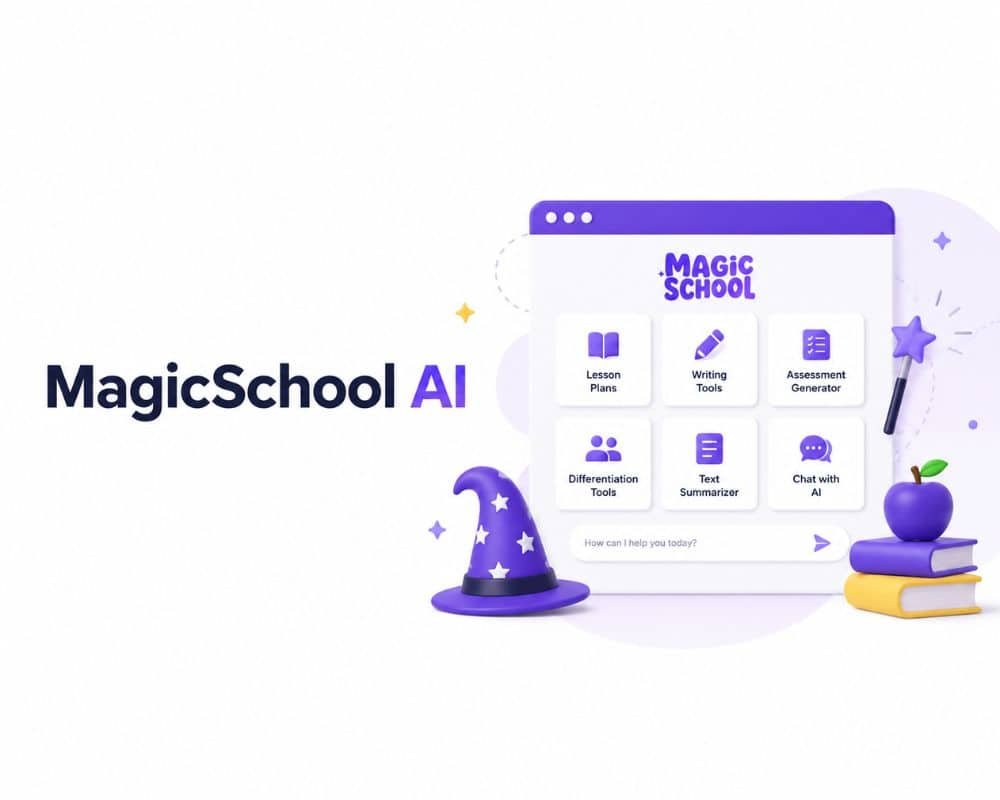
Ideal for teachers who plan lessons, develop assessments, and need to be productive in the classroom.
Designed specifically for educators, MagicSchool AI is one of the best free AI tools for teachers in 2026. It provides dozens of tools covering education and creating lesson plans, rubrics, quizzes, IEP supports, classroom newsletters, and differentiated learning materials to meet teaching standards.
According to the research, 71% of teachers who have been using MagicSchool AI spend the time saved on instructional planning, revealing that it is a productivity tool and not a substitute for teachers.
Key Features
- Standards-aligned lesson planning
- AI Rubric + Quiz Generator
- Inclusive provision and accommodation support
- Parent communication tools
- Classroom resource templates
Pros
- Designed for the teacher
- Easy-to-use interface
- It offers a robust free plan, outfitted with an assortment of AI features.
Cons
- Some of the better tools are only subscription-based.
- Most appropriate for grades K–12.
Pricing: Free plan; premium plans available at extra cost.
Free Version: Yes.
Why it’s best for teachers
Unlike traditional AI chatbots, MagicSchool AI is aware of the requirements in the classroom and generates learning materials that require minimal editing, making it one of the most useful AI helpers for busy teachers.
Best Classroom Use Case
Create a standards-aligned lesson plan, differentiated activities, a classroom quiz, and a grading rubric on the same topic in minutes.
4. Brisk Teaching
Best For: AI generation of lesson plans, quizzes, presentations, and feedback for classrooms.
Brisk Teaching is one of the fastest-growing AI tools for educators since it is directly integrated as a Chrome extension, enabling teachers to develop instruction without having to switch between various apps. No matter if you are creating a lesson plan, designing a quiz, or giving personalized feedback to your students, Brisk simplifies your workflow with a few clicks.
Brisk’s most impressive features are the ability to create classroom-ready resources directly from web pages, Google Docs, PDFs, and YouTube videos. Educational research shows that Brisk can produce lesson plans, quizzes, and slide presentations, making it a great productivity tool for busy educators.
Key Features
- AI-generated lesson plans
- Creating Quizzes and Worksheets.
- Presentation generation
- Personalized student feedback
- This is a Google Workspace extension to be installed in Chrome.
Pros
- Easy integration with Chrome and Google Classroom
- Increases your efficiency and saves you hours of lesson preparation
- Supports differentiated instruction
Cons
- There are some advanced features that will need to be purchased for a premium subscription.
- Compatible with the Chrome suite of apps.
Pricing: Free plan with premium options.
Free Version: Yes.
Why Teachers Love It:
Teachers like Brisk because it alleviates repetitive tasks and maintains all in their current browser. It’s the ideal option for teachers who want to boost productivity without having to learn the entire platform.
Best Classroom use case
In minutes, convert a webpage into a complete lesson plan with discussion questions, a presentation, and an exit quiz.
5. Notebook LLM
Best For: Planning, preparation, and organization of teaching resources, study guides, and curriculum planning.
Given how easy it will be to upload and interact with teachers’ notes, lesson plans, presentations, research papers, and PDFs, it’s easy to see why Google’s NotebookLM is one of the most promising AI tools for teachers in 2026.
Unlike conventional chatbots that use general web data, NotebookLM will produce answers based on the documents you furnish. It is perfect for summarizing curriculum content, study guides, revision notes, and classroom content and lowers the chances of irrelevant responses.
Key Features
- Upload PDFs, Google Docs, and presentations.
- Summary and study guides generated by AI.
- Curriculum-based question answering.
- Resource organization for several subjects.
Pros
- Utilizes personal trusted teaching materials.
- Designed for improved curriculum planning.
- Supports the organization of large collections of educational resources.
Cons
- Must have high-quality source documents
- The collaboration features are still in development.
Pricing: This is free, but there are premium Google AI features that can be paid for!
Free Version: Yes.
Why teachers love it
Notebook LLM acts like a teacher’s assistant, which helps them to quickly find information across hundreds of pages of curriculum materials instead of manually searching.
Best Classroom Use case
Upload the entire book or chapter of study and instantly generate quizzes, revision grades, discussion questions, vocabulary lists, and students’ study notes.
6. Grammarly
Best for: Parent communication, reports, and written feedback.
Teachers can rely on Grammarly to create clear, professional, and error-free communication. It enhances grammar, clarity, and tone for report comments, parent letters, newsletters, and classroom directions and saves editing time.
Key Features
- Correcting grammar, punctuation, and spelling
- Tone suggestions
- AI writing assistance
- Email and document editing
Pros
Improves writing quality and saves editing time.
Cons:
Grammarly Premium is needed for its advanced writing capabilities.
Pricing:
A free plan is available; premium plans are available.
Best Classroom Use Case
Create slicker parent e-mails and student progress reports.
7. Otter.ai
Ideal for lectures, meetings, and accessibility.
Otter.ai instantly transcribes classroom conversations, meetings with staff, and lectures. It’s especially useful for teachers in order to take notes on meetings with accuracy and for teachers who have accessibility needs and would like to help their students who have accessibility needs.
Key Features
- Live transcription
- Automatic meeting summaries
- Searchable notes
- Speaker identification
Pros
Captures transcription data accurately, allows sharing of notes, enhances accessibility.
Cons
Only for one person, not for mobile devices.
Pricing
Free plan, premium accounts.
Best Classroom Use Case
Record classroom discussion or faculty meetings and have searchable notes for future reference.
Best AI Tools for Teachers in the Classroom 2026
8. Gradescope
Ideal For: AI-based assessment and grading, feedback.
If a huge amount of your week is spent grading, Gradescope can significantly alleviate that burden. It is a tool that is widely adopted in schools and universities, leveraging AI to cluster similar student answers and enable educators to craft feedback once and reuse it for all answers.
Instructors consider a group of answers rather than one by one to achieve quicker and uniform evaluation. This functionality greatly shortens the time spent on grading and guarantees fairness and quality.
Key Features
- AI-assisted grading
- Automatically classify similar responses within a group.
- Rubric-based assessment
- Digital assignment management
- Detailed performance analytics
Pros
- Grades faster than a human can!
- Clear and consistent feedback
- Is willing to accommodate large class sizes
Cons
- Learning curve for first-time users
- This resource is not freely available on the web but can be accessed through paid services.
Conditions of pricing: Depends on the institution.
Limited Access: Free for a limited number of schools and organizations.
Why Teachers Love It
Teachers appreciate the ability to make grading more efficient and rapid while saving valuable instructional time and student support opportunities by using Gradescope.
Best Classroom Use Case
Use a single rubric to grade hundreds of short answers and give uniform feedback to all students!
Gradescope’s AI organizes similar answers together, allowing teachers to provide a single response to many answers and save valuable time.
9. Curipod
Ideal For: Interactive Learning, Live Polls, and AI-driven Classroom Engagement.
Curipod can be a great AI tool for teachers in 2026 to create more engagement and participation in lessons. It enables educators to create engaging presentations that include live polls, quizzes, word clouds, drawing activities, and instant formative assessments.
With a single prompt, Curipod’s AI can create full lesson presentations and give live feedback on student responses. This is particularly useful if you want to keep your students engaged and not passive listeners during the lesson.
Research underscores the powerful feature of Curipod that allows teachers to embed AI-powered polling, interactive quizzes, and rubric-based feedback directly into their classroom presentations, enabling teachers to gauge understanding while students are learning.
Key Features
- AI-generated interactive lessons
- Immediate polling and quizzes.
- Instant formative assessment
- AI-powered student feedback
- Collaborative classroom activities
Pros
- Boosts student engagement
- Encourages classroom participation
- Easy to incorporate into daily instruction.
Cons
- For live activities, an internet connection is necessary.
- For advanced collaboration tools, you will need to opt for premium plans.
The pricing of this plan is free for the plan with paid upgrades.
Free Version: Yes.
Why Teachers Love It
In Curipod, presentations become interactive learning activities, making lessons more interesting and making teachers instantly aware of students’ comprehension.
Best-in-class classroom use case
Generate a fully interactive lesson with AI-generated slides, live polling, exit tickets, and formative assessment for students to engage in real time.
10. Deffit
Best For: Personalized learning and differentiated instruction.
Diffit is a tool that automatically works to make reading material and tasks easier for students with different learning capabilities. All you need to do is copy and paste a text or an idea, and the tool will generate multiple reading levels, vocabulary lists, comprehension questions, and activities for the classroom. Great for students with special needs or ELL students.
Key Features
- Reading-level adjustment
- AI-generated comprehension questions
- Vocabulary support
- Standards-aligned resources
Cons: Lines are hard to read; lacks a social studies component.
Pos: Allows you to enjoy premium features with a subscription.
Pricing: Free plan is available.
Best Classroom Use Case
Create different reading levels of an article to use in a multi-ability classroom.
11. Khanmigo
Ideal For: AI tutoring, personalized student support.
Khanmigo, developed with the aid of Khan Academy, is a virtual tutor that asks students questions to help them solve problems, rather than just giving them answers. It promotes thinking skills and provides a new approach for teachers to facilitate independent learning.
Key Features
- AI tutoring
- Guided learning
- Socratic questioning
- Personalized practice
Pros: Encourages deeper learning and student independence.
Con: Not available in all areas.
Pricing: subscription (selected free access).
Best Classroom Use Case
Supplement students’ learning for extra practice outside of class.
12. ClassPoint AI
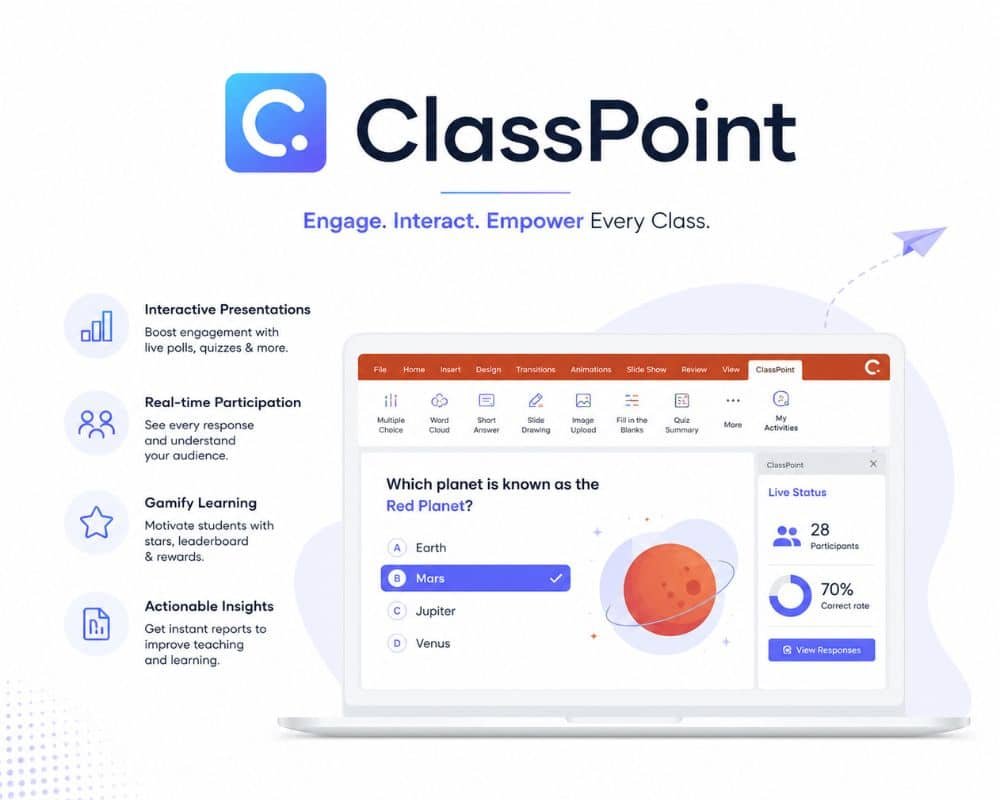
Ideal for: Creating quizzes in PowerPoint using artificial intelligence.
For teachers in 2026, ClassPoint AI is a great option for creating quizzes with AI. Transforms existing PowerPoint slides into engaging quizzes within seconds, without having to build assessments from scratch.
Key Features
- AI quiz generator
- PowerPoint integration
- Live classroom polling
- Instant assessment
Pros: Saves preparation time and increases classroom participation.
Cons: Best experience requires Microsoft PowerPoint.
Pricing: Free plan and premium plans.
Best Classroom Use Case
Make a presentation a quiz session, using AI to generate it.
13. Canva AI
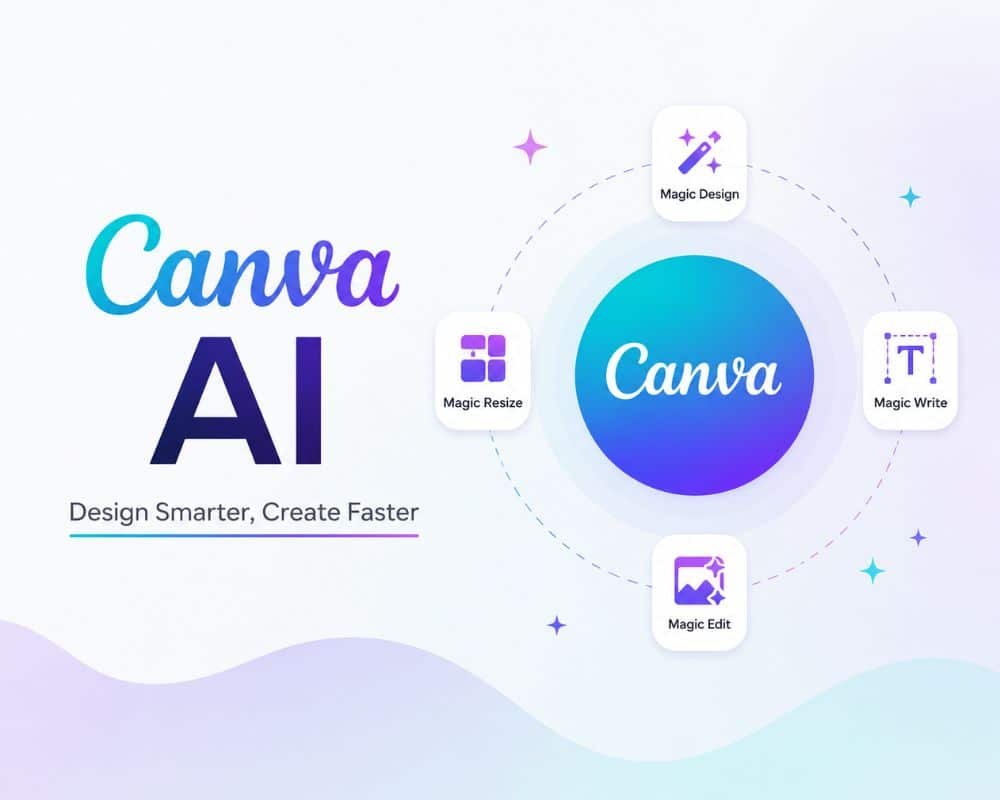
Ideal for classroom presentations, worksheets, and educational visuals.
With Canva AI, educators can create high-quality classroom content efficiently with AI-driven design ideas and content creation. It streamlines the process of creating visual content for any subject, from presentations to infographics, worksheets, and more.
Key Features
- AI presentation generator
- Worksheet templates
- Image generation
- Classroom posters and infographics
Pros:
- It has beginner-friendly designs with an extensive template library.
- It has access to sharing and collaborative editing
- Interactive card design for students.
- Canva AI Studio gives free access for customizing designs and photos.
Cons:
Some designs require Canva Pro.
Pricing:
Free version available. Canva Pro is required for advanced design.
Why teachers love it
The most interactive thing is that it makes realistic designs for the classroom. Makes engaging presentations and posters that help students understand easily.
Best Free AI Tools for Teachers 2026.
You’re not in trouble if you are seeking to use AI in your classroom within your budget. The best free AI tools for teachers in 2026 often have robust free tiers
It includes tools for lesson preparation, creating quizzes, allowing for personalized learning, and facilitating engagement in the classroom. Most teachers will be able to complete day-to-day teaching with the free versions, while the higher-level plans provide additional features.
| AI Tools | Free Plan | What you get for Free | Paid Plan best for |
| ChatGPT | Yes | Lesson planning, worksheets, quizzes, emails, and brainstorming. | Faster responses, advanced AI models, increased usage limits. |
| Magicschool AI | Yes | AI-generated, high-quality lesson plans and rubrics, quizzes, IEP tools, classroom resources | Unlimited generations, premium teacher tools, and school-wide features. |
| Notebook LLM | Yes | Upload documents, AI summaries, study guides, curriculum organization | Additional AI features with premium Google AI plans |
| Diffit | Yes | Reading-level adjustments, worksheets, comprehension questions, and more exports | Advanced customization, Higher usage limits raised |
| Curipod | Yes | Interactive lessons, live polls, quizzes, and classroom activity | Premium templates, analytics, and collaboration tools. |
| Brisk teaching | Yes | Chrome extension, lesson planning, quizzes, presentations, and feedback. | Advanced AI tools, additional integrations with the classroom. |
The free plans are sufficient for most teachers to start using AI-powered teaching. For lesson planning and teacher productivity, ChatGPT and MagicSchool AI are great options, and for creating engaging in-class experiences, Curipod and Brisk Teaching are great options. For differentiated learning materials, Diffit is a top choice, and for organizing curriculum resources and creating study guides, NotebookLM is recommended.
For those just getting started, start with ChatGPT, MagicSchool AI, and Brisk Teaching. They take care of lesson planning, content creation, classroom activities, and productivity as a team (and without paying a subscription fee).
Conclusion
The selection of the most suitable AI tools for teachers in 2026 isn’t about replacing their skills but about utilizing them to the best of their capabilities and saving time.
From lesson planning support, grading, building quizzes, and engaging the classroom to daily productivity, the right AI tool can streamline your workflow and enable you to focus on what matters
It supports your students. Consider using free tools such as ChatGPT, MagicSchool AI, or Brisk Teaching first, and then add more tools as your classroom requires.
In 2026 and beyond, as AI evolves and becomes more accessible, you can use AI responsibly alongside your teaching experience to make lessons more engaging, enhance learning, and develop a more efficient, future-proof classroom environment.