Best apps for teachers: 12 time saving picks for teachers
Teachers already have too much work to do, so educational technology in 2026 should save time. According to recent Education Week reporting, teachers use an average of 50 ed-tech tools per school year. Meanwhile, a 2025 UK technology survey of primary and secondary schools found that 44% of primary teachers and 42% of secondary teachers felt technology has decreased their workload.
While teaching can be fulfilling, it can also come with a never-ending list of tasks. From lesson planning and grading to keeping students engaged and staying organized, teachers have a lot to handle. The good news is that the proper technology can help take at least some of that off their plates.
We’ve compiled a list of the best apps for teachers in 2026 to help students save time and get everything they need done in the classroom.
Whether you’re looking for the best apps for teachers to use in the classroom or for apps to help with lesson planning, there’s something here for everyone. We’ll take a look at some of the best teacher apps to use in 2026 and the features that make them worth using. From basic teacher apps to apps that help with everything, including communication and planning, you’ll find something for your classroom.
These are some of the most useful apps teachers use to spend less time doing redundant tasks and more time focusing on their students.
Why teachers need time-saving apps in 2026
As the last student leaves the classroom, a teacher’s day is just beginning. Many educators are now turning to these top-rated AI tools for modern teachers, which streamline grading and lesson planning.
Lessons to make, homework to mark, attendance to take, emails to reply to and so on. Although they can be relatively simple tasks on their own. EdTech for teacher collaboration needs time-saving apps that help with daily routine tasks; multiplied by 50 students and shared across a group of young English learners, they can still take up a lot of a teacher’s time.
The hidden workload behind teaching
The preparation work involved in teaching.
Teaching isn’t simply about lesson preparation and lecturing in front of students. Teachers must also manage attendance, record-keeping, school correspondence, marking, lesson planning, and all manner of small tasks that accumulate throughout the week.
But sometimes it is the behind-the-scenes preparationon thamakeses teachero feel overworked.
Only the OECD TALIS data shows how much of this work exists. Approximately 6% of teachers’ working time goes to general administrative duties, and around 52% report that administrative duties cause stress at work. Teachers also set aside about seven hours per week for lesson preparation.
This is where apps that save teachers time can help. The objective isn’t to teach teachers how to use the technology. It’s about relieving them of repetitive jobs and instead investing in students and doing thoughtful planning and teaching.
What makes an app genuinely time-saving?
Not all teacher apps save time. The right tool should make the day-to-day easier, not add another complicated system teachers have to manage. Consider six factors before picking an App.
Time saved: Does the app actually reduce repetitive tasks or make them quicker? Look for evidence rather than relying on broad marketing claims.
Ease of use: Teachers shouldn’t have to be extensively “trained” to start using it. A simple, intuitive interface can significantly improve ease of use.
Detection: An app must work without problems on teachers’ laptops, tablets, or mobile phones.
Integrations: Linking to the existing classroom platform, calendar, grading,, or learning platform can help teachers avoid entering the same information more than once.
Privacy: Apps can access sensitive student and school data, so transparency in privacy and data-security policies is important.
Cost: The cost should be appropriate relative to the features offered — it can be free, subscription-based or as a school purchase.
Best apps for teachers in 2026 for time saving
It is hard to imagine teachers needing another app just because it needs to be installed. AI usage statistics found that “52% of teachers reported that AI decreases their workload, whereas 69% of teachers use AI comfortably for lesson planning and 15% use it for grading or feedback”. Useful apps take repetitive tasks off your plate, whether you need to make a new lesson plan or create a quiz. When you change the timetable, enter grades, message families, organise resources, or create a presentation.
These quiz-creation tools help educators generate interactive assessments for students.
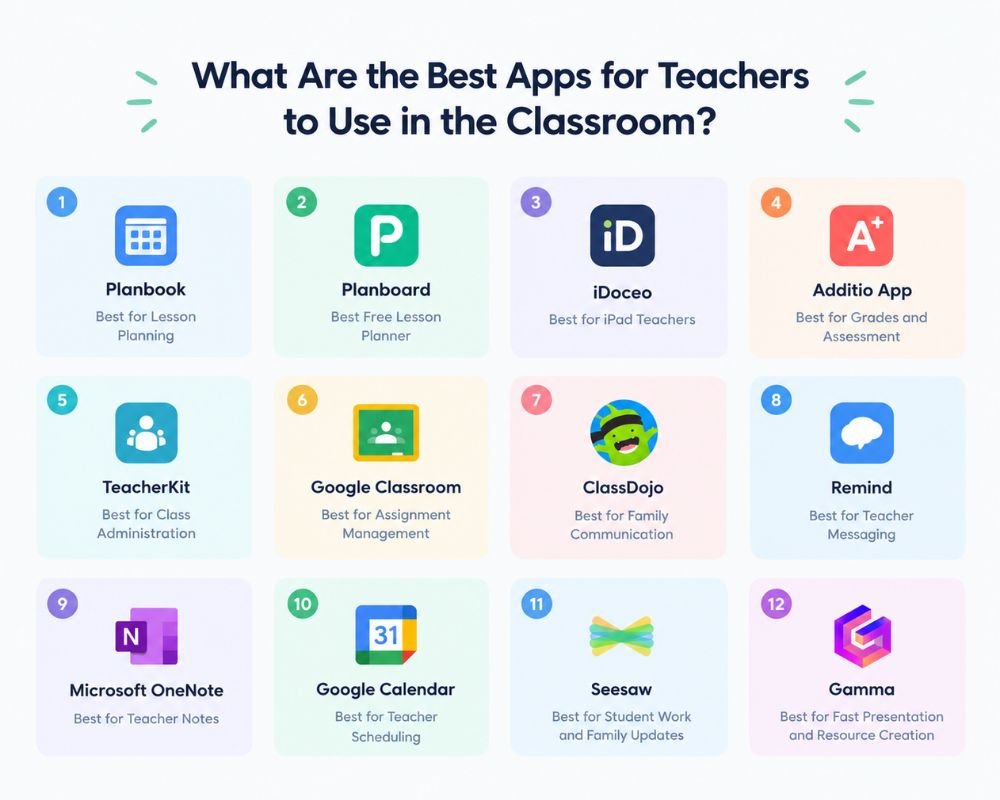
The best option also depends on what you need your app for. A teacher with a different timetable during the day might need the opposite of a family-communication elementary teacher. Thus, the 12 apps listed below are listed by the best classroom use case, not by the “best/worst” ranking.
Prices and specifications may vary; prices shown are as of the time written.
| App names | Main features | Prices |
| Planbook_Best for lesson planning | Planbook is designed for lesson planning and scheduling. It helps teachers adjust lessons and adds resources. It is best for secondary and higher school teachers. | Planbook’s free trial runs for 90 days and is available now. Individual plans range from $15 per year, with lower annual rates for longer plans. |
| Planboard | Best for lesson planningLesson planningTimetablesCurriculum standardsAttachments | Planboard is a teacher planning freebie. |
| Idoco | Best for iPad teachersGradebookAttendanceLesson planningSeating plansReports | The price for this App is currently listed at $0.99 on the App Store |
| Additional app | Best for grades and assessment It unifies gradebooks, attendance, planning, rubrics, scheduling, reporting and communication. | The current teacher plans offer €13.99 per year for Teachers Standard and €29.99 per year for Teachers Pro AI. |
| Teacherkit | Best for class administrationIt focuses on daily classroom management,, including attendance, seating charts, reports, behaviour, seating allocations, and and grades. | It has free and paid options. Before buying, make sure what is available in the app plan, as prices and features may change. |
| Google classroom | Best for assignment management It is a hub for assignments, submissions, communication, scoring, rubrics, and class management | It is free for educational fundamentals and for qualifying educators. It has more education versions for paid features |
| ClassDojo | Best for family communication Family messagingClassroom updatesPhotos and videosTranslation | ClassDojo claims that its teacher, school, and district core product is free. |
| Remind | Remind is a messaging solution for teachers, students, and families: Group messaging, announcements, attachments, and translation | Remind is free for teachers and schools, but Remind Hub is paid. |
| Microsoft OneNote | Microsoft OneNote for Education serves as a digital notebook for lesson planning, resources, student observation, and notes. | It is free for educators and students. |
| Google calendar | Plan classes, meetings, deadlines, recurring tasks, get reminders and use multiple calendar schedules in Google Calendar | It is free with a a personal Google account, and extra functionality b available with paid plans. |
| Seesaw | It is a Digital student portfolio.It is best for Activities, Family communication and Multimedia student work | Seesaw starter is free for teachers and students. It has more features in the paid version |
| Gamma | Gamma is a visual content workspace. It is used to create presentations, documents, webpages and other resources | Gamma Plus is $9 per seat per month (annual billing), and Pro is $18 per seat per month (annual billing). |
1. Planbook: Best for lesson planning
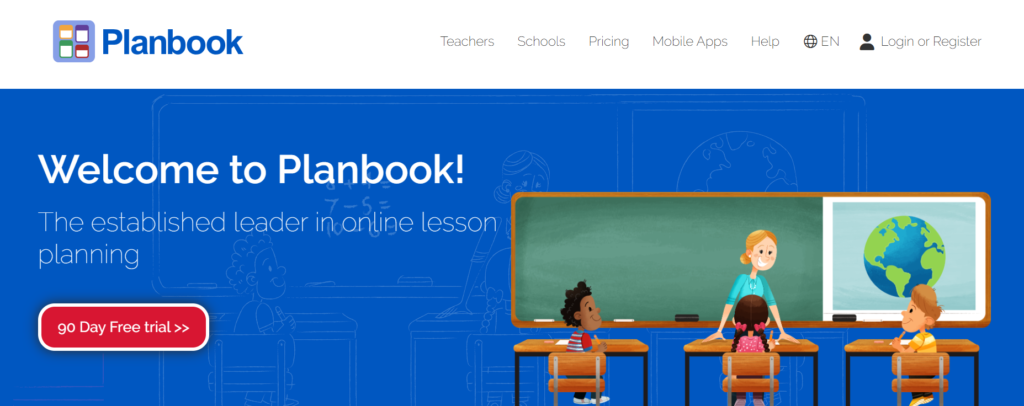
It facilitates lesson planning. Use Planbook for lesson planning.
What it does:
Planbook is designed for lesson planning and scheduling. When school breaks, teachers can adjust lessons, add resources, ensure standards are aligned, and create plans as needed.
How it saves time:
The primary benefit is reusability. Teachers can “bump” or move lessons from an assembly, a holiday, or a schedule change without rebuilding a lesson plan.
Key features:
- Lesson scheduling
- Reusable lessons
- Standards
- Attachments
The best use case is moving an existing lesson from the current week’s plan to a different week for a secondary teacher whose timetable is in flux.
A comprehensive list of top ed-tech tools for career guidance to help students map out their future based on their degree and skill set.
Best for: Secondary and high-school teachers who have hectic schedules.
Pricing: Planbook offers a 90-day free trial and is available now. Individual plans range from $15 per year for a year, down to annual rates for longer plans. School/District pricing is also available. Planbook Invoice
Restriction: If it’s an LMS and your school already demands that teachers plan within the LMS, it may be redundant to have specific planning features.
Time-saving takeaway: Focus on its ability to modify and reuse plans rather than recreate them.
The research notes that Planbook reports more than 1 million teachers and 1 billion lessons in its system; treat these as company-reported figures.
Ecosystem value isn’t so much the number of plans you make but the number of old plans that you reuse and modify.
2. Planboard: Best Free Lesson Planner
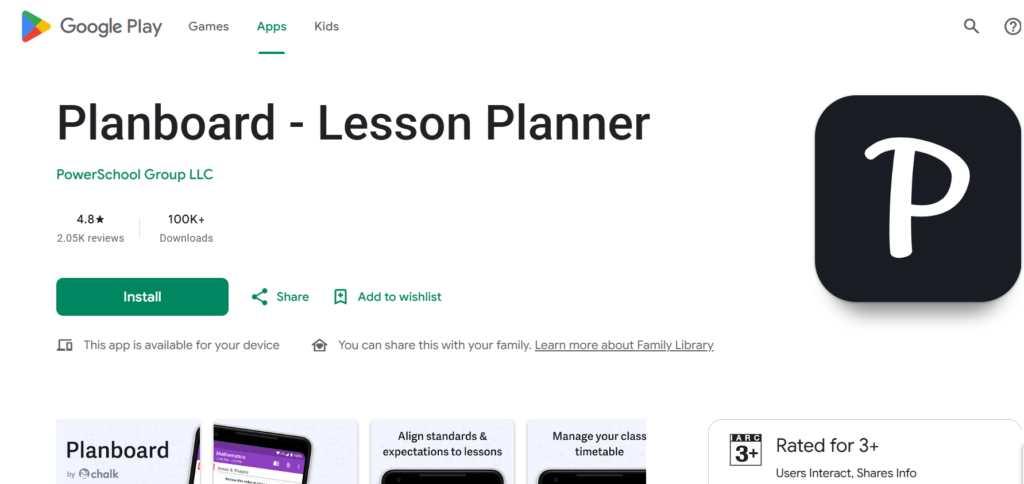
Easily plan your lessons, track their outcomes, and review them later.
What it does:
Planboard helps teachers plan subjects, semesters, timetables, curriculum standards and lesson resources.
How it saves time:
Teachers can store planning information in one place instead of across documents, notebooks, and spreadsheets.
Key features:
Lesson planning
Timetables
Curriculum standards
Attachments
Best use case: A teacher can plan the week across multiple subjects and keep all lesson materials and schedules in one place.
Ideal for: Teachers who want a stand-alone lesson planning software that is free to enter.
Pricing: Planboard is a teacher planning freebie, and there are three other Chalk products/services available for additional fees.
Challenge: Adding another planning system can be a double burden if your school already requires one.
The takeaway: Planboard is essentially a tool to consolidate planning for each week.
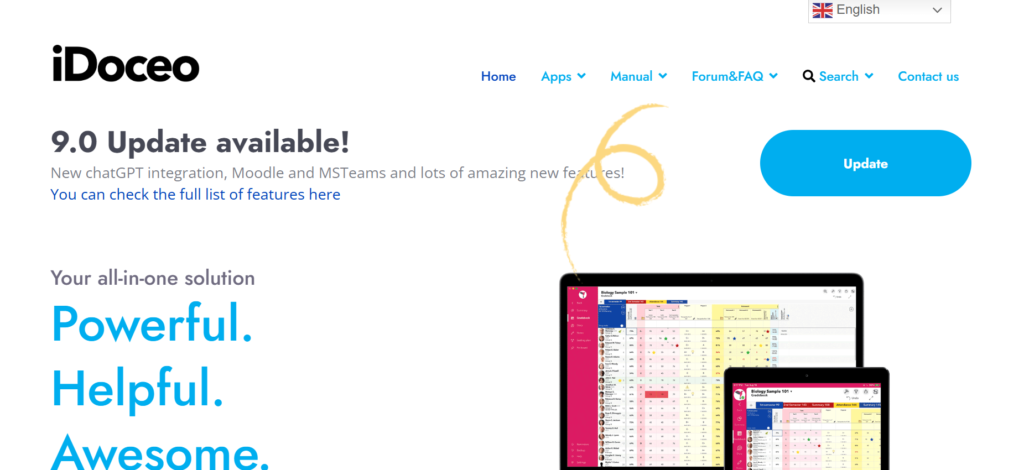
3. iDoceo for teachers on the iPad
What it does:
iDoceo is a user-friendly iPad teacher planning app that integrates a gradebook, attendance, lesson planner, seating chart, notes, schedules, resources, and reports.
How it saves time:
Teachers can manage these records in one system instead of switching between separate apps for attendance, grading, seating charts, and lesson notes. It’s also a no-look book.
Key features:
- Gradebook
- Attendance
- Lesson planning
- Seating plans
- Reports
Best use case: Record attendance, update grades, and view lesson notes on an iPad without switching between classroom apps.
Recommended for: iPad teachers.
Application: This app is currently listed at $0.99 on the App Store.
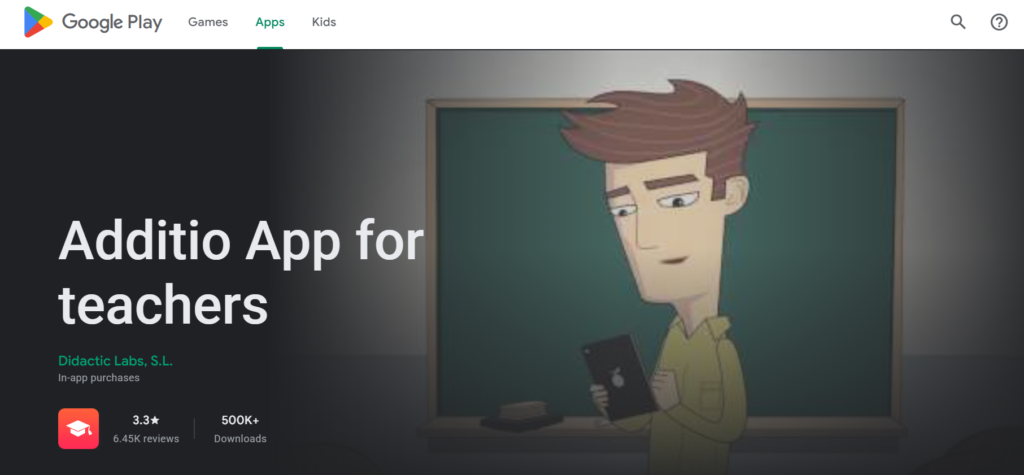
4. Additio App: Best for Grades and Assessment.
What it does:
Additio App unifies gradebooks, attendance, planning, rubrics, scheduling, reporting and communication.
How it saves time:
Linking assessment and attendance data helps avoid re-keying information and makes reporting easier.
Key features:
- Gradebook
- Attendance
- Rubrics
- Reports
Number one best practice: Teachers log attendance and assessment results in the same flow and report on them later.
Ideal for: Teachers with a heavy grading and assessment workload.
Pricing: The current teacher plans offer €13.99 per year for Teachers Standard and €29.99 per year for Teachers Pro AI.
Limitation: In some cases, teachers with only a basic gradebook may not need the gradebook’s more extensive classroom-management system.
The key takeaway is that it’s not a single feature that makes it time-saving; it’s the workflow of attendance, assessment, and reporting that makes it tick.
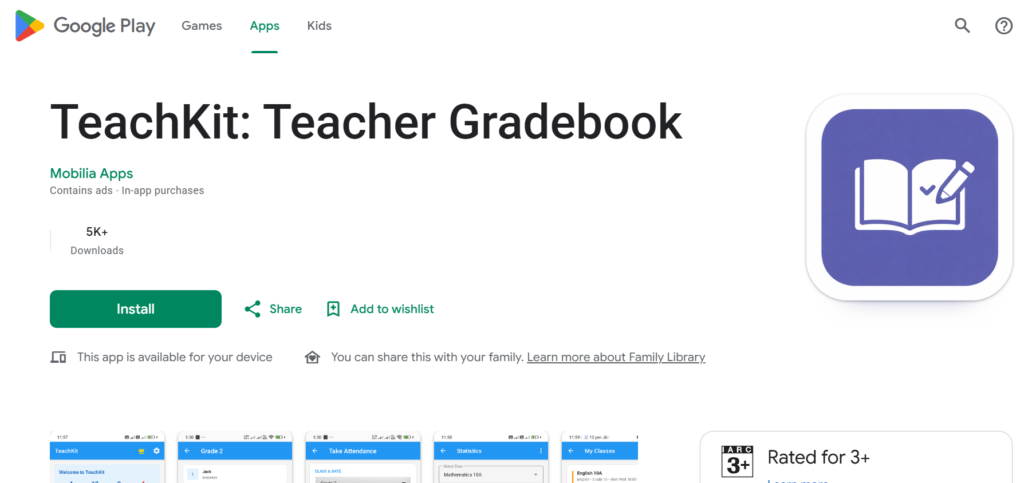
5. TeacherKit is the best tool for Class Administration.
What it does:
TeacherKit focuses on daily classroom management,, including attendance, seating charts, reports, behaviour, seating allocations, grades, timetables, and students.
How it saves time:
Attendance records and reporting don’t need to be kept separately,, as the information can be used for multiple classroom tasks.
Key features:
- Student rosters
- Attendance
- Gradebook
- Reports
- Seating charts
Best use case: Teachers record attendance from the class list and later use it to review or prepare reports.
Best for: Elementary and secondary teachers who have a high frequency of classroom administration.
Prices: TeacherKit has free and paid options – be sure to see what is available in the in-app plan before buying, as prices and features may change.
Limitation: Schools with a student information system may not need a separate administration app.
The nugget of wisdom here is that you can reuse this information, so you don’t have to record it multiple times.
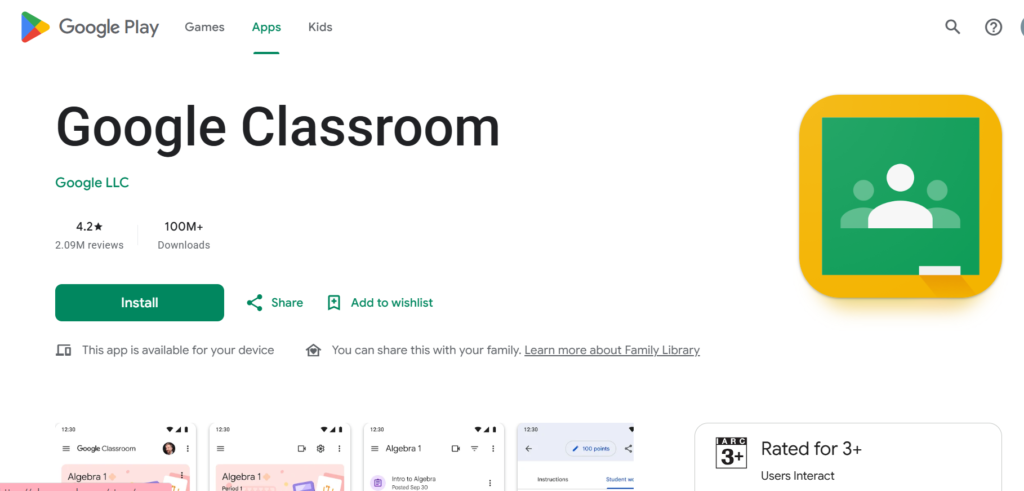
6. Google Classroom: best for assignment management
What it does:
Google Classroom is a hub for assignments, submissions, communication, scoring, rubrics, and class management.
How it saves time:
Teachers can distribute work and return it to students with feedback, all in the same workflow. Google also allows for reuse of rubrics and comment banks.
Key features:
- Assignments
- Gradebook
- Rubrics
- Comment banks
- Notifications
Best use case: A teacher sets an assignment, receives students’ responses, marks them, and provides feedback without switching between multiple systems.
Best for: Institutions and teachers who are already using Google Workspace for Education.
Pricing: Google Workspace for Education Fundamentals (Classroom included) is free for qualifying institutions. The paid education versions have more features
Limitations: The experience may depend heavily on the Google Workspace configuration, account policies, and administrators’ decisions within the school.
The key takeaway: It’s most useful for having the assignment-to-feedback process in one place.
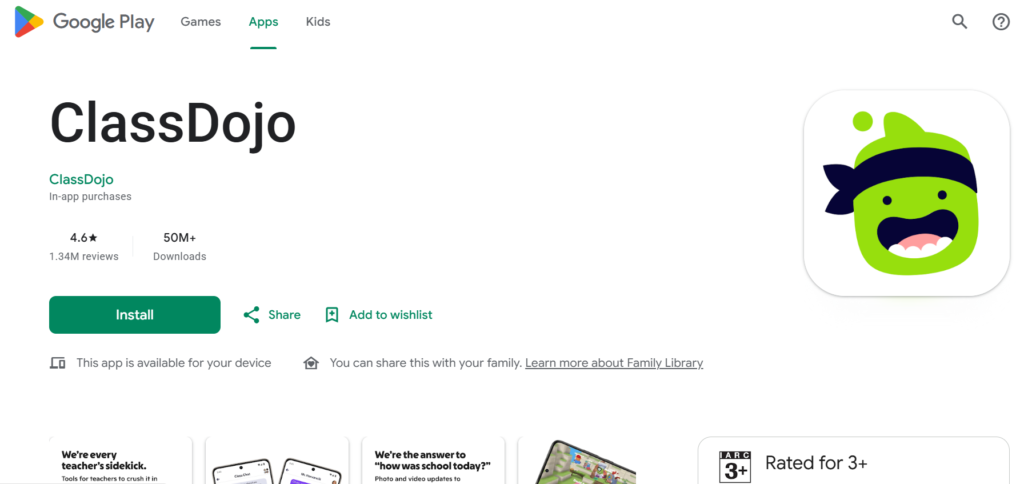
7. ClassDojo: Best for family communication
What it does:
ClassDojo connects teachers and families via messages, classroom updates, photos, videos and more.
How it saves time:
Teachers can share classroom information in a central feed instead of sending it separately to individual families. It also automatically translates messages.
Key features:
- Family messaging
- Classroom updates
- Photos and videos
- Translation
Best use case: A primary teacher shares one classroom update; multiple families can access it, not multiple individualized updates.
Best for: Elementary/primary teachers who communicate with families often.
Pricing: ClassDojo claims that its teacher, school, and district core product is free.
Limitation: It can’t integrate with an existing school communication system.
Kids’ takeaway: Once you’ve sent it, send it to many families!
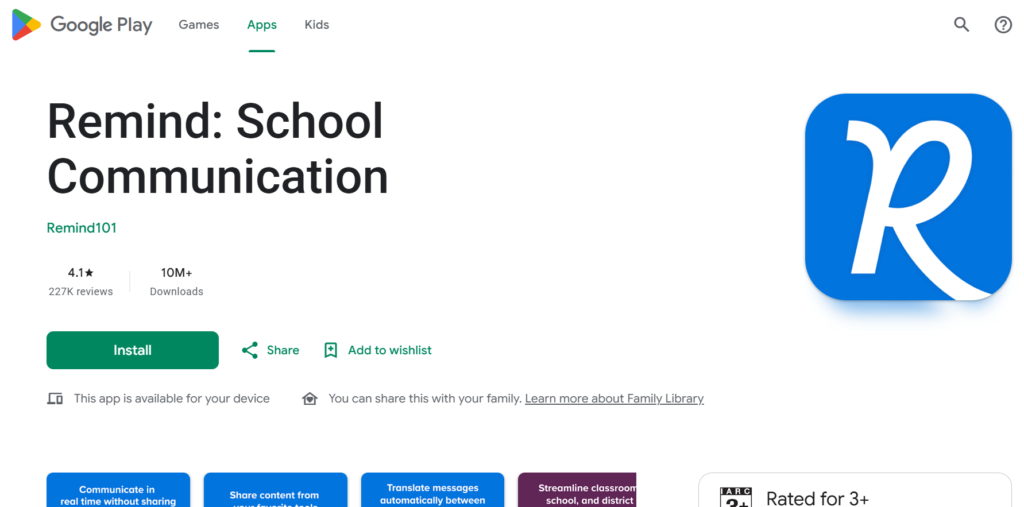
8. Remind: Best for Teacher messaging
What it does:
Remind is a messaging solution for teachers, students, and families: Group messaging, announcements, attachments, and translation.
How it saves time:
A teacher can send one announcement to a class or family group instead of sending it to each student individually. Remind separates teachers from their personal phone numbers. Remind
Key features:
- Class messaging
- Announcements
- Files and photos
- Translation
Best use case: Send a single one-time reminder to an entire class or family group of a deadline or school event.
Best for: Teachers who primarily need simple classroom communications.
Pricing: Remind is free for teachers; Remind Hub is not free and is available individually by organization.
Limitation: It cannot be a comprehensive classroom-management system.
Time saving: It’s a way to communicate within a group without the need to send the same message repeatedly,
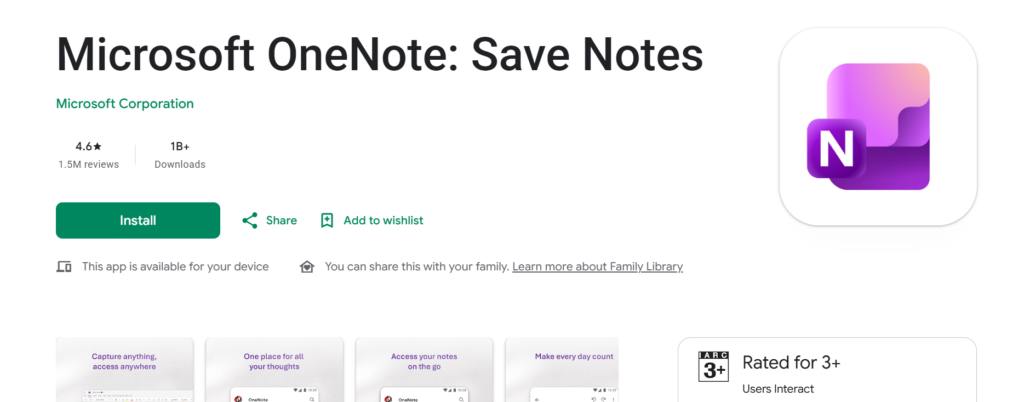
9. Microsoft OneNote: Best for Teacher Notes
What it does:
Microsoft OneNote for Education serves as a digital notebook for lesson planning, resources, student observations, meeting notes, and classroom resources to share.
How it saves time:
Structured digital notebooks can replace scattered notebooks and files in the classroom. Recurring information is easier to find and reuse with search, templates, shared content and Class Notebook.
Key features:
- Class Notebook
- Digital notebooks
- Templates
- Collaboration
- Search
Best use case: Maintain lesson plans, meeting notes, student observations, resources, and assessment reflections in a consistent notebook structure.
Best for: Educators who already use Microsoft 365.
Pricing: Office 365 Education is free for the educator and students who qualify for the program, and Microsoft offers OneNote as part of its education services.
Limitations: Notebooks can be inconsistent and can become a problem because of OneNote’s flexibility.
Takeaway: When you need a single searchable hub for teacher information, OneNote is the biggest time saver.
10. Google Calendar: Best for teacher scheduling
Google Calendar is a very convenient tool for teachers who want to schedule their classes.
What it does:
Plan classes, meetings, deadlines, and recurring tasks; get reminders; and use multiple calendars.
How it saves time:
Recurring events and reminders save teachers the trouble of re-entering the same timing information every week. Using multiple calendars can also separate teaching from other responsibilities, meetings, and personal commitments.
Key features:
- Multiple calendars
- Shared calendars
- Tasks
- Reminders
- Custom views
Best use case: Recurring blocks for grading, parent meetings, lesson preparation, and professional development.
Best for: Educators who are looking for a platform to schedule classes, but not a general education site.
Pricing: Google Calendar is free with a personal Google Account, and extra functionality may be offered in paid Google Workspace plans.
Limitation: Not a stand-alone gradebook or lesson planner.
Time-saving tip: Automate recurring schedules and reminders, not every aspect of teaching.
11. Seesaw: Best for Student Work and Family Updates
What it does:
Seesaw is a digital student portfolio, classroom activity, multimedia student work and family communication all in one.
How it saves time:
Students’ work and family updates live in the same classroom system, eliminating the need for two separate systems for student work and communication.
Key features:
- Digital student portfolios
- Activities
- Family communication
- Multimedia student work
Best use case: A primary teacher creates an activity, gathers students’ multimodal work and maintains connections with families via the same tool.
Best for: PreK–6 secondary and elementary teachers.
Pricing: Seesaw Starter is free and lets teachers try the platform’s core features. The current Starter plan includes up to 35 students for one active class;; school and district plans offer more functionality.
Limitation: The free Starter plan has significant restrictions on classes, students and some features.
The takeaway: Focus on Takeaway’s ability to be a hub for students and families rather than a primary AI teaching hub.
12.Gamma:Best for fast presentation and resource creations
If you want an app to create resources or make a presentation quickly, Gamma is the best choice.
What it does:
Gamma is a visual content workspace for creating presentations, documents, webpages, and other resources.
How it saves time:
Teachers don’t have to create a slide presentation from scratch. Teachers do not have to create a slide presentation from scratch.
- PDF/PPTX import and export support is provided in Gamma.
- Gamma supports PDF and PPTX import and can export to PDF, PPTX, PNG, and Google Slides.
Key features:
Presentations
Documents
PDF/PPTX import
PDF/PPTX/Google Slides export
Best use case: Create a presentation or a visual classroom resource from the content of a lesson without having to recreate each slide.
Ideal for: Teachers who regularly create presentations and visual learning materials.
Pricing: Gamma is Free (400 sign-up credits), Plus is $9 per seat per month (annual billing),, and Pro is $18 per seat per month (annual billing).
Limitation:
The limitation is that Gamma’s value here is in producing resources, not just the AI. It is also being developed for mobile and offline use in its mobile app, so teachers who rely heavily on mobile or offline learning should confirm this is available.
Time-saving takeaway: Think of Gamma as a shortcut to creating polished resources from existing teaching material!
Best apps for teachers by task
| Teacher task | Apps to consider |
| Lesson planning | Planbook and Planboard |
| iPad planning and recordings | idoceo |
| Grades and assessment | Additio, TeacherKit |
| Assignment | Google classroom |
| Family communication | ClassDojo and Seesaw |
| Teacher messaging | Remind |
| Note and resources | One note |
| Schedule | Google calendar |
How to choose the right apps for teachers
Thousands of teaching apps are available, but you don’t need them all, and they may not be suitable at the same time. More is not always better. Take an analytical approach: choose apps you actually need, not those that just show up on featured lists.
Start with the task, not the app
Before downloading anything, ask these questions:
- What repetitive task consumes the most time?
- Where am I entering the same information twice?
- What system does my school already require?
- Do I need mobile or offline access?
- Does the app require student data?
- Is the free version enough?
These filters rule out 90% of the “shiny objects” and steer teachers to places where they can find digital tools to address an authentic problem instead of creating a new one.
One app per major workflow
One key takeaway from our research: the more apps you have, the more disjointed they are, and the less productive they are.
Teachers using 10-12 disjointed tools result in duplicate data entry, multiple logins, endless platform changes, and disjointed communications. The benefits are offset by the cognitive burden.
Rather, create a mini, in-house flow around your core processes. For instance: lesson co-planning hub, communication hub (asynchronous), and storage hub (curriculum). Prioritize apps that connect with your LMS and with one another – install your ed-tech stack together instead of against one another.
Conclusion:
Build an individualized and emphasized stack.
In this article, we discuss different best apps for teachers’ needs in 2026. Thousands of apps are available now, but not all are effective for teachers and students at the same time. Different apps have different features. Some are free; some are paid. They may have different features and specifications. More apps don’t mean more productivity. Sometimes, fewer, effective apps lead to more productivity.
The free version is less effective compared to the paid version. Paid apps have more features and specifications. The smartest approach is to choose apps that work, not ones with long feature lists.
Since you begin with the tasks, not the technology, you will not end up with too many apps to track,, and you’ll focus on those that save time and enhance instruction.
It’s not about doing more with ed-tech when it comes to teacher collaboration. It is about becoming more collaborative, being more efficient with your planning time, and getting back to the business of teaching!
Keep it simple; do it again and again; small stack, grow with you.