

In this crowded digital era, a talented marketing consultant also faces the challenges of an invisible online presence. The clients’ search for “best marketing consultant” and are ready to invest, but they can’t find you if you don’t do SEO for your website. They select your competitors who rank higher on Google. SEO for marketing consultants is crucial to their online presence and to achieving a top ranking in search results.
It is a brutal truth of today’s digital world: you can’t exist if you’re not showing up in search results—you don’t really exist. But here’s the good news: with the right SEO strategy, your name shows at the top of Google, clients see it first, and trust it more.
SEO for marketing consultants can improve your online presence and attract potential clients. Search Engine Optimization is not about keywords and algorithm work; it’s about making your expertise discoverable. When you activate SEO for your website, it becomes a 24/7 lead-generation engine that attracts high-value clients who search for the solutions you offer. If you’re an agency owner or an independent Marketing consultant, online visibility equals credibility.
In this guide, I’ll explain how SEO helps marketing consultants attract potential clients. You’ll learn how to build authority, optimize for AI-driven results, and write content that’s clear and understandable to both humans and Google.
In the digital era, clients not only buy services they trust. And SEO is the fastest and easiest way to earn clients’ trust.
Why Marketing Consultants Can’t Afford to ignore SEO?
The majority of marketing consultants rely heavily on referrals and repeat clients—and this is a good starting point—but it can become a growth trap. Eventually, referrals stop flowing, and if you don’t have visibility online, your pipeline will dry up. This is what causes many highly capable consultants not to stand out, and instead, other consultants – sometimes less competent – have a larger stream of clients.
The simple truth is that when it comes to SEO for marketing consultants, ranking isn’t everything—it’s about developing the visibility you have worked so hard for and converting it into consistent results. When you have a solid SEO strategy, every article, case study, and service page becomes a silent salesman that builds trust, attracts clients, and works for you 24/7.
According to recent data, over 70% of B2B buyers research consultants online before making a selection. This indicates that your prospective clients are already nose-deep in the research process—the question is, can they find you?

If they can’t find you, your competitors will.
In today’s market, visibility is not optional—it is the difference between being just another consultant and being the one viewed as the authority in your niche.
Understanding the role of SEO for Marketing Consultants
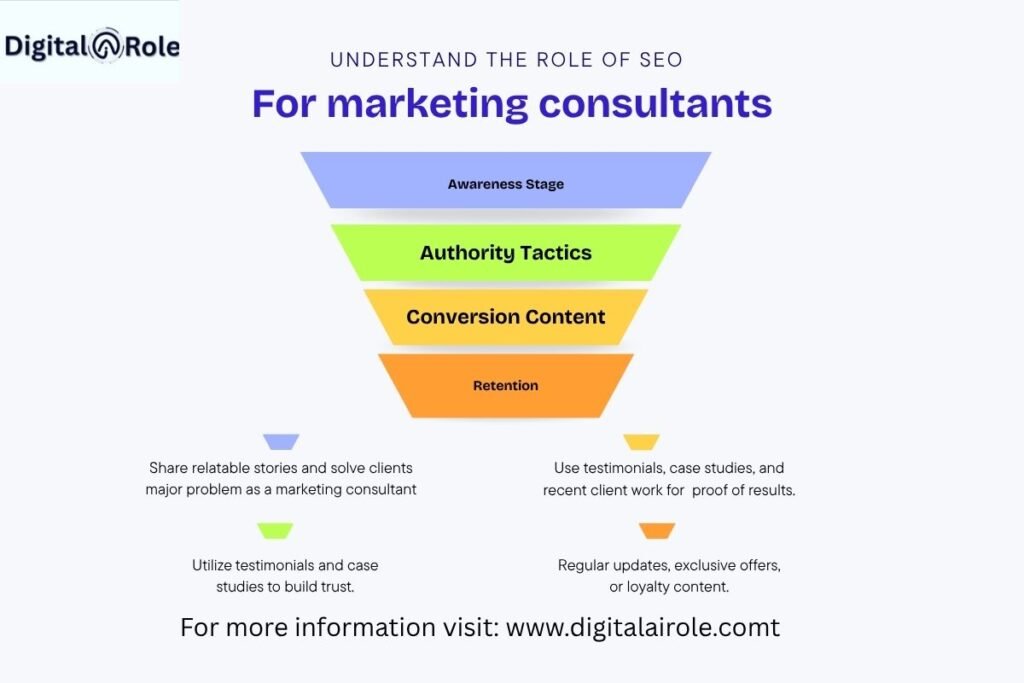
Most consultants, when they hear “SEO,” think of keywords and rankings. But SEO for marketing consultants is about positioning your expertise where clients are already looking. Provide clients with a solution to their problems in a way that ranks higher in search engines and that they trust you.
SEO helps consultants translate their real-world reputation into digital trust by ensuring their name, ideas, and solutions appear at the top of search results whenever a client searches for a solution to their problem. It shows at the right time, at the right place.
Think of SEO for a consultant as a digital reputation engine. The stronger your presence, the easier it becomes for potential clients to find you, believe in you, and hire you.
What SEO Means for a Consultant Brand
For marketing consultants, SEO is about credibility, not traffic. When your content ranks for industry-specific questions, you’re signaling to clients (and Google) that you know what you’re doing. That visibility builds trust long before they ever reach out for the discovery call.
A consultant brand that has optimized SEO doesn’t chase leads; it attracts them. When you have the right keyword strategy, your website becomes an always-on marketing funnel connecting your niche expertise to the audience actively searching for it.
When you align your services and niche with your ideal client’s keywords and intent, your site can act as a discovery platform, and you can sell your value without having to say a word.
SEO vs. Paid Ads — Which Builds Better Long-term Authority?
Paid ads can net you short-term gains, clicks, traffic, and may even create a few leads. But when the budget runs out, so does the visibility.
SEO, on the other hand, compounds over time as an investment in your online authority. Every blog post, backlink, and optimized page adds authority to your digital presence, helping you rank for months (or years) without needing paid ads.
In a trust-based industry like consulting, authority is more important than impressions. Clients want to work with experts they found organically, not through paid ads.
That’s why SEO for consultants is not an expense; it’s an asset that continues to grow with authority, reputation, and revenue long after the campaign ends.
Keyword Strategy that brings your perfect clients
Keywords are not search terms; they are indicators of client intent. Every word a potential client enters into Google reveals the issue they’re trying to resolve and how close they are to finding someone like you. For marketing consultants, understanding a keyword’s intent means matching your offer to the most precise words clients use when they are ready to purchase.
With proper practice, a marketing consultant SEO is a magnet that helps you attract your dream clients—not just online traffic.
Identification of Client-Intent Keywords
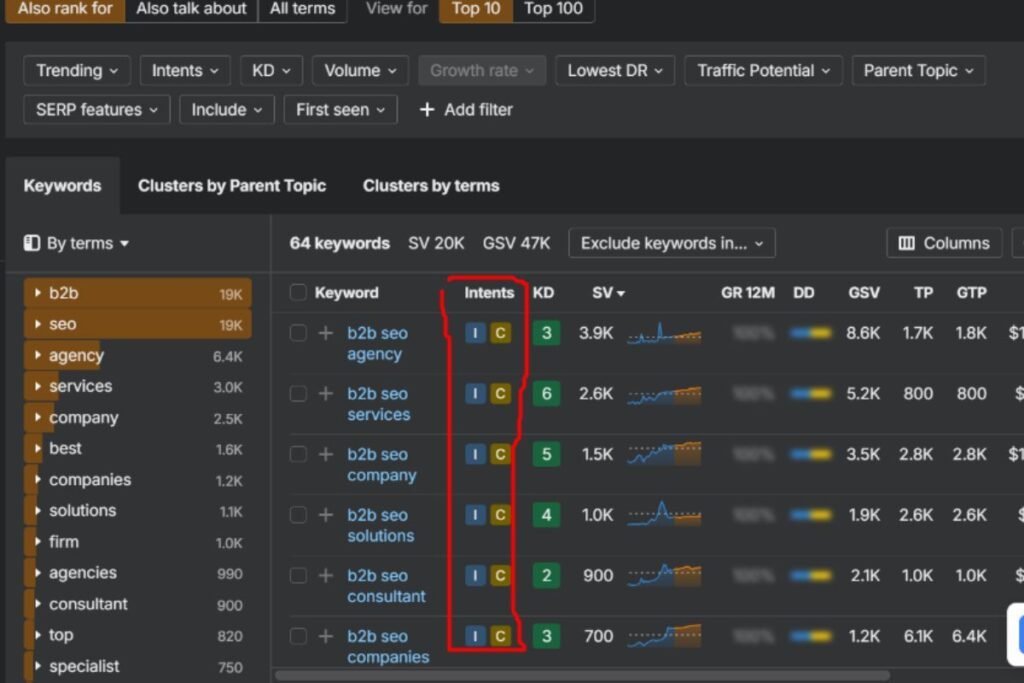
The trick is not in pursuing high-volume keywords; it is in pursuing client-intent, purchase-intent, or solution-intent keywords. Additionally, consider the keyword difficulty, which is relatively low and has minimal competition.
Consider the difference between someone looking for the answer to the question “What is SEO?” and someone looking to hire an “SEO consultant for a B2B brand”. The former desires information, the latter is willing to hire.
Here is the way to find the correct keywords for your niche:
- Listen to your clients on the vocabulary they use in calls and proposals, and match that in search results—that is, real-world search data.
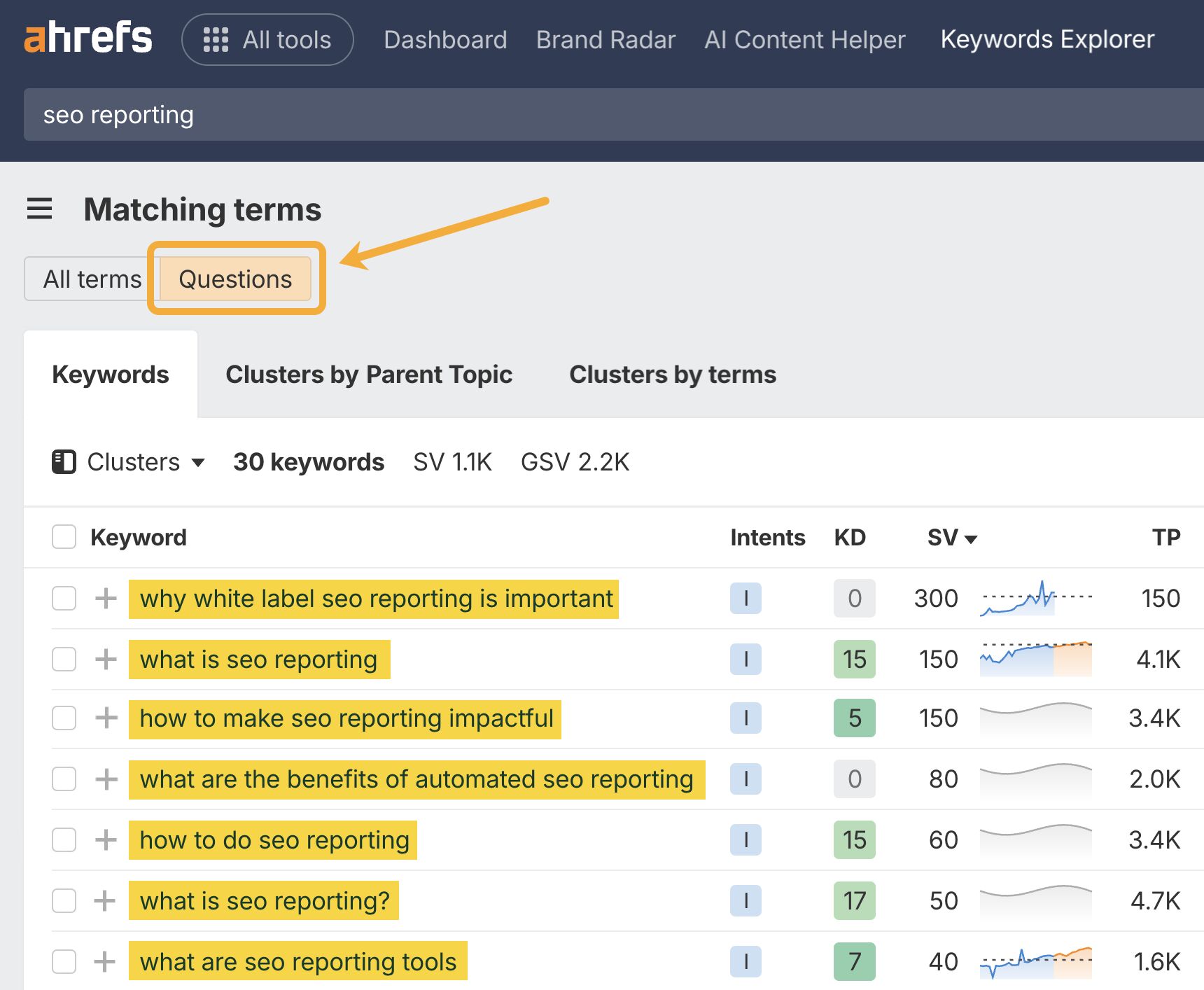
- Identify question-based and transactional terms using AI-powered tools such as Ahrefs, Semrush, or ChatGPT’s keyword intent analysis feature.
- Focus on target long-tail and intent-rich terms, including:
- “Best SEO strategies for marketing consultants”
- “SEO in the B2B industry as a consultant”
- “How to attract customers as an SEO consultant”
- “SEO tips for personal branding”.
All these keywords are action-oriented, and people are willing to invest in their own growth.
Long-Tail Keywords = Authority Builders
Long-tail keywords are likely to receive fewer clicks, but they often generate high-intent and conversion traffic. These are not ordinary visitors window-shopping; they are testing your authority.
For example:
- You want to target not a “marketing consultant”, but a “digital marketing consultant SEO strategy”.
- Change it to “SEO consultant” to “SEO consultants that need more leads”.
With the expert-led, tailored content on these phrases, you establish yourself as a solution provider to the problem, not merely another consultant.
In the long run, these targeted articles will create semantic connections on your site, which can signal to Google’s AI that your company is an authority in SEO consulting. That is what gets you snippets of features, artificial generalizations, and a credibility heading.
On-Page SEO That Converts Expertise into Position
Knowledge is not enough; Google must move it and believe in it. On-page SEO makes people think your site is worth ranking. It is not about how many words you put in the text; it is all about how much credibility, clarity, and value you put in every page.
Content, Developed with Trust (E-E-A-T in Action)
Google values content with Experience, Expertise, Authoritativeness, and Trustworthiness (E-E-A-T), which is precisely what customers seek in a consultant.
Here’s how to make it happen:
- Show your experience by writing about actual outcomes, case studies, or pre-and post-campaigns that you have been in charge of.
- Add credibility markers, such as author profiles and credentials, customer reviews, and certifications.
- Establish external authority connections—the reference data from reliable marketing sources, such as HubSpot, SEMrush, or Moz.
- Structure for AI snippets and add subheadings, bullet points, and concise and scannable answers that ease the process of Google to pick featured snippets.
Google will also trust what you have to say when your readers do the same, and that trust will translate into new positions on the search results list.
Optimizing Key Pages
Each page of your site must have a point, and each of them must back your authority as a marketing consultant.
Homepage: Make USP (Unique Selling Proposition) conspicuous – what makes your consulting special. Include a concise headline, testimonial slider, and a call to action that creates immediate credibility.
Services Page: Search around your core term, ‘SEO’, to find marketing consultants and similar groups, such as ‘SEO strategy to marketing consultants’ and ‘digital marketing consulting SEO’.
Blog: Develop topic groups with responses to client-led questions, such as how to maximize marketing ROI or why consulting firms should engage in SEO. They are ideal for appearing in AI-generated search results.
Backlinking Authority and Thought Leadership

Optimizing the best website will require external validation, even after optimization, which is where quality backlinks come in. In the case of consultants, connections are not only related to SEO juice, but it is also a demonstration of authority in your area.
Industry Features and Guest Posting
Become a thought leader by presenting your experience on credible sites.
Guest posts, podcast interviews, and LinkedIn articles increase your presence and help you acquire high-quality, organic backlinks.
The contextual anchor text to use when returning to your site is ” Learn more about SEO for consultants” or “Discover how SEO for marketing consultants generates client visibility.”
This serves not only to buttress your ranking signals but also to appear organic and reader-friendly.
Power leverage LinkedIn and Case Studies
One of your strongest SEO tools is your professional network.
Reports on case studies – transform your case studies into pieces of content posts: write about client outcomes, lessons learned, and back-of-the-scenes tactics on LinkedIn and your blog.
Backlinking with storytelling and not spam – people naturally cite and share your content when they find the value in it.
This simultaneously provides backlinks and trust, which Google highly values within its E-E-A-T framework.
Technical SEO: The Silent Game-Changer of the Consultants
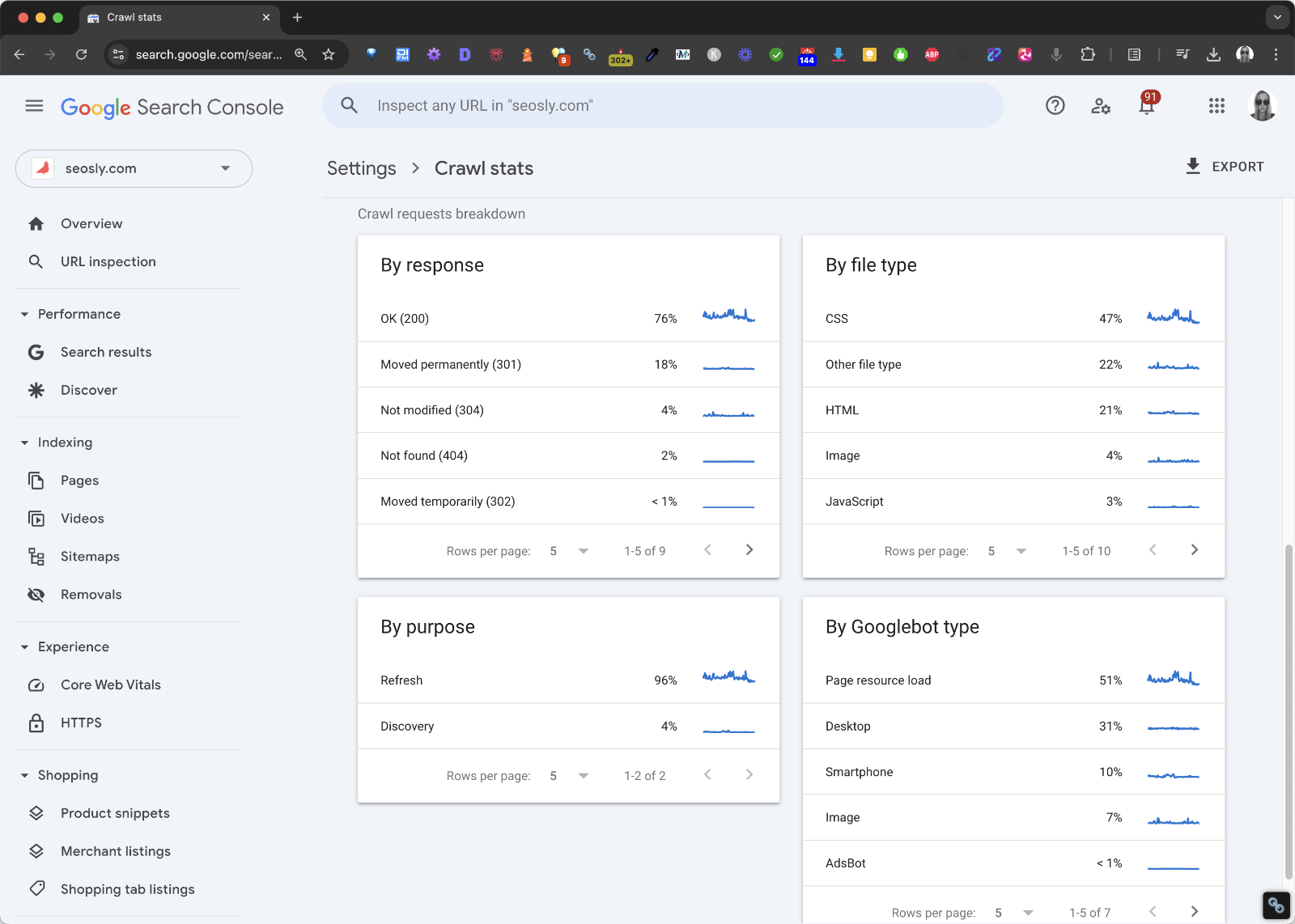
You may be writing incredible content, but if your site loads slowly or confuses Google crawlers, your ranking will suffer. Technical SEO helps ensure your content is found and not forgotten.
Speed, Mobile & Schema Optimization
Your website should be as professional as your advisory name, as quick and sophisticated.
Speed: Optimize images, code, and caching with the help of such tools as PageSpeed Insights.
Mobile Optimization: Ensure your site is well responsive; more than half of B2B purchases are made on mobile devices.
Schema Markup: Add structured data for Individuals, Organizations, or Professional Services. It helps search engines understand what you are good at and provides rich text snippets, such as ratings, frequently asked questions, and author descriptions.
These are technical tricks that will bring your brand to the top both in human and AI search.
AI Search Optimization
Search is changing—and so should your SEO.
As AI-based results currently drive the Search Generative Experience (SGE) at Google, conversational and predictive search queries are crucial to optimization.
- Create FAQ pages that address questions such as: “What is the best SEO strategy to market consultants?”
- Write in natural, conversational language—it helps AI models get a direct answer.
- As a marketing consultant, you can improve exposure by creating summaries that match generative summaries.
In so doing, your content is made more readable by AI, giving you a better chance of ranking high in voice, chat, and AI overview search results.
Content Ideas to turn visitors into clients
Where your knowledge and chance coincide is content. It is not about getting traffic, but about converting visitors into qualified leads who trust you enough to have a call with you.
Topics in Blogs that Build Trust
These are examples of blog ideas that perform well in the marketing consultant case:
- How I Helped a Startup Scale with SEO —Be real about the transformation and results.
- The Consultant Guide to Ranking Without Ads– Educate without testing.
- How AI Is Changing SEO for marketing consultants – How to become a future-oriented expert.
The combination of experience and search intent is appropriate for each topic, as is Google’s E-E-A-T and AI snippet ranking.
Add Lead Magnets
Make your content a conversion machine by giving out useful freebies that make you the expert to refer to:
- Consultant SEO audit checklist.
- Detachable client acquisition by SEO guide.
- Instant strategy call booking, one-click link in your blog.
- Use an engaging CTA to wrap up.
Would you like to be discovered by clients who are already searching for you? Make your brand visible: a proven SEO plan specific to consultants.
Track the website performance.
SEO is done by tracking website analytics to see what your audience wants and what your website ranks for. To truly understand how SEO for consulting is performing, it’s essential to track the right metrics—not vanity numbers.
Here’s what to focus on
Increase Organic Traffic: Keeping track of which pages generate visitors from Google and if the visitors match the services you’re after.
Keyword Rankings: Remember to keep track of how your key phrase — such as “SEO for consultants” or “marketing consultant SEO strategy” — moves up over time.
Conversion Rate: Are visitors booking calls, downloading audits, or subscribing to your email list? Visibility is great, but conversions prove ROI.
Quality of Backlinks: Utilize tools like Ahrefs or Semrush to verify the quality of links from authoritative sites within your industry.
Engagement Statistics: Check the average session length and bounce rate. These metrics indicate how truly useful your content is.
For intelligence purposes, couple Google Analytics with AI-powered SEO tools like SurferSEO to do your keyword targeting for you. Clearscope does a great job of modeling topical authority and sharing predicted ranking potential. Alternatively, you can use MarketMuse, which makes strategy adjustments feel like second nature.
Conclusion— from hidden to highly visible
In this article, I explain how marketing consultants can be seen through SEO when you target the right clients and are aware of your services. When you blend genuine expertise with smart optimization, your website evolves from a digital business card to an ecosystem that attracts clients.
SEO for marketing consultants isn’t just a marketing tactic; it is your digital reputation. Every blog post, case study, and targeted keyword enhances your credibility, respects your visibility, and supports your trust factor.
Especially in a more AI-driven search world, where clients research before reaching out to you, being discoverable means being chosen.
So start today:
Refine your pages, flaunt your results, and let SEO do the heavy lifting for you by showcasing your expertise.
Ready to turn your consulting brand into a client magnet? Let’s build your personalized SEO strategy together to create an expertise that cannot be ignored!