
Most small businesses are doing SEO but not seeing results because their online visibility is only on their website, and they’re not showing up in Google search results or on Google Maps. The problem for small businesses is not the effort; it’s the direction: serving a customer whose problem you solve.
The local SEO checklist for small businesses is the only clear way to ensure that your local audience recognizes you, follows you, and visits your catalog through your website or WhatsApp.
Research found that local SEO “businesses in the local Google Map increase traffic by 126% more and 106% more calls than businesses that aren’t listed.”
I work with many small business owners who are wondering how long local SEO takes and how to rank faster in local search. I know every businessman dreams of succeeding fast, but it depends on your efforts, the right direction, and understanding audience needs, and it requires a complete strategy. Even worse, they face issues like their businesses not showing up on Google Maps and want to rank in the local pack without reviews. These are unsolved questions because of a missing foundation step.
But in this guide, I provide a step-by-step local SEO checklist designed for real-world results, not theory. This local SEO checklist for beginners helps overcome other local search ranking factors and generate high-quality leads when implemented properly. By optimizing local listings, you improve visibility, fix ranking gaps, and turn your local presence into a consistent source of traffic and leads.
Why You Need a Local SEO Checklist in 2026
Stuck thinking local SEO is just an extra perk? That mindset lagged months ago. By 2026, showing up nearby will require greater precision and smarter signals, as algorithms now filter more aggressively. A basic site or scattering terms here and there won’t cut it—visibility lives in method, routine, and sequence. Follow a clear task order if you want people to look closely.
Most small businesses jump between scattered local SEO for restaurant moves when there’s no plan in place—moves that go nowhere over time. A solid local SEO checklist changes that, turning chaos into steady progress. Tweak your Google Business Profile just right, and understand the steps to refine your Google My Business listing. This isn’t extra anymore – it’s what holds everything together. Rankings grow stable. Traffic shows up like clockwork. Local customers start reaching out without you having to chase them. Structure beats guesswork every single time.
The Evolution of Local Search in 2026
Now it’s different when people look up things nearby. Instead of matching words alone, Google relies on artificial intelligence to understand what users really want, how they behave, their habits, and even where they are. So fitting into real-life searching matters more than targeting isolated phrases typed into a box.
Here comes a big change: more people now find what they need right on the search page—no site visit needed. When searches skip websites entirely, being absent from local packs or map listings means losing those looking hard for services and missing these spots. Then real interest just passes by. Featured snippets matter too—they pull attention before anyone clicks through.
Freshness of content grabs attention first.
Pages that load fast keep users around longer. A clear structure helps people find what they need without hassle. “Close by” means easier to find. Location matters when someone looks nearby. The right spot can mean more visits. Nearness counts more than you think. Being just around the corner helps show up first.
What you offer lines up with what someone searched for
- Your trustworthiness shows up in what people say about you online.
- What others mention matters just as much as where they say it.
- How your material holds up over time adds weight, too.
A strong local SEO checklist for 2026 keeps your efforts grounded in real results rather than assumptions. Because focusing on what actually moves the needle beats hoping something might work.
Small Business Errors People Often Overlook
Mistakes in local SEO usually happen not because people try too little, but because their attention is elsewhere. What gets measured often isn’t what matters.
Missing out on Google Business Profile tweaks? That kills your shot at appearing in Maps or local search results. A half-filled profile might just vanish when customers look for what you offer.
A single mismatched detail might be enough to throw off search engines when listings show slightly different info, and confidence in your business drops.
Last of all, plenty of companies overlook creating content tied to their location. When material isn’t shaped around local needs or questions, chances to appear in nearby search results start slipping away.
Local SEO Checklist for Small Businesses 2026
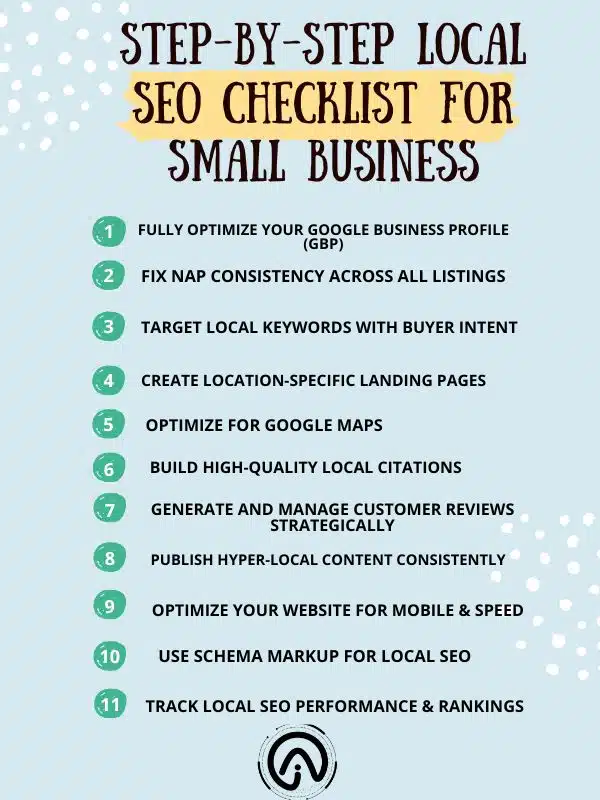
This is where the strategy turns the action. When you guess what works, it wastes your time; follow this step-by-step. Local SEO checklist for small businesses in 2026, which increases your local ranking, visibility, and local conversion. Each step is designed to improve your previous strategy with a new one systematically.
1. Fully Optimize Your Google Business Profile (GBP)
Start strong with a solid Google Business listing—it shapes how locals find you online. Skip this step, yet expect poor results despite effort elsewhere.
- Your business shows up. Confirm it belongs to you.
- Start by listing each service with clear details. Moving on, sort them into groups that make sense for customers. After that, include the place’s hours of operation every day of the week.
- Upload high-quality images regularly.
Start with what you do best and tie it to where you are. Slip in key terms as they belong there. A natural flow beats forced phrases every time. Place names mix well with services when done lightly. Let details unfold slowly, not rushed. Words stick better when they feel casual. Your main offering shows up clearly, just not on repeat. Readers notice clarity more than tricks. Location matters most when mentioned once, clean and clear.
What questions do people ask? Tuck them right into your profile. That small move sharpens context signals, pulling in longer search phrases others miss.
2. Fix NAP Consistency Across All Listings
Day after day, showing up makes people believe. Search engines start to rely on patterns that hold steady.
Your contact details should match across every platform. Wherever your name shows up, it must align perfectly. The address listed needs to stay consistent without variation. Phone numbers appear correctly only when they are exactly alike each time.
Matching information builds recognition slowly over time.
Audit directories, social profiles, and listings.
A secret worth knowing: citation auditors spot mismatches easily, yet overlooked entries, especially outdated ones, still slip through. Watch for repeats, too; they weaken trust without warning.
3. Target Local Keywords with Buyer Intent
Last thing you need? A high spot on search results without sales. Think about the words people type when they’re ready to act instead. What matters comes down to clicks from real interest.
- Use “near me” and city-based queries.
- Example: the best bakery in New York.
In local SEO, businesses that use “nearby” in their product listings see 50% of users visit their store or website.
A little trick? Focus on questions people speak out loud, such as “Where is the closest bakery with fresh bread?”
Voice searches behave differently. They often sound more like conversations. Think of how someone asks a real question while walking down the street. Those kinds of phrases matter more now than before. Search engines adapt quickly.
Matching natural speech helps get noticed. Location-based spoken queries keep rising. Planning around them makes sense. Not shouting it from rooftops—just smart tuning.
4. Create Location-Specific Landing Pages
A separate page works better when covering more than one location. Each spot gets its own space that way.
- Create separate pages for every service and location.
- Avoid duplicate content by customizing each page
- Start with real stories from nearby customers.
Sometimes a photo works better than words. Try showing the actual results to the audience. Trust grows when others speak up. See how one example can shift decisions. Proof matters more than promises. People believe what they recognize.
5. Optimize for Google Maps (Local Pack Ranking)
Most people click on listings that show up in the local pack.
- Regularly post updates, images, and offers
- Encourage and manage reviews
Pictures work better when they whisper where they were taken. Tucked into each file, location clues slip past most people aiming for nearby clicks. A smart move? Dropping precise markers quietly, long before posting. Spot-on references often come from quiet details others skip. Names, addresses, and phone numbers—lined up cleanly across trusted sites.
6. Build High-Quality Local Citations
They’re really just clear echoes of your presence. When repeated correctly, they nudge trust without shouting. Each listing, if matched perfectly, becomes proof you belong there. Missing pieces weaken that signal.
Getting every small thing right keeps rivals one step behind
When others mention you online, it shows people where you exist.
- Submit your business to trusted directories (Yelp, local listings, etc.)
- Maintain consistency across all platforms
Surprisingly useful: Target directories that cater only to your field—these tend to deliver stronger results compared to broad listings.
7. Generate and Manage Customer Reviews Strategically
Reviews are one of the strongest local ranking factors.
- Ask for reviews immediately after a positive customer interaction
- Respond to every review (positive or negative)
Here is a trick you might not expect. Slip keywords into answers where they fit, like pairing service with city names, so it feels natural rather than forced. Try starting phrases differently each time—maybe with an example or even a question. This way, the connection sticks but does not shout. Vary how sentences build up; let some trail off while others land sharp. The goal? Make relevance feel accidental, almost like a side comment rather than a planned line.
8. Publish Hyper-Local Content Consistently
Sure, content sticks around and does its job over time. It grows quietly behind the scenes while you focus elsewhere.
- Write blog posts about local events, guides, and tips
- Answer real questions your local audience is searching for
Hidden Tip:
Target micro-local topics (specific neighborhoods, communities, or events) that competitors usually overlook.
9. Optimize Your Website for Mobile & Speed
Phones handle most nearby lookups now because speed matters when searching close by.
Improve loading speed
Ensure mobile responsiveness
Optimize Core Web Vitals
Surprisingly quiet but true: speed matters just as much as position. Picture this—traffic arrives fast yet leaves faster when pages drag. Performance isn’t secondary; it shares the spotlight with SEO. Rank high? Good. But a lagging site quietly drains results. Users vanish before clicking—timing overrides visibility every time. Fast loading doesn’t follow rankings—it runs alongside them.
10. Add Schema Markup for Better Local Search Visibility
When you use schema, search engines get a clearer picture of what your business does. It’s like giving them hints about your work so they can show the right info to people who are looking.
- Implement LocalBusiness schema
- Start by listing what you offer, step by step.
Then slide in where you are—clear and plain. Toss the phone number or email right after, no fuss. Wrap it up with how folks can reach out, without extra words
Start off by adding review markup—it could help land those detailed previews on Google. Sometimes small tweaks like this make pages stand out more. A little structure goes a long way when machines scan your site. Try shaping data, so answers pop up neatly below titles. See how it changes visibility without changing words.
11. Track Local SEO Performance & Rankings
A measurement brings change. When numbers show up, things start shifting.
- Use tools like Google Search Console and GBP insights
- Keep an eye on where you stand in search results.
Traffic flow tells a story over time. Engagement shifts when content hits the right note
Bet on what happens after the click—watch calls, visits, and sign-ups. Those moves matter most when it comes to local search results. Quiet wins count more than noisy clicks ever could.
Advanced Local SEO Tips Most Guides Don’t Mention
Leverage AI to improve local content
By 2026, skipping AI means falling behind—others will move faster. Rather than trying to figure out text on your own, let smart tools reveal how people nearby actually search. What you say fits better when guided by real habits, not guesses. These systems spot trends hidden in everyday queries. Writing improves once you see what shows up most. Local searches tell stories if you know where to look. Machines help decode them quickly. The result? Messages that connect because they match actual behavior.
- Use AI for keyword clustering to group related local queries
- Identify long-tail opportunities your competitors are missing
- Generate content ideas based on real search intent
A fresh take shows that raw output isn’t enough—shape it with real-world understanding. Instead of relying on speed alone, blend fast creation with personal depth to meet Google’s trust standards. What matters grows when machine pace meets human judgment.
Get local backlinks without writing guest posts
Building local trust takes less effort than you think. Skip the slow process of guest articles altogether. Other paths open doors more quickly. Some methods grow easier as they go. Reaching goals can happen without endless outreach.
- Collaborate with local influencers or micro-creators
- Partner with nearby businesses for cross-promotions
- Popping up on community blogs might catch a few eyes.
Local listings could mention your name when folks search nearby. Event calendars sometimes highlight participants without much effort. Being spotted in regional updates tends to happen quietly. Small online spots often share what’s going on behind the scenes
One connection from a nearby reliable site often matters more than several weak links. What makes it work?
Relevance. Location-based referrals tend to count extra because they’re rooted in community trust. Think of it like word of mouth—closer ties feel more genuine. Quality beats quantity here, quietly but clearly.
Optimize for Near Me and Voice Search
Folks now talk to devices like they’re having a chat, thanks to smart speakers. Staying ahead means adapting before it’s obvious.
- Target “near me” and location-based queries
- Use natural, conversational phrases in your content
- Answer questions like “Where can I find the best [service] near me?”
Ask questions people might say out loud when searching by voice. This way, answers appear more often in those quick-response boxes. Break things into question-and-answer pairs instead of long paragraphs. Voice assistants prefer clear back-and-forth like real talk. Matching how someone speaks helps get noticed. Short exchanges work better than blocks of text. Try starting each section with what, why, or how. Real speech patterns boost visibility without extra effort.
Conclusion
In this article, I explain 11 hidden local SEO checklists for small businesses, which help them get seen nearby in 2026. Getting seen nearby in 2026 won’t come from chance—structure drives progress. Step-by-step local SEO checklist: Small businesses now know how to sharpen their Google Business Profile after walking through this guide.
Fixing mismatched name, address, and phone details happens before chasing rankings. Local keyword choices shape what shows up when neighbors search. Pages built around specific spots draw attention in different ways. Smarter moves enter later—think AI-tuned writing and voice-friendly answers.
Staying steady beats quick fixes every time. Updating info often keeps things accurate. Sharing community-focused updates pulls people in slowly. Responding to feedback builds trust bit by bit. Results grow only if effort stays regular.
Noticeable growth often begins without fanfare, just steady effort. A clear path opens when you follow practical steps made for real results.
Hidden potential shows up where consistency meets smart choices. Helpful details live inside a focused roadmap built for local visibility. Progress tends to grow quietly behind the scenes first.