
You’re publishing content with consistency, proper research, adding quality, and Google E-E-A-T, but unfortunately, you’re stuck on page 3, watching other websites with half of your efforts rank on the #1 page of Google.
That’s the game of quality backlinks for SEO, and beginners skip these. Great content alone doesn’t rank. Authority does. Google prioritises authoritative content that earns high-quality do-follow backlinks from authentic, high-quality websites.
I’ll spend 7 years as a content marketer, helping brands build authority with Google through backlinks by building them on sites across competitors’ niches. The difference between the pages that stop ranking and the pages that climb almost always comes down to how they earn links naturally, not how much content they publish.
In this article, I explain quality backlinks for SEO beginners’ guide and give you 5 pro tips that most SEO students miss. Also, give you a ready-to-use backlink quality checklist to help you find high-quality backlinks from authoritative websites. By the end of this article, you will have a clear roadmap on how to earn natural links that actually move your rankings—starting today.
What Makes a Backlink “Quality” in the First Place?
Before you chase a backlink, you need to understand what makes a backlink high-quality, so you don’t waste your time and still get a ranking. Here is the checklist of high-quality backlinks for SEO.
Quality vs. Quantity: Why 5 Great Links Beat 500 Weak Ones
Right off the bat, toss out that rookie idea. A pile of backlinks won’t boost your spot in search results, even if some still believe it. Quantity? Doesn’t impress search engines. What matters hides behind the curtain, not in sheer numbers. “93.8% of link-building specialists prioritize quality and topical relevance over volume.”
A single nod from someone influential means far more than hundreds of unknown voices shouting at once. Picture how it works when people talk about others’ work—credibility comes from reputation, not volume.
One trusted name backing you outshines a crowd without clout. Search engines notice who’s speaking, not just that they’re speaking. Weight matters more than numbers every time.
One nod from a writer at The Guardian—linking your page simply because it helps readers—quietly tells Google you’re worth noticing. Meanwhile, scattering five hundred spammy comments on forgotten blogs? That move went stale years ago. Not only do those links go nowhere, but they often make your site look like someone is trying too hard behind the scenes.
One thing decides if a link matters—where it comes from. Another part? Who controls that site? Last bit: what words wrap around the connection
- Does the website sharing a link seem dependable at first glance? What kind of reputation does it bring just by existing?
- Page relevance: Does the linking page cover topics closely related to yours?
- Someone out there decided to point toward your site—did that decision come from a person, or did it follow some automated pattern? The difference matters more than most realize.
A signal becomes valuable only if all pieces fit together. Without that match, it fades into background clutter.
The Five Point Guide to Quality Backlinks for SEO
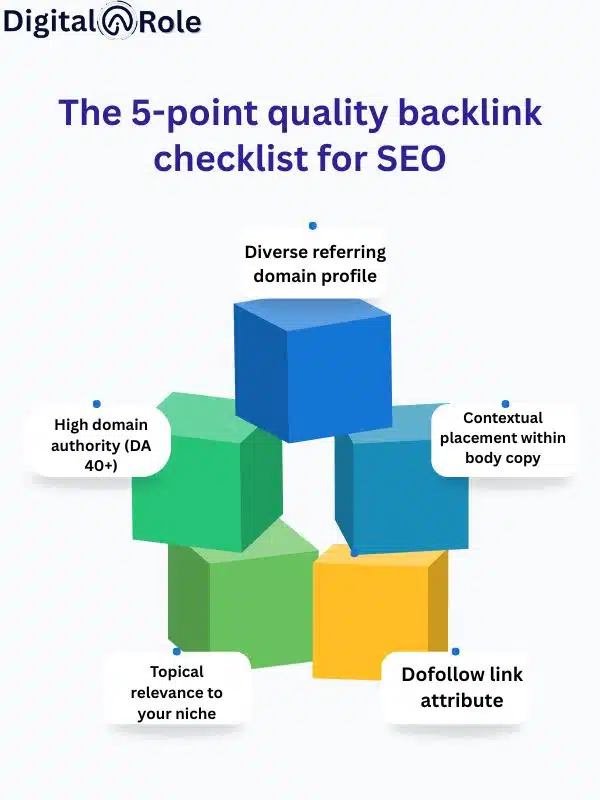
Got a link opportunity? Pause first. Run through these steps every single time. Save this page. It’ll come in handy more than you think.
- High Domain Authority (DA 40+)
Start by checking their strength using tools like Moz or Ahrefs—look for a DA of 40 or higher. Skip those under DA 20 if they lack solid content. Weak pages won’t shift your position much. Focus on links from places that actually count. Stronger sources tend to make a greater difference. Ignore low-quality ones—they bring little value.
- Topical Relevance to Your Niche
A recipe app earns trust when a food blog points readers its way. On the flip side, a crypto discussion board sending traffic to a workout manual makes little sense. Search engines grasp these connections well. Context shapes value in their eyes. Links matter more when topics align closely.
- Dofollow Link Attribute
Search engines ignore link value when a page uses nofollow tags. Check each backlink to ensure it carries weight by being marked “dofollow”—unless you only care about exposure and visitor clicks. What matters depends on your goal: influence rankings or just audience reach.
Mid-article links work better when they fit the topic. Placed right inside the narrative flow, they feel helpful instead of stuck on later.
- Contextual Placement Within Body Copy
Links hidden in sidebars or footers often go unnoticed. When a hyperlink supports what someone is reading at that moment, it carries more weight. Natural spots within paragraphs beat isolated sections every time.
- Diverse Referring Domain Profile
A single site linking repeatedly doesn’t impress search engines much. One link per domain holds more weight when building trust. Getting citations from varied sources shows broader approval across the web. When separate authorities point to your page, it feels less like coordination. Multiple unrelated backlinks suggest organic recognition.
Search algorithms favor this kind of spread-out validation. It’s not about volume alone but where those connections come from. Different domains create a natural-looking pattern. This kind of mix often aligns better with how people actually share resources. A wider range of referring sites strengthens perceived authority.
Link Equity Signals Google Actually Weighs
Start by picturing how one site lends weight to another through links. Picture Google noticing which connections carry real influence. What counts above all? The authority of the linking page comes first. Then there is relevance—how closely topics match between pages. Last comes trust, built slowly over time from consistent behavior.
Anchor text diversity
Clicking here isn’t the only way people reach your site. Picture links labeled simply “your brand” sit beside those labeled “how beginners start.” Toss in phrases like “tips for SEO backlinks,” and things start to feel balanced.
When 80% of every link uses the identical keyword over and over, alarms go off behind the scenes. That kind of repetition rarely looks accidental.
Link placement on the page
Most new writers underestimate where they put links. Put a link within the 200 words at the beginning of the article. That spot feels intentional and carries weight. The same link down in the footer, lost among dozens of pages? Not so much.
Referring domain traffic
Most times, where links come from hints at their weight. When one website points to another and lots of actual people visit it, search engines notice that trust happens live, out there. Picture a place ranked high with a DA of 50 but empty—nobody browsing, sharing, or doing anything; it loses value fast. Compare that to a DA 40, which is packed each month with fifty thousand people who stick around, click, and explore. That kind hums with credibility no number alone can fake.
5 Pro Tips to earn natural quality Backlinks
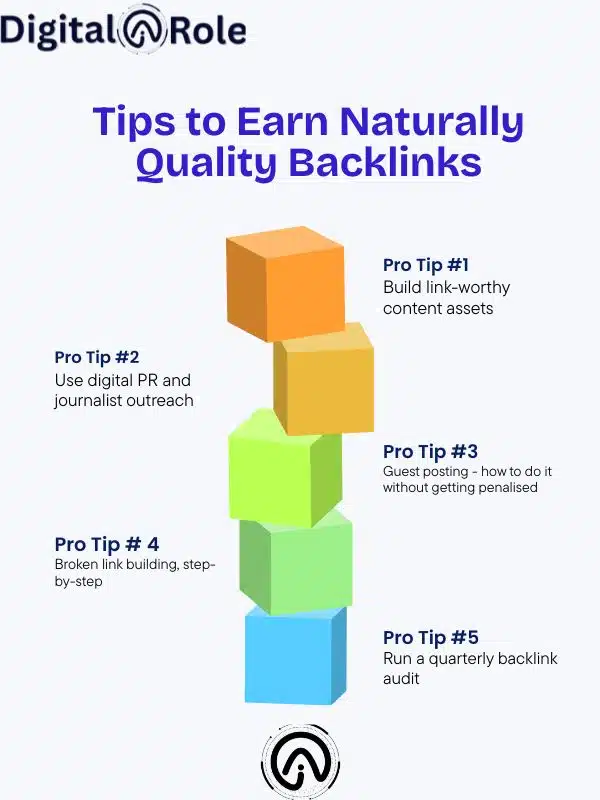
Pro Tip #1: Build Link-Worthy Content Assets
Truth hits hard for plenty of writers. A solid 2,000-word piece might sit online with no links pointing to it. The quality isn’t the problem. It’s that the structure offers nothing worth quoting. People ignore it simply because there’s no hook to grab onto. Good words alone won’t draw attention. What matters is whether someone feels urged to share it. Without a natural trigger, even sharp insights fade unseen. Effort doesn’t guarantee notice. Often, silence follows work meant to stand out.
Useful beats perfect every time online. What spreads? Pages others find handy enough to send people to. Google notices those links. Often, they lead to practical help—not polished prose.
Linkable assets go by that name. Four strong versions exist.
- Original data studies and surveys: Start by gathering fresh info through a basic online poll made with Google Forms or Typeform. Once responses come in, sort them out carefully. Share what you find in a clear post. Other writers covering similar ground often grab stats like these. Numbers travel fast online—people pass them around more than most content.
- Comprehensive beginner guides: Think of this guide as a full walkthrough. When something explains every part of a subject in one place, it turns into a reference others link to again and again. Over months or years, these pages gather connections without effort. They’re the lasting foundation of your content—created just once, but used repeatedly down the line.
- Free tools and calculators: The SEO audit list, word counter, and calendar layout—each one tackles something people actually face. Offer them freely, see how often they get mentioned. Helping quietly tends to stick around longer than shouting offers. Value shows up when it doesn’t demand attention.
- Definitive resource lists: When people find a solid list of top tools or research, they tend to keep it handy. These collections get shared by others who want to help their audience skip the search. A well-put-together guide often earns links simply by being useful. It sticks around online because it does one thing well—saves effort.
This week, try something useful.
Pick your top three posts. We could make it a summary of numbers instead. Try turning a popular guide into fresh research by slipping new survey results into it. Reuse what worked before. Make old content easier for others to reference. Start there. Build from what is already yours. Let past effort pull double duty now.
Pro tip # 2. Digital PR and journalist outreach with HARO
Finding it tough to land press mentions on respected media platforms? That dream feels distant for many just starting. Yet a real shortcut exists, one that skips guesswork. Think connectively now instead of HARO. It opens doors quickly, without cutting corners. Real exposure shows up through actual outreach. Not magic, not tricks—just smart connections made possible by responding to active journalist requests.
A single sentence tells it best: Reporters turn to Connectively to find voices for stories, so experts jump in with answers that land them links once the piece goes live.
The process is straightforward:
Step 1—Get started by signing up at connectively.us. No cost to join. Pick the option labeled “Source” during registration. One step at a time, that comes first.
Step 2 — Filter queries by your niche. Every day brings new messages asking for expert comments. Focus only on those matching your specialty. Skip the rest without hesitation. What matters most fits right into what you know best.
Step 3 — Craft a tight, expert response. Put what matters first; skip listing titles. Press folks race the clock—help them out while standing out. Your words should grab attention without trying too hard.
Step 4—Put your name, job role, and site address here. Once the reporter includes what you said, that link turns into an active reference on their page. It shows up just where they publish it.
Here’s why it matters more than a single connection: Each mention where someone quotes you as an authority strengthens how clearly you signal skill and credibility—exactly what Google weighs through its E-E-A-T guidelines. It goes past collecting links. Think of it as shaping what experts are taught to notice.
Staying steady matters more than speed. Hit five to ten solid questions each week—do that, then wait. Roughly two or three months in, regular posters start seeing links from real outlets show up. It just happens, slowly.
Pro tip #3: Guest Posting Without Penalties
These days, guest posts can get results. Yet what actually moves the needle isn’t the scattergun method newbies often reach for right away.
One strong article on a trusted, fitting website matters more than scattered posts everywhere. A meaningful link comes not from volume but from placement where it truly belongs.
How to vet a site before you pitch:
- Real organic visitors—how many show up? Try Ahrefs’ free tool or Semrush to spot the numbers.
- Is there a clear sense of quality control? What happens when someone sends in their work? Does anyone go over it carefully? Can you tell if changes is make before things get posted? Does somebody review each piece with attention, or is everything published as-is?
- Focused on your specific area, or merely skimming the edges? Does it dive into what truly matters there?
- Does the DA measure at least 40?
A green light on every one of those? Then you’re looking at something that might just matter.
The pitch structure unfolds when someone clicks it open
- Subject line: Keep it specific—“Guest post idea: [Specific Title] for [Their Audience].”
- Just checked what you shared. Noticed a few things worth mentioning right away
- Audience interest grows when relevance hits a nerve. This subject matter is because timing shifts attention.
- Offer three titles. Editors like picking one better than taking a single suggestion. Variety gives room to choose what fits.
- Start strong. A brief line about who you are. Maybe a second highlighting one key thing you’ve done. Keep it tight. Let what matters show without saying much.
Picking an anchor: Try using your actual company name or something that sounds like regular speech. When it comes to guest posts, stuffing keywords into bio links raises red flags—just skip that habit altogether. Instead of forcing phrases that match search terms perfectly, go for wording people might naturally say out loud.
Search engines tend to notice when every link uses the same keyword-heavy format—it looks robotic. A smoother approach blends better; real sentences work fine instead of rigid SEO patterns. Stick to labels that fit without trying too hard—that small shift makes a difference over time.
When handled well, posts on respected websites plus guest features in publications count as some of the longest-lasting links around. Slip up, though; those same efforts could trigger a direct penalty from search systems.
Pro tip #4: Broken link building guide
Out there among fresh strategies, broken link building stands quietly, effectively. Imagine spotting a busted connection on a solid website—someone once trusted that link. Instead of leaving it empty, you step in with something alive.
Pages lose links when sites vanish or move things around. That gap?. It is filled with what you’ve made. Someone clicks expecting help—they get nothing. Now picture them finding exactly what they need through you.
Authority pages often have these gaps hiding in plain sight. You scout for those moments. Your piece fits where theirs broke. Both sides gain without fuss.
No noise, just function. A small fix turns into your gain. The page error gets cleared by its creator. A solid link comes your way because of it. Everyone walks away fine.
Here’s the step-by-step process:
- Start by hunting down web pages related to your subject that probably link out to other sites. Pages like curated resource hubs, roundups of helpful tools, or detailed how-to articles work well here. Try typing into Google phrases such as “your topic” followed by “resources,” or pair “your topic” with “useful links” instead.
- Start by opening your browser. A handy tool called Check My Links helps spot faulty connections fast. This free add-on for Chrome scans pages. Red marks appear wherever a link fails. Seeing those spots means you can step in right there.
- Third comes checking that the stand-in actually fits. It must work well instead of the broken link, not simply touch on something similar by chance. What matters is real usefulness, where the old one failed.
- Step 4 – Send a helpful, human outreach email:
A real connection matters more than a quick exchange.
“Hi [Name], I was reading your guide [Topic] and noticed the link to [Dead Page Title] appears to be broken—just wanted to give you a heads up. I actually have a piece on [Your Topic] that covers similar ground and might serve your readers well as a replacement: [Your URL]. Either way, hope it helps!”
A single broken link fix can lead to one of the purest forms of inbound links out there—the kind where someone actually decides, on their own, to point readers your way. Every three months, take time to review who’s linking and what might need refreshing.
Pro Tip #5: Run a Quarterly Backlink Audit
A strong backlink setup needs ongoing attention. Think of it as something that shifts over time. Pages disappear online; certain linking tactics raise red flags. In tough markets, rivals might even target your site with harmful links on purpose. These things happen more often than some believe.
Most folks finish a quarterly check-in under sixty minutes. This tiny effort might stop long stretches of confusing rank falls. Getting backlinks? It hardly ever seems quick. At first, everything echoes emptiness—you post material, reach out, and watch numbers stay flat. Everyone experiences this odd silence. Then one day, things shift.
- Starting at Google Search Console means heading to Links, then Top linking sites—see where traffic points back. Free access shows referrers without scoring harm levels. This tool opens the door, even if it skips risk ratings. Visibility begins here, with no cost involved.
- One tool you might consider is Ahrefs, though Semrush works just as well – each comes at a cost, yet many find the investment useful. These tools check every site linking to yours, giving each one a risk rating based on how shady they appear. They also catch odd surges in new links showing up out of nowhere. Strange trends that resemble manipulative tactics get highlighted automatically. When money’s an issue, there’s still an option: Semrush lets users run one basic version without paying.
- Inside Google Search Console sits the Disavow Tool. It gives you a way to signal that certain backlinks shouldn’t influence how your site is judged. Picture handing over a list of unwanted connections—ones you had no part in creating. You’re making it clear these links aren’t welcome in evaluations of your page. Not every inbound path earns approval just because it exists. Some simply need to be set aside. This is where you draw that line without asking permission first.
Your quarterly check begins here—step one lines up all financial records.
- Start by pulling every backlink into a file using Ahrefs or Semrush. Focus on those flagged with poor quality, ranked from worst to least bad.
- Twenty to thirty domains need checking by hand next. Not everyone who seems toxic should lose your trust automatically. Strange scores sometimes hit honest websites because systems make odd mistakes. Visit each place yourself instead of relying on numbers alone. A proper site usually shows clear signs—real articles, working pages, and effort put into design.
- Start by trying to remove bad links yourself. Look up who runs the website, then ask them nicely to take it down. Write down each time you reach out. Before using Google’s disavow tool, they say you should try this way first.
- Toss out whatever’s left behind. When stuck with links you cannot delete, gather them into a .txt list meant for disavowal, then send it through Google Search Console. Go slow – wiping too much, even trusted connections, might strip value built over time without meaning to.
Here’s something to remember: the disavow tool works fast but can’t be undone right away. If you’re unsure about a sketchy-looking link, just skip it. Removing a good link by accident hurts worse than leaving a slightly shady one untouched.
Conclusion
Think of strong backlinks like money growing slowly in a bank. Each link you get now boosts your site’s strength later. One big post won’t push you to the top. Page one rankings come from steady work—month after month—until search engines start seeing you as reliable. It takes time, sure—but quiet persistence beats shortcuts every time.
Here’s a look at your five solid tips once more:
- A fresh start could be a collection of unique findings, pulled straight from research. Sometimes it is long-lasting content that sticks around, useful after months or even years. Another path? Offer something helpful at no cost—like a tool people return to again and again
- Tip 2: Use Connectively (HARO) to earn editorial backlinks from high-authority publications
- Beyond just writing elsewhere online, pick spots that matter. Choose platforms others trust, where your topic fits naturally. Reach places with strong reputations, not random ones. Go where readers already engage deeply. Skip the noise. Focus only on sites earning real attention. Quality beats quantity every time.
- Fixing dead links can lead to real backlinks when you assist webmasters. Start by spotting outdated URLs on relevant sites. Then reach out with a working alternative that fits naturally. Site managers often appreciate the heads-up. A helpful note might just land your page where it earns visibility. Quiet fixes like these build connections without asking for favors
- Every few months, check how things look. A fresh review helps spot gaps. This peek under the hood catches slips early. Picture it like a tune-up for trust. Small fixes now prevent bigger issues later. Watch what’s working. Notice what feels off. Adjust quietly before problems grow
Choose a single idea from what’s above. Only that one. Begin right here, starting now. Forget doing every last thing at once—movement matters more than completion.
If this beginner-friendly guide on quality backlinks gave you clarity, turn your attention next to how solid your pages really are behind the scenes. Once off-site efforts feel steady, shift focus toward refining what lives on your site. Peek at our On-Page SEO Checklist for Content Creators so each page pulling in trust also earns its spot in search results. Strength isn’t only where links come from—it’s whether the destination can hold them.
Finding tough spots in your link work lately? Share below—each note gets seen.