
Students learn and are taught in the traditional model, which is no longer needed in the tech-savvy world. Rigid classroom, one-size-fits-all teaching, and exams focusing on learning often fail forour curious, and gadget-using students. As a result, many students are discouraged about their future. Schools only provide them a straightforward slide lecture, not improving their critical thinking, creativity, and personality development. That’s where Innovative education comes and makes a huge difference.
By shifting towards student-centred, innovative education, schools and educators are using project-based learning, digital tools, and effective learning paths that easily determine the success of the students. Edtech innovations improve the outcomes of the students by working with them.
In this article, I’ll explain to you the real impact of innovative education on student success, and understand how innovative education prepares students for the future-ready skills, critical thinking, and creativity. You also learn how student-centred, innovative education works in the classroom. If you’re a student or a teacher, this will help you a lot and solve your teaching queries.
What is innovative Education?
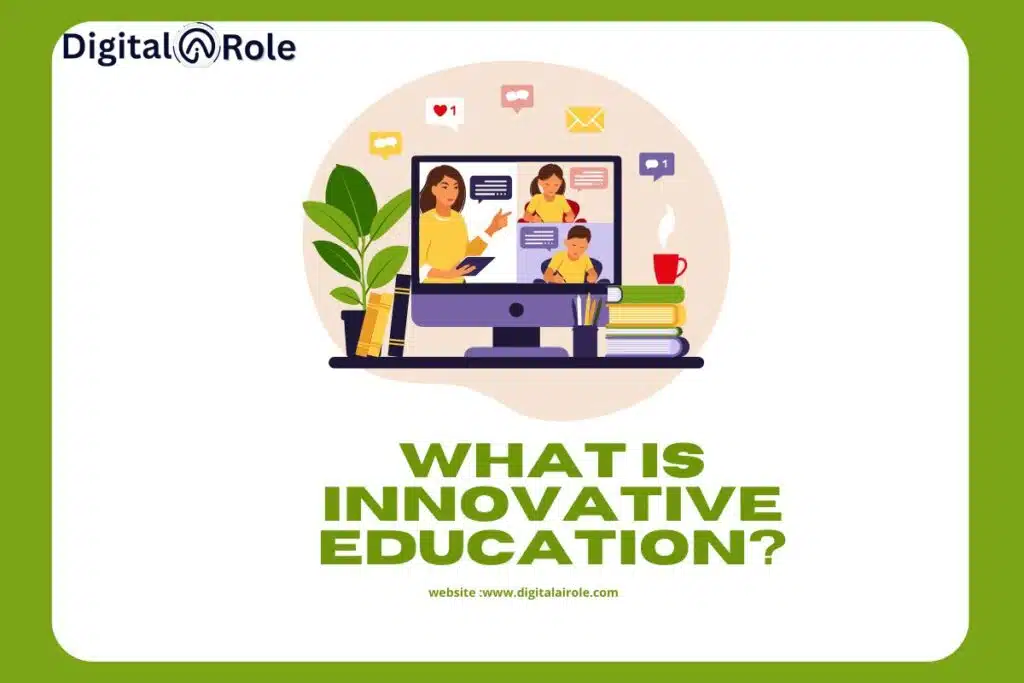
Innovative Education is a modern learning approach that focuses on student-centred teaching and the use of modern technology, so students gain a better understanding. Its main goal is to develop students’ great personality,problem-solving skills, critical thinking, and creativity, not only memorisation. These skills help students to succeed in school and their careers.
Key elements of innovative education include:
- Student-centred personalised learning that only delivers for their better understanding.
- Integration of innovative technology in the classroom for more personalised learning for the students.
- It gives an opportunity to learners to solve real-world problems and enter a tech-savvy world to build a professional career.
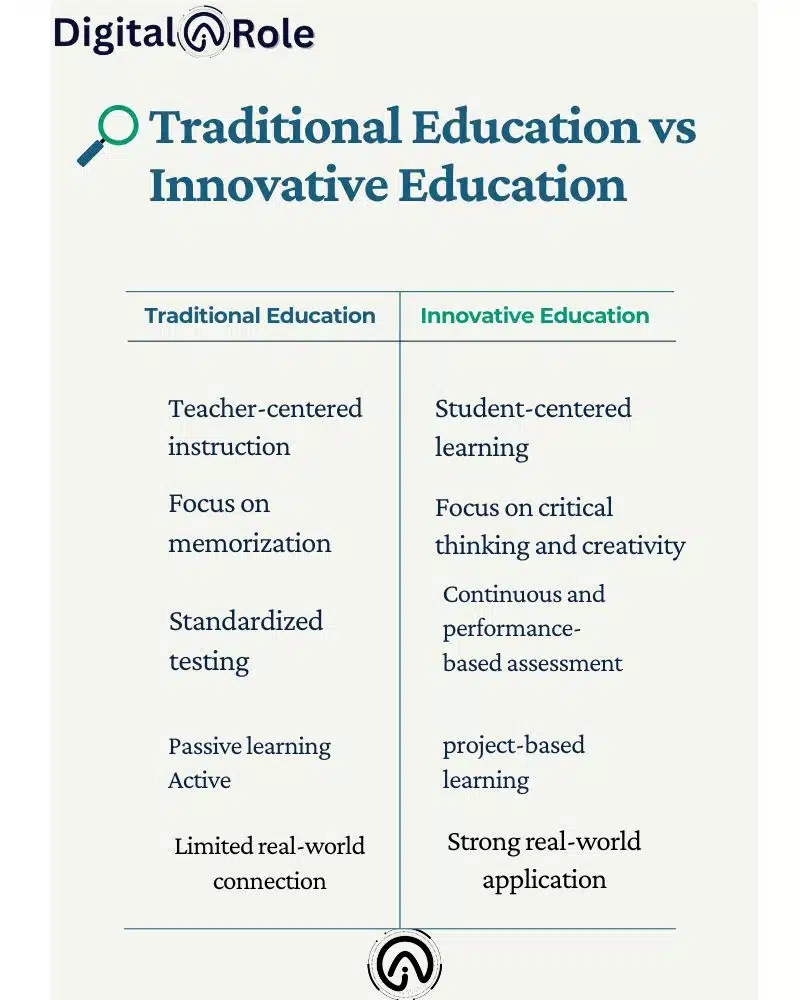
Traditional Education vs Innovative Education
Why Innovative Education Matters in Today’s Learning Environment?
Today’s Learner is growing up, but schools still use the traditional teaching blackboard method. This behaviour frustrated the students. Innovative education matters because it bridges the gap by aligning the students with how to develop the skills they actually need.
It creates a flexible and engaging learning experience for both academic success and personal growth. It makes education more relevant for modern teachers and students.
1. Transforming Student needs in the digital age
This is because modern students do not learn in the same way as past generations. The decreased attention spans, the constant exposure to the digital world, and the availability of information require new methods of teaching. Students have become very demanding in regard to the way they learn, as well as the possibility to practice what they know. Creative learning reacts to this by providing interactive learning, flexible learning streams, and practical learning experiences that maintain student interest and concentration.
2. The teacher’s role in new models of education
In a new model of education, teachers perform the role of facilitators but not lecturers. Referring to pedagogical training and experience in the classroom, teachers facilitate the discussions, mentor students, and give ongoing feedback. The learning processes involving collaboration, individualised support, and reflective teaching practices contribute to the development of the learning environment where students are active contributors and owners of their learning.
The Impact of Innovative Education on Student Success
The impact of innovative education on student success is visible in their academic result, personal growth, and skill development. When students focus on active learning and incorporate digital study tools, it builds their logic, and then innovative education helps them to understand the concepts deeply and apply them confidently beyond the classroom.
A leading large-scale meta-analysis of 50 experimental studies shows that with innovative education, students improve their learning by 77.40 out of 100 on average in the education sector.
1. Better Academic Performance With Active Learning
Project-based and experiential learning are some of the active learning approaches that enable students to learn through doing. Students do not memorise facts but problem-solve, do research and use concepts in real-life situations. The statistics of active learning show that students have “54% higher scores than in the traditional lecture”. It is a strategy that enhances comprehension, reinforces knowledge and achievement in academics.
2. Increased Engagement and Motivation by students
Creative learning enhances interaction through interactive and enjoyable learning. Gamification, online technologies and custom paths to learning enable students have greater control over their learning. Motivation is bound to go high when the students are granted options and when their efforts are considered relevant.
3. Better Critical Thinking and Problem-Solving
Students learn to think critically through real-life issues, projects and inquiry learning. They are taught to think critically and solve problems, collaborate with other students and make sound decisions, which are essential in life and in school.
The main advantages of innovative learning among students:
- Better educational knowledge.
- Answered with increased motivation and involvement.
- Good problem-solving and critical thinking abilities.
- More preparation in the real world.
How Student-Centred Innovative Education Transforms Learning
The innovative education based on students puts a shift on teaching to learning. It appreciates the fact that all students are different and they learn best when education is modified to suit their needs, interests, and abilities.
The Real Meaning of Student-Centred Learning
Learning centred on students enables individual pacing, where the learner is given time and encouragement to learn. It promotes independence in learning for the students to make them responsible for their learning and works on the strengths of students instead of the weaknesses.
Actual Classroom Models of Student-Centred Innovative Education.
Student-centred innovative education manifests in actual classrooms in the form of flipped classes, individual learning plans and group projects which are peer-led. Students read materials on their own and spend time in the classroom discussing, collaborating, and solving problems under the supervision of the teacher.
Social and Emotional Development of Student-Centred Models
Student-centred models aid the emotional and social development beyond the academic field. Teamwork and collaborative learning experience give students confidence, enable them to develop their communication skills and learn to be leaders.
How Innovative Education Prepares Students for the Future
Both teachers and students need to learn how creative learning equips them with knowledge of the future. It not only prepares the students with skills that are not limited to exams, but also makes them successful in life.
1. Developing Future-Ready Students that They Wish To Have
Creative education fosters digital literacy and innovative and flexible thinking. Students are taught to learn how to learn, which is a crucial aspect of living in a fast-changing world, and they develop an attitude toward constant development and learning throughout their lives.
2. Career Preparedness and Practical Applicability
Students acquire skills that are relevant to the industry through internships, project-based tests, and real-life challenges. The exposure to contemporary technologies, such as AI and digital platforms, enables students to make the gradual transition between schooling and employment.
3. Training the Generation ahead of an AI-Powered Society
Creative learning also equips learners to collaborate with AI in a responsible manner. Students are gaining moral consciousness, the capacity to find solutions to problems with the help of technologies, and human qualities like empathy, creativity, and critical thinking- qualities that cannot be automated.
Challenges and Misconceptions About Innovative Education
To establish credibility and understanding, it is good to discuss the myths and dwell on the actual issues in innovative education. This method has a good combination of advantages, but in order to be successful, it has to be evaluated honestly, by experienced teachers, and planned.
Popular Misconceptions of Innovative Education.
- A myth that has been frequently used is that innovative education lowers academic rigour. In an actual sense, it increases the expectations since it asks students to think, use knowledge and solve crucial problems as opposed to memorising.
- The second myth is that technology is a replacement for teachers. Like never before, innovative education is dependent on the knowledge of the educators, teachers instruct, offer feedback, and mentor students, and technology facilitates teaching only.
- There is also an opinion that only high-level schools or highly funded schools can provide creative education. Nevertheless, there exist numerous strategies that do not require a lot of resources, but can be implemented in any classroom, e.g. project-based learning and discussion-led classes.
Actual Problems in Schools and Teachers
Innovative education has challenges, although it has its advantages. The lack of training makes teachers less confident, and insufficient resources prevent them from accessing tools. Traditional systems can also reduce the speed of adoption as a result of resistance to change. The honest approach to these issues is a source of strength in terms of credibility and long-term success.
The way Schools and Teachers should embrace Innovation in education
Implementing new education does not mean that things will change dramatically. Deliberate little steps assist in developing significant, long-term, and lasting changes in teaching and learning.
1. Minor Things that Teachers Can Do Now
The first step that teachers might take is in blended learning, a combination of traditional teaching and digital teaching. Designed to foster interaction between students and the teacher, interactive tasks are essential as students engage actively. In contrast, periodic feedback loops among students allow educators to adjust their instructions according to the actual classroom requirements.
2. Building a Favourable Learning Environment
A favourable learning culture promotes the idea of continuous improvement via reflection and experimentation. Collaboration among teachers enables mutual learning and best practices, whereas the importance of student voice and inclusion is guaranteed to make education relevant, engaging, and, finally, student-centred.
Conclusion
In this article, I explain to you the main impact of innovative education on student success. You can see in students’ academic results, their behaviour and personality when they change the way of their learning through digital tools, build their logic and implement it in the real world. This type of knowledge gives students positive energy, and they show more interest. Innovative education prepares students for their future by accelerating their critical thinking, creativity, and logic-building skills with their actual skills.
When teachers apply the student-centred innovative education, they relate to them and ask questions freely. This enables the teachers to work on individual student weaknesses so that they can work on them and perform well.