
You’re a restaurant owner and struggling with the empty diner tables, while your competitors are packed. You want more customers?. You’re not alone; many owners face this situation. In this digital era, where people search before dinner, a restaurant’s online visibility decides how full your tables are local SEO for business.
The good news is that Local SEO for Restaurants is the process by which your restaurant’s website is optimised for local users on Google Business Profiles and listings to appear higher in search results. When users search for “best restaurant near me” or “Best Italian Restaurant in New York,” this helps boost your business and shows exactly what services you offer within the area.
You optimise your restaurant’s online presence in such a way that when hungry customers search in their area, Google exactly shows your restaurant name, which increases sales. According to research at Krofile which indicates “76% people who search online on Google visit within 24 hours”.
These statistics tell that in the restaurant industry, visibility = foot traffic. That means if you’re not ranking in local search results, you’re losing real diner customers. Local SEO acts as a bridge, filling the gap of invisibility and putting your restaurant in front of nearby searchers at the exact moment they are ready to book a table.
When you read this guide, you’ll understand how to:
- Optimise your restaurant website for local SEO
- Get your restaurant featured in the top 3 Google map results.
- Generate consistent customer reviews that build trust. Optimise your content for “near me” searches.
- Pro tips to generate more organic traffic
- Turns searchers into real-world bookings, which fills every table fast.
What is Local SEO for Restaurants and Why is it Crucial?

Local SEO for a restaurant is the process of improving your restaurant’s online visibility in local search results, Google Maps listings, and near searches, so customers can easily find and visit you. It attracts nearby diners and converts online visibility into foot traffic, ultimately increasing sales.
Simply, when the user searches for “beef burger ear me”, local SEO ensures your restaurant appears at the top of Google results, with directions and reviews listed.
It’s like placing your restaurant billboard on a busy digital street where diners are ready for their next meal.
How Local SEO is different from Traditional SEO
No doubt, but traditional SEO helps boost website rankings and authority, and also helps websites rank globally. When you use Local SEO, it ranks you in local search results, focusing on connecting people near your restaurant who are ready to dine, order, or reserve a table.
Why is Local SEO critical for Restaurants?
Local SEO for a restaurant is not an option; it’s a necessity because many people search on mobile when they are hungry and need instant results, including customer reviews, directions, and a menu, at their fingertips.
Google’s top three map results receive 60% of all clicks. When your restaurant is listed in local search, it attracts more customers, more visibility, and more reservations.
Let’s take an example of two cafes on the same street.
Café Aroma has also optimised its Google Business Profile, added local reviews, and posted about community events.
Downtown Coffee has not been updated in months.
As you search for coffee on the site near me, Cafe Aroma will appear on the first page, receiving more clicks, directions, and daily customers, whereas Downtown Coffee will remain invisible.
It is the strength of local SEO; this way, your restaurant can be discovered, trusted, and chosen among the others.
Benefits of Local SEO for Restaurants
When you own a restaurant, it is not only to be listed on the Internet, but to fill all tables within a short period of time.
That is exactly what local SEO is: it helps to tie your restaurant with hungry local customers who are willing to dine, order, or make reservations at this moment.
Local SEO done correctly can establish a continuous flow of new customers, regulars, and rave reviews for your online presence.
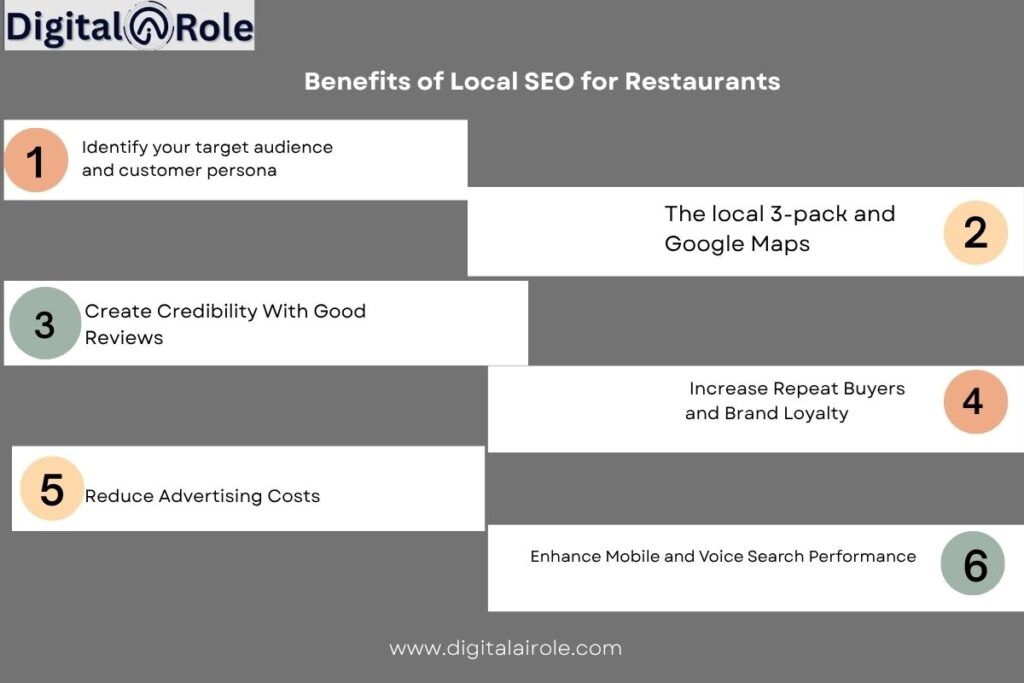
1. Get More Local Traffic and Customers
Local SEO ensures that your restaurant is visible in the places where people search on Google Maps, mobile devices, and in “near me” searches.
For instance, when a person enters the query ‘best sushi near me,’ your restaurant can appear at the top with directions, photos, and ratings. Local SEO enables restaurants to attract more visitors to their location, as they can be easily found on search engines and Google Maps when people are interested in dining out.
Pro Tip: Add your complete address, opening time, and menu to your Google Business Profile so that customers can locate and visit you immediately.
2. The Local 3-Pack and Google Maps
The Google Local 3-Pack displays the three closest restaurants in the case of local intent searches, and those listings receive more than 60 per cent of all local clicks.
Ranking in this case implies that your name, reviews, and contact details will appear before any organic listing to the diners.
Example:
When your Italian bistro is featured in the 3-pack of the top pasta restaurants near me, you will likely get dozens of new telephone calls or directions requests every week, without any advertising expense.
3. Create Credibility With Good Reviews
The new word-of-mouth marketing is through your reviews. Having 4.5+ stars and real reviews on Google or Yelp instantly increases credibility among potential customers.
Get happy customers to leave brief reviews after dining out and at all times respond (including negative ones) as a sign that you are concerned.
Pro Tip: Responding to reviews also fosters more interactions, and Google can better understand that your business is operational and reliable
4. Increase Repeat Buyers and Brand Loyalty
Local SEO is not only a way to attract new customers, but also to keep old diners in sight.
When your restaurant appears in search engines and maps repeatedly, it reminds people to visit it again and again.
Blend search engine advertising with email or SMS communications, such as ‘We are in your neighbourhood and have a new lunch deal!’ To enhance recurrent business.
5. Reduce Advertising Costs, Yet Receive 24/7 promotion
Local SEO provides long-term outcomes, unlike paid advertisements. Your restaurant continues to appear in search results after optimisation – even when you are not actively campaigning.
It offers increased visibility at a lower cost and a higher return on your marketing investment.
6. Enhance Mobile and Voice Search Performance
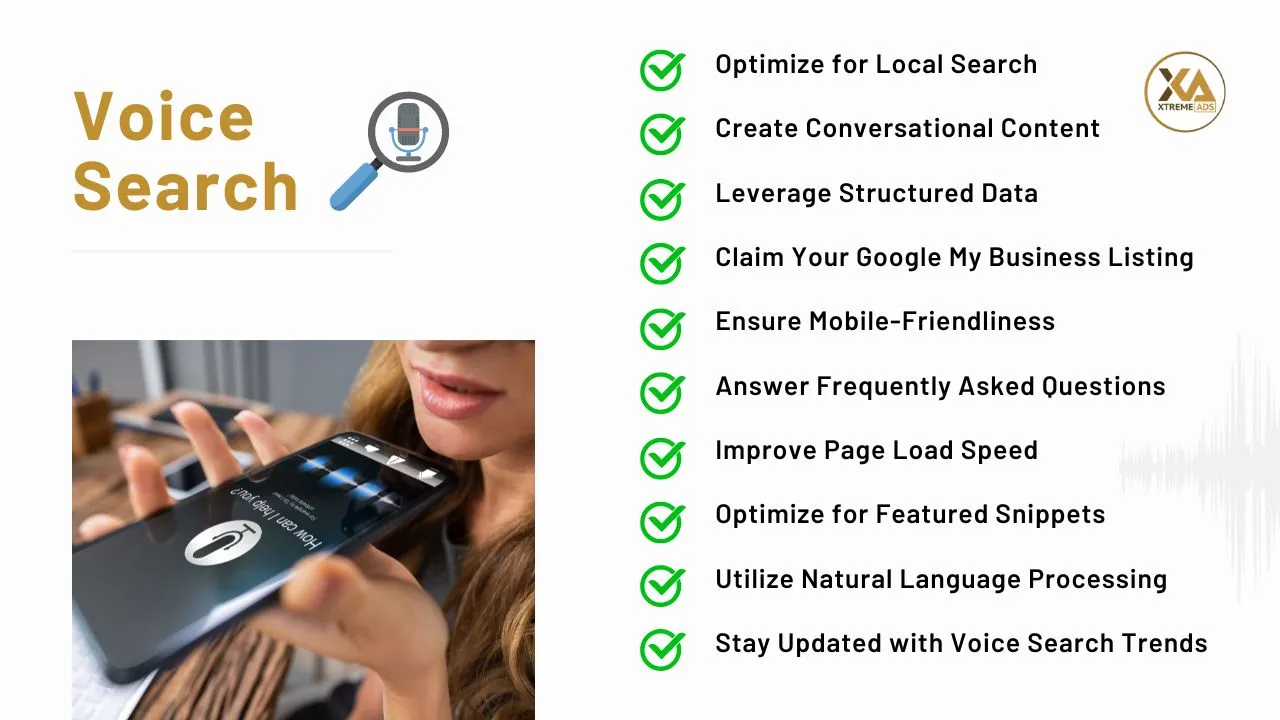
The majority of “near me” restaurant searches occur on mobile devices or via assistants, such as Siri or Google Assistant.
Through local search optimisation and voice seo, your restaurant can be found among those that people are querying:
“Where can I eat near me?” or “Best pizza place open now.”
These diners can be captured using voice-friendly mobile pages and keywords that load quickly.
The main benefit of local seo for restaurants is that it attracts nearby real customers, ranks you on Google Maps search, builds trust through excellent reviews, increases booking rate, and saves ad costs.
Step-by-step Local SEO guide for Restaurants
Follow this proven Local SEO roadmap, which helps you make your restaurant appear in “near me” searches, rank higher on Google Maps searches, and fill your table.
1. Claim and Optimise Google Business Profile
The core of restaurant SEO is your Google Business Profile (GBP), which is what appears on Maps and in local search results.
Optimisation checklist (snippet-eligible):
- Make your business visible through Google Business Profile
- Provide correct Name, Address, and Phone number (NAP).
- Select an appropriate category, e.g., “Italian Restaurant,” “Cafe,” “Steakhouse”.
- Post good-quality pictures of your food and interior.
- Create your menu, reserve links, and hours.
Request the customer for a positive review and feedback, and then respond to this.
Pro Tip: Include location-based keywords in the description, e.g., “Family-friendly pizza restaurant in Austin.”
2. Local restaurant Keywords
Local SEO performs optimally when your keywords align with the search terms customers use.
Examples:
- Best breakfast restaurant in Boston.
- “Vegan cafe near Central Park”
- “Late-night diner in Chicago”
Actionable tips:
Insert these phrases into your title tags, meta descriptions, headers, and alt text of images.
Natural use of keyword variations, no stuffing.
Include city names in page URLs, e.g., best-italian-restaurant-dallas.
LSI Keywords: the keywords of local restaurant, geo-targeted search, local restaurants.
3. Develop Local-Based Content that Appeals to Diners
Your content is not only needed in blogs, but also in conveying to Google and customers that you belong to the community.
Local-oriented content ideas:
- Write a blog on events or festivals of local food (Top 5 Food Events in Austin This Month).
- Write [Your City] ‘s best dishes guides.
- Partner with local companies (e.g., a local bakery or a wine vendor)
- Community stories, local community charity events, or Chef spotlights.
Pro Tip: Add location photos, include Google Maps, and create internal links to menu or booking pages.
Create location-based content to inform Google that your restaurant caters to customers within a specific location, which can improve your local search results.
4. Make a strong presence on Social Media.
Social interaction is a good local SEO indicator. Customers telling their posts about your restaurant or tagging your restaurant helps to increase your online authority.
Action Plan:
- Share Reels and post on Instagram, Facebook, and TikTok using local hashtags (#ChicagoEats, #NYCFoodie).
- Label your position in each one of them.
- Become a user who provides user-generated content, such as customer photos or reviews.
- Share your customer experience on social media, which helps build trust against others.
- Publicise local promotions or events, e.g., Weekend brunch in downtown LA
- Request customers to review your restaurant online or check in.
Pro Tip: Add a link to your own webpage or booking facility to your profile, allowing for smooth traffic.
5. Receive More Positive Reviews
Google attaches great importance to review signals. The more genuine and current your reviews, the better your chances of ranking will be.
Checklist:
- Ask satisfied clients to post a review on your website.
- Add QR codes on tables with your review page.
- Always respond – thank those who leave positive comments and address those who leave negative comments.
- Emphasise the best reviews on your social media and website.
Companies with 4.5 or higher star ratings receive twice as many clicks as those with lower ratings.
6. Optimise’ Near Me’ and Mobile Searches
The majority of restaurant searches occur on mobile devices, typically within an hour of eating.
Optimisation essentials:
- Apply responsive design (pages that are mobile-friendly).
- Reduce the size of images to have them loaded more quickly.
- Add LocalBusiness schema markup (assists Google with knowing where you are located)
- Ensure that buttons (Reserve, Call, Menu) are easy to tap.
Optimise your restaurant site for mobile devices and near-me searches: “Near me” and mobile device searches to find your restaurant customers quickly and visit them immediately.
7. Build Local Backlinks and Citations
Google uses backlinks and citations to confirm your location and the credibility of your business.
Checklist:
- Register your restaurant on Yelp, TripAdvisor, Zomato, Uber Eats, Food Panda, and OpenTable.
- Get mentioned in local news websites or food blogs.
- Cross-sell with other local attractions or companies.
- Ensure consistency in the NAP (Name, Address, Phone) across all listings.
Pro Tip: Audit your citations with the help of such tools as BrightLocal or Whitespark.
8. Track and Measure Your SEO Performance
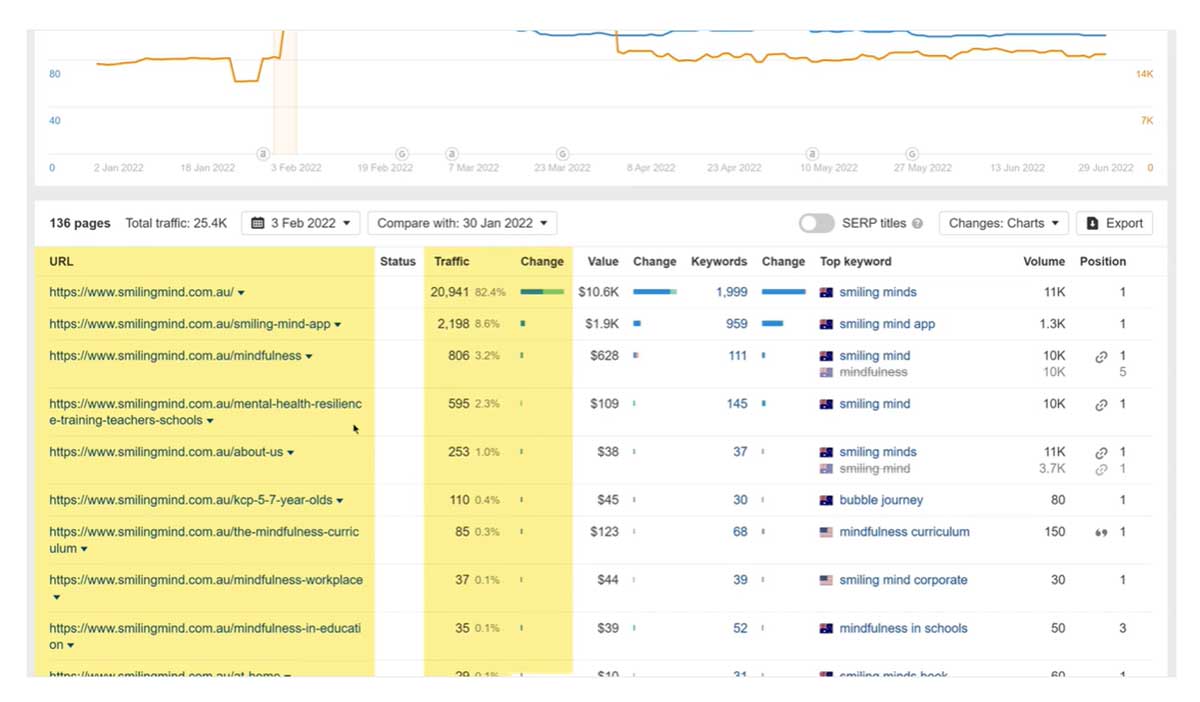
Measure what matters – since what is measured, gets.
Key tools:
- Google Analytics Track Traffic and Conversion.
- Use Google Search Console to view your search engine rankings.
- You use GBP Insights Tracking of calls, direction requests, and bookings.
Metrics to watch:
- Local keyword rankings
- Traffic of the websites by city/region.
- Reservations or calls through search.
Pro Hack: Conduct monthly performance reviews and adjust strategies to continue growing.
Pro Tips to fill every Table using Local SEO
Visibility and engagement are the two elements you need to combine to make your local SEO in your restaurant great. Place local digital ads with your SEO campaigns – the combination not only improves your map positions but also leads to instant bookings.
Encourage social media check-ins and user-generated posts to increase your local organic reach. Add ‘Order online’ and ‘Reserve a table’ links directly to your Google Business profile, so that searches can be immediately converted to reservations.
Lastly, introduce seasonal events based on local festivals, holidays, or community events —these promotions are timely. They will position your restaurant as the go-to place to eat when local diners are searching for a spot to eat.
Frequently Asked Questions
Q1. How long does it take for local SEO to work for a restaurant?
Local SEO work appears within 3 to 6 months, but it depends on the consistency of the efforts. If you update the Google business profile weekly, upload local content consistently, and post real reviews, you will often see faster results, especially for “near me” and map search.
Q2. What factors are included in Local SEO?
- Google Profile Optimisation
- Consistent NAP details
- Identify the local audience
- Build local backlinks
- Use local keywords and optimise On-page Elements
- Earn Positive Customer reviews
- Upload High-quality Local content
- Mobile-friendly website
- Give every event updates
- Track the performance with tools
Q3. What is the difference between local SEO and normal SEO?
Local SEO helps ensure your restaurant is visible in local search results and Google Maps for the customers in your local area.
Regular search optimisation appeals to a larger, frequently national or global audience, with the content of websites and their backlinks not being location-specific.
E.g., Pizza in my area (Local SEO) vs. Best pizza recipes (Regular SEO).
Q4. Can I do local SEO myself?
Yes! You can start by:
- Claiming your Google Business Profile.
- Incorporation of correct NAP (Name, Address, Phone)
- Getting customer reviews
- Sharing photos and posts about the local area.
- Local Keyword use on your site.
These are his basic steps that can make a huge difference to small restaurants.
Q5. What is the effect of reviews on the SEO of restaurants?
Good reviews enhance the reputation and local ranking of your restaurant. The visibility is determined by the number of reviews, quality, and freshness, as assessed by Google. Responding to reviews, including negative ones, not only helps establish credibility but also enhances your restaurant’s visibility in search and Maps, demonstrating your active presence.
Conclusion
In this article, I explain how to do local seo for restaurants. You need to make a profile on Google Business and a website. You upload the locally based content to the website with local keywords. Incorporate the keywords that attract your nearby customers. Build strong backlinks with other local businesses to establish a solid foundation and increase website traffic. If you don’t have a website, you can do this on your Google Business profile by uploading high-quality images of the menu and using ‘near me’ and local keywords. Earn positive reviews from customers and post them on social media or create a reel, which will result in more engaged customers. Build loyalty with customers by serving good food. Track the performance with SEO tools, which guide you about the audience and traffic.